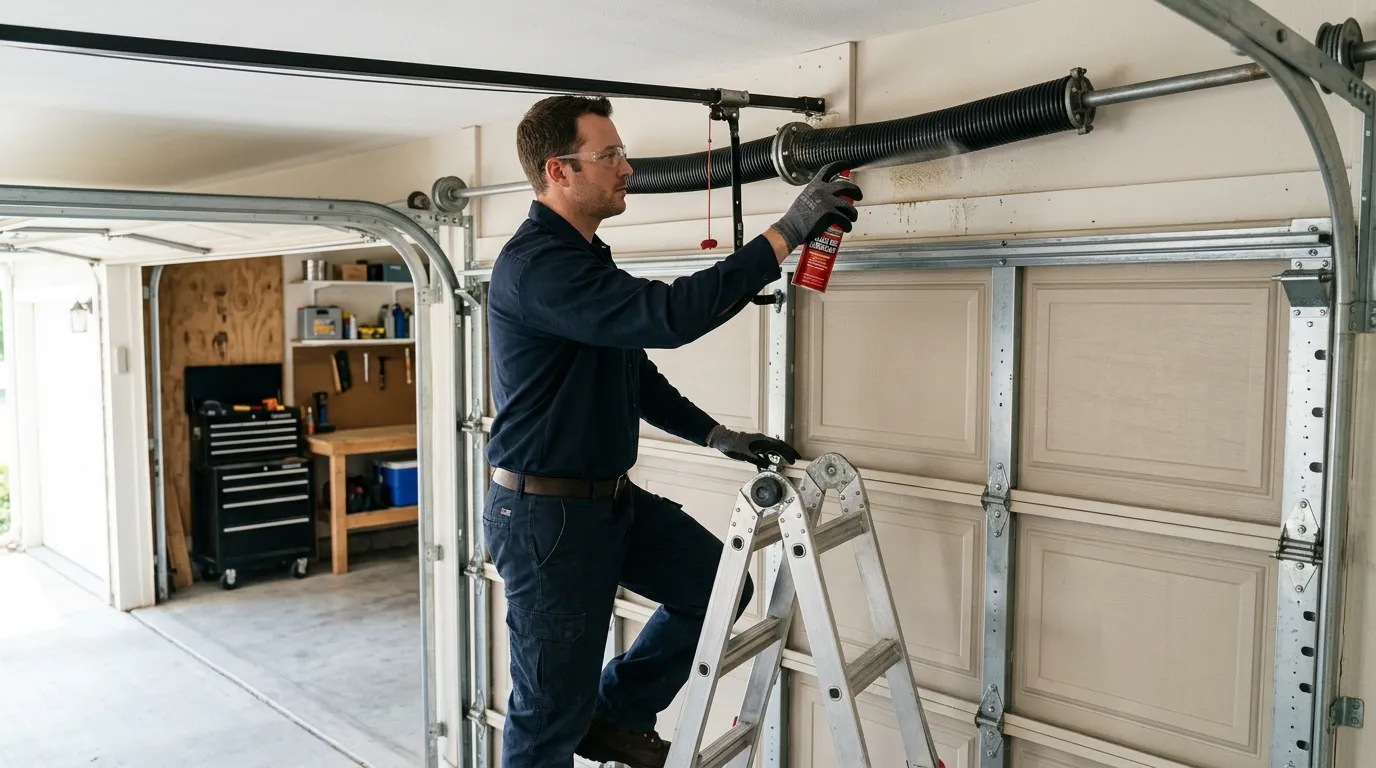
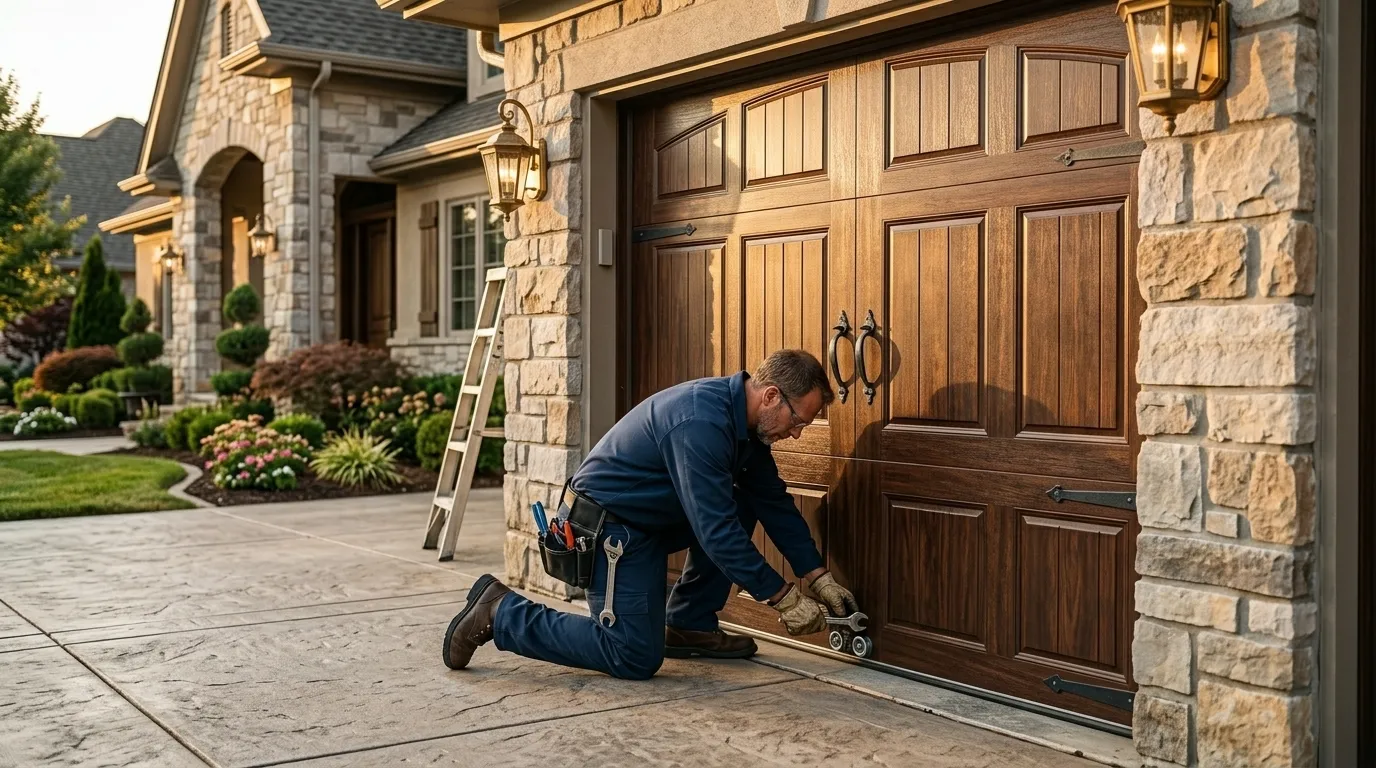
Emergency garage door repair for Orem-area homes built mostly between 1977 and 2015, where cold winters strain springs, openers, and rollers year-round.
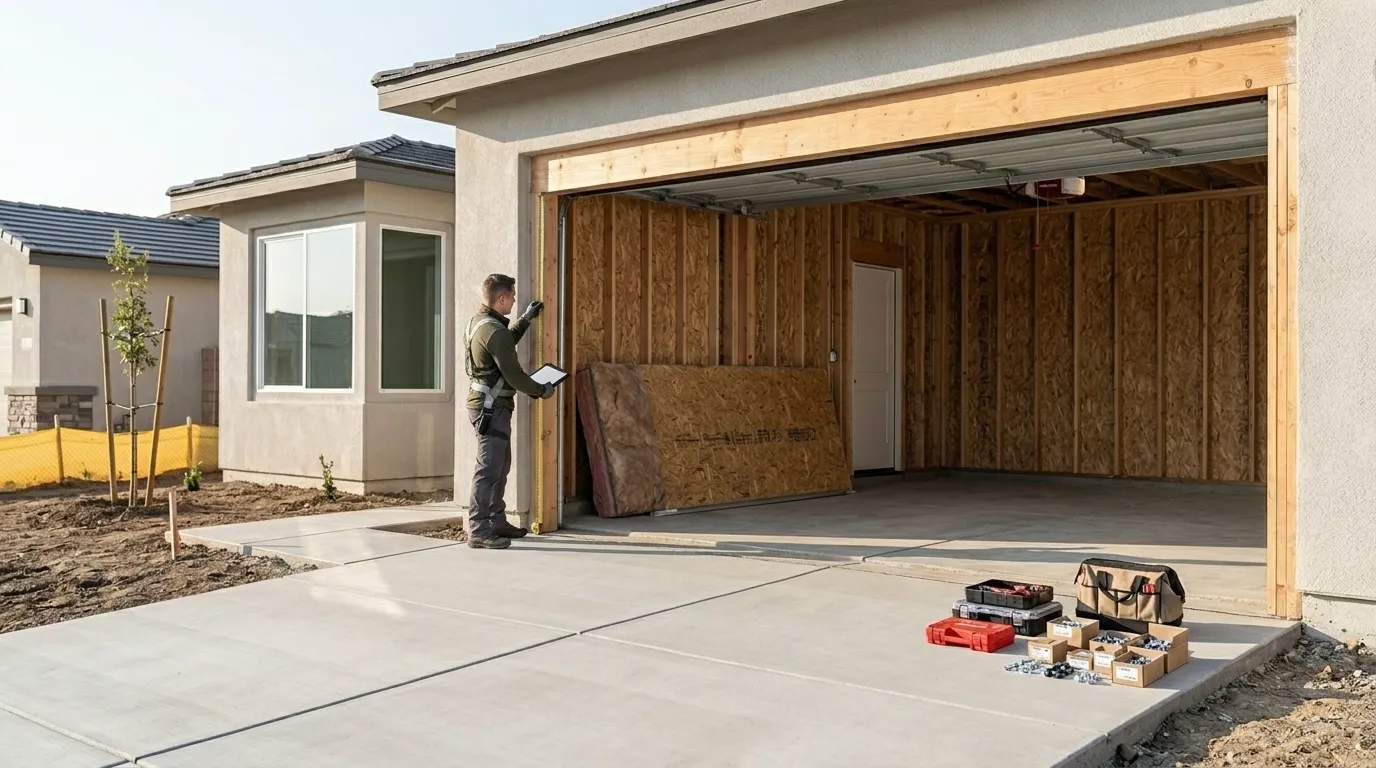
Most of the housing across this service area went up between 1977 and 2015, with the bulk of it dating to the 1980s and 90s. That matters because a torsion spring is rated for a cycle count, not a calendar date, and a spring installed when a house was framed in 1985 has been through three to four decades of daily openings by now. It's not a question of if it breaks, it's when.
The climate band here runs cold to moderate, which means steel springs, tracks, and cables go through a real temperature swing every year - baking in summer, then contracting hard in a winter freeze. That contraction is what turns a spring that's been fraying for months into one that snaps on a random Tuesday morning, usually right as someone's backing out for work.
Across the 25 named communities in this service area, the housing stock isn't uniform - some pockets skew older, some newer builds from the 2000s and 2010s - but the pattern holds everywhere: the door hardware ages on its own clock, and cold snaps are what finally push a tired spring or a corroded cable past the point of no return. We see the same failure show up on a 1980s split-level and a 2010s two-story alike, just on a different timeline.
What It Costs
We're not going to put a number here that doesn't match what we'd tell you on the phone, because a spring job on a single 8-foot door and a full opener swap on a double door aren't in the same ballpark, and quoting one figure for both would be dishonest. What drives the cost is the part that failed, the door's width and weight, and whether the track or drum got damaged when the spring or cable let go.
What we can tell you: a broken torsion spring is usually the fastest and least expensive fix of the common emergency calls, because the spring itself is the failure, not the opener or the track. A seized opener motor or a fried circuit board costs more, mostly because of the part itself. A door that's come off its track after a cable snap sits in between, depending on whether the rollers or panel took damage on the way down.
Our honest limitation: we don't give a firm number sight-unseen over the phone for anything beyond a straightforward spring replacement. Once someone's out there and can see the drum, the track, and the panel, you get a real number before any work starts - not a guess that turns into a surprise.
What Can Go Wrong
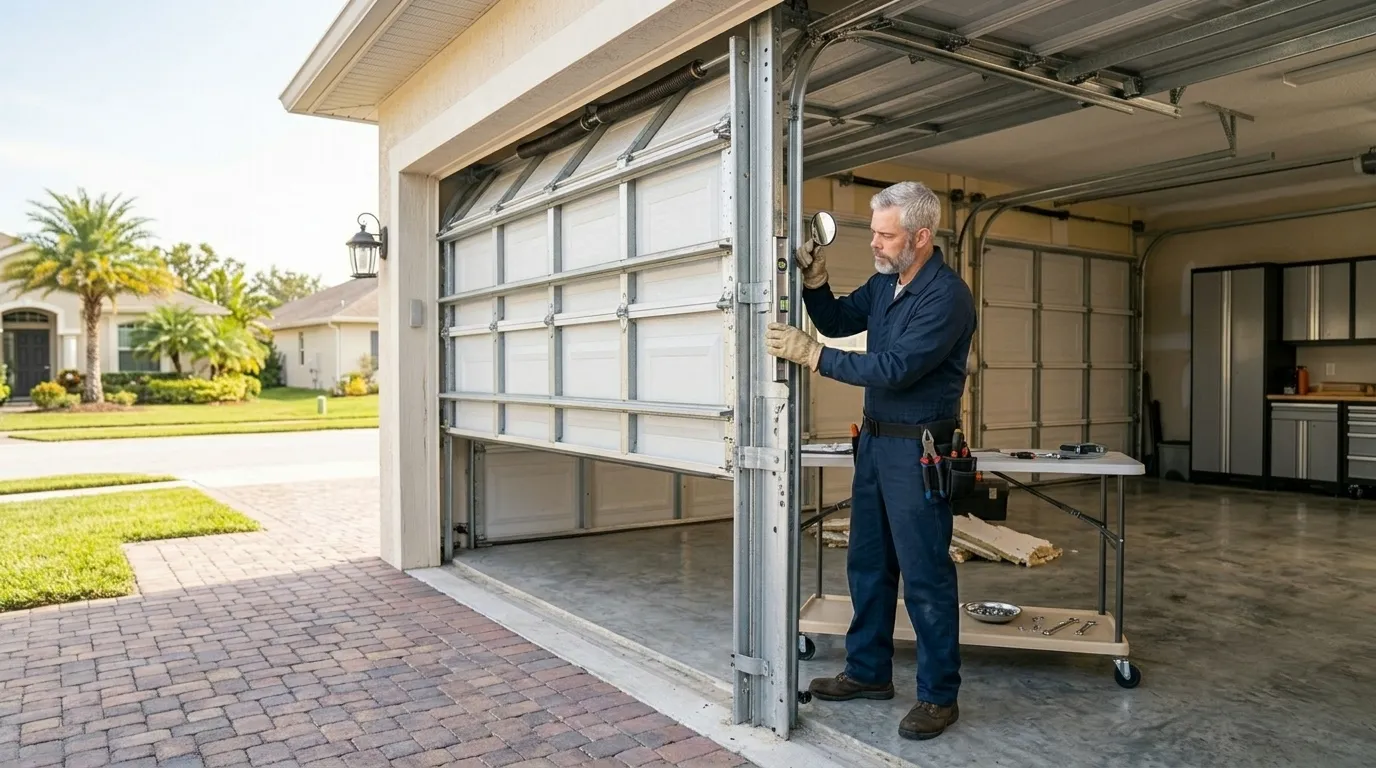
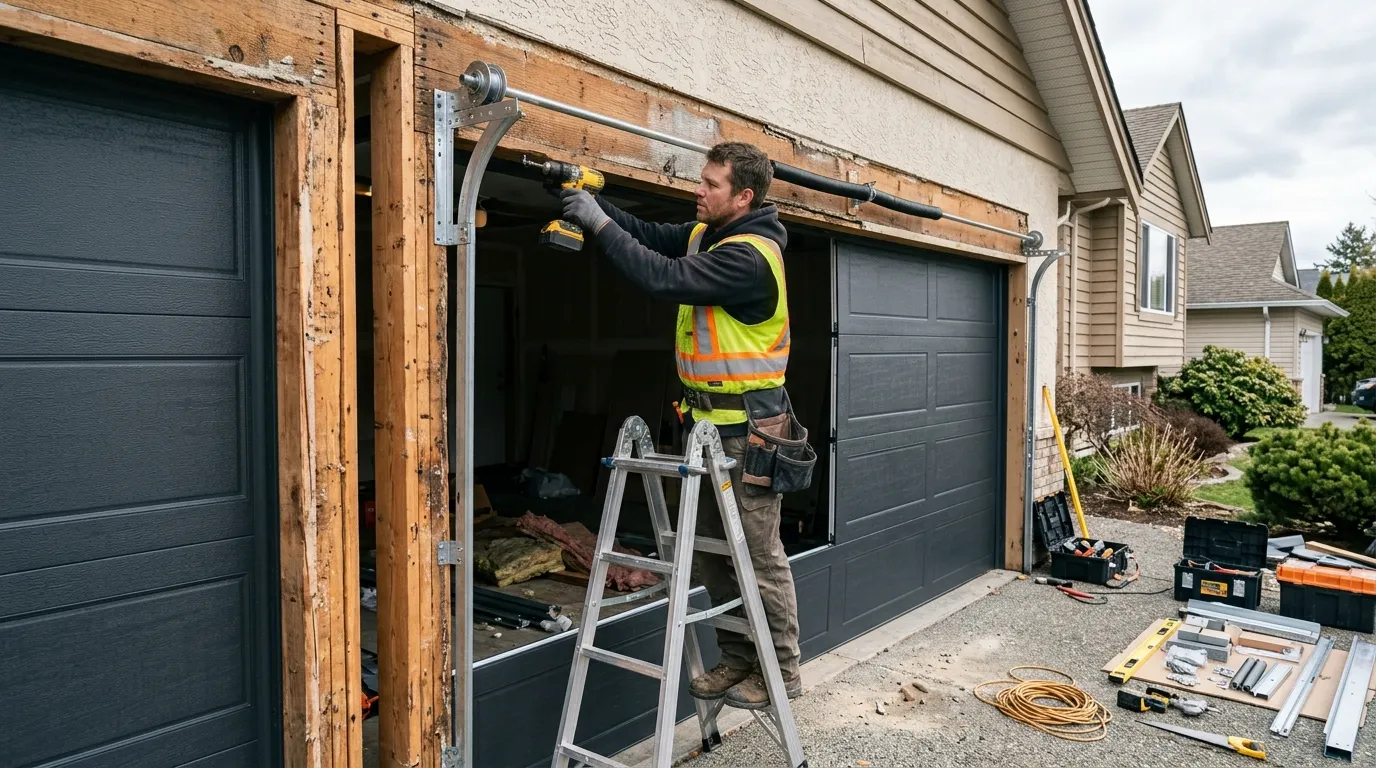
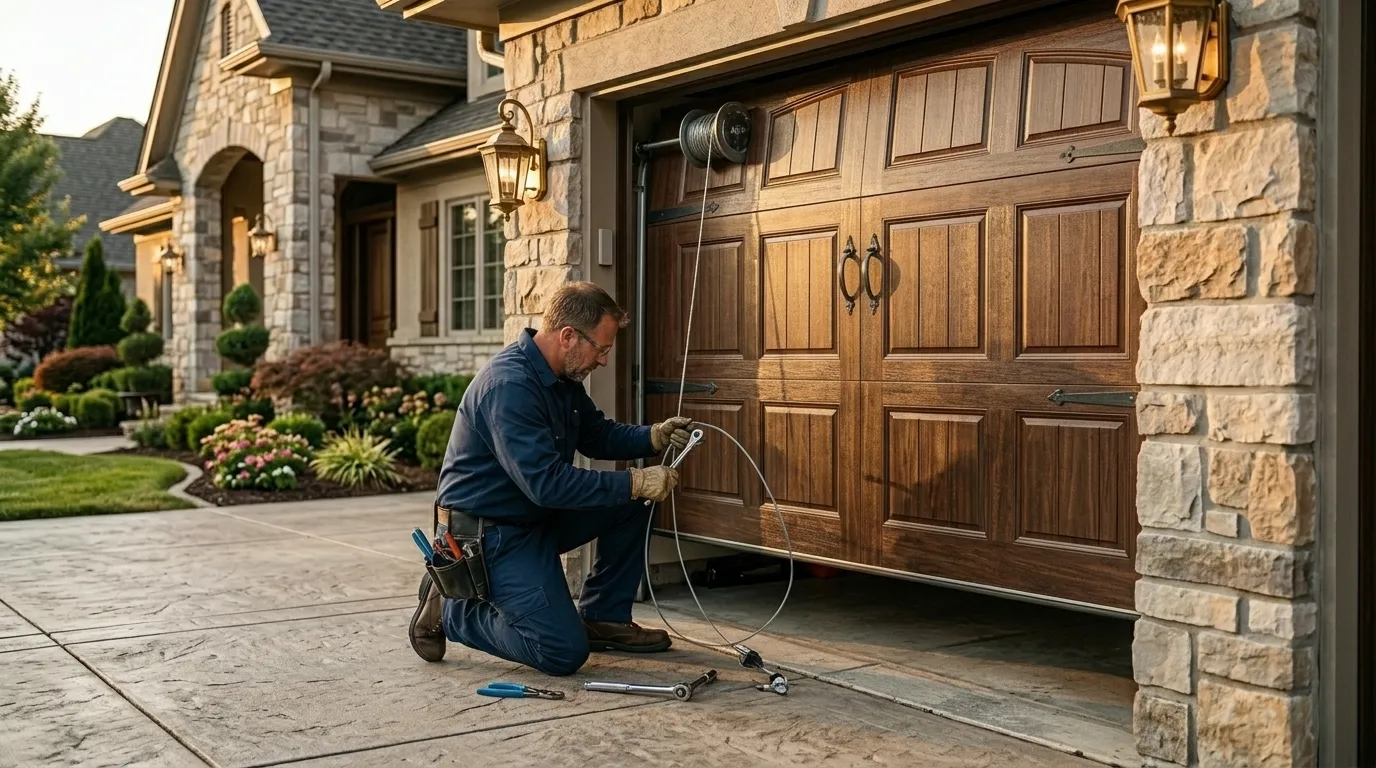
The most common emergency call is a broken torsion spring - one loud bang, then a door that won't budge or that slams down if someone tries to force it by hand. Right behind that is a snapped lift cable, which lets one side of the door drop while the other stays up, twisting the panel on the track.
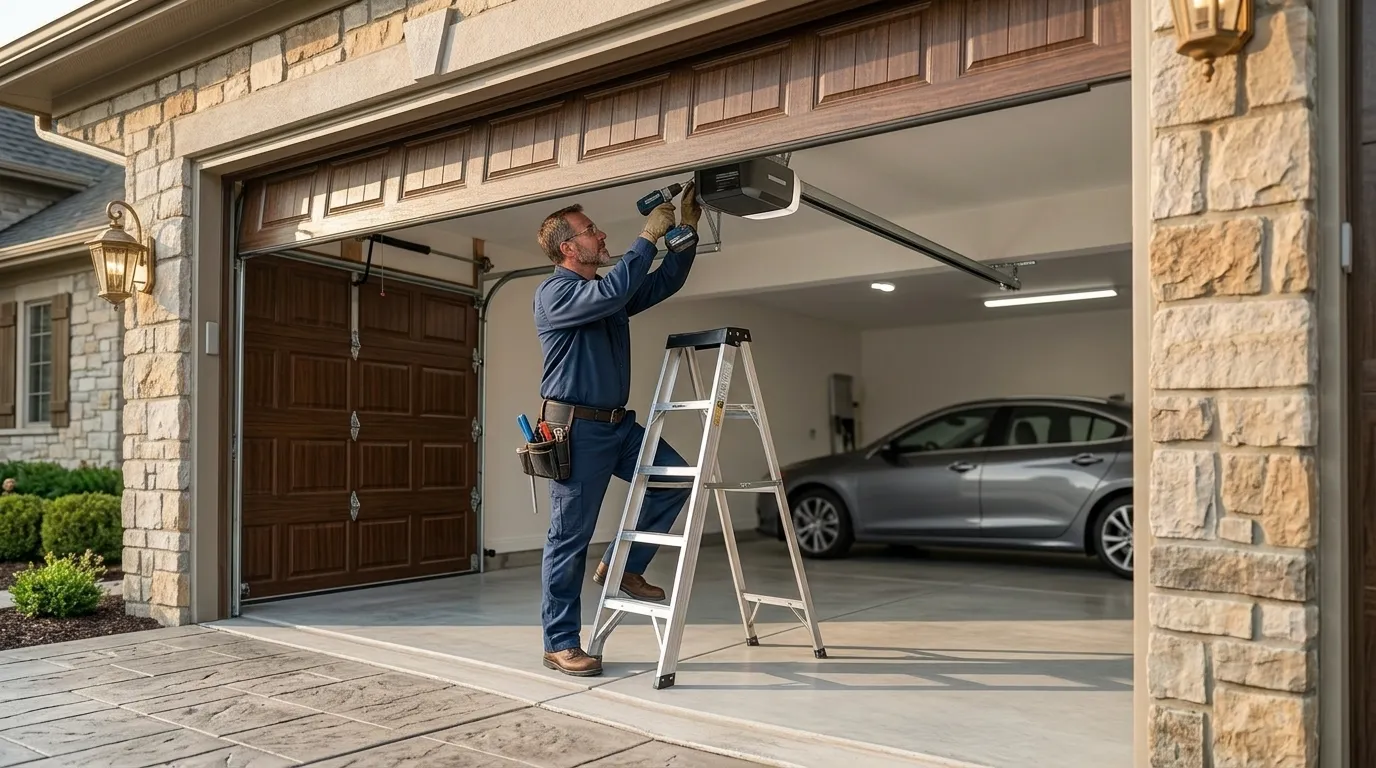
Opener failures are the next tier: a burned-out motor, a stripped drive gear, or a circuit board that's stopped talking to the remote. On older installs from the 1980s and 90s stock common across this area, it's often the board or the capacitor going after decades of use, not the motor itself.
Cold makes photo-eye sensors act up too - condensation or a knocked-loose bracket can make a door refuse to close even though nothing else is wrong. And on doors that have been limping along on a weak spring for a while, the opener sometimes takes the strain instead, which burns it out early and turns what should have been a simple spring job into a two-part repair.
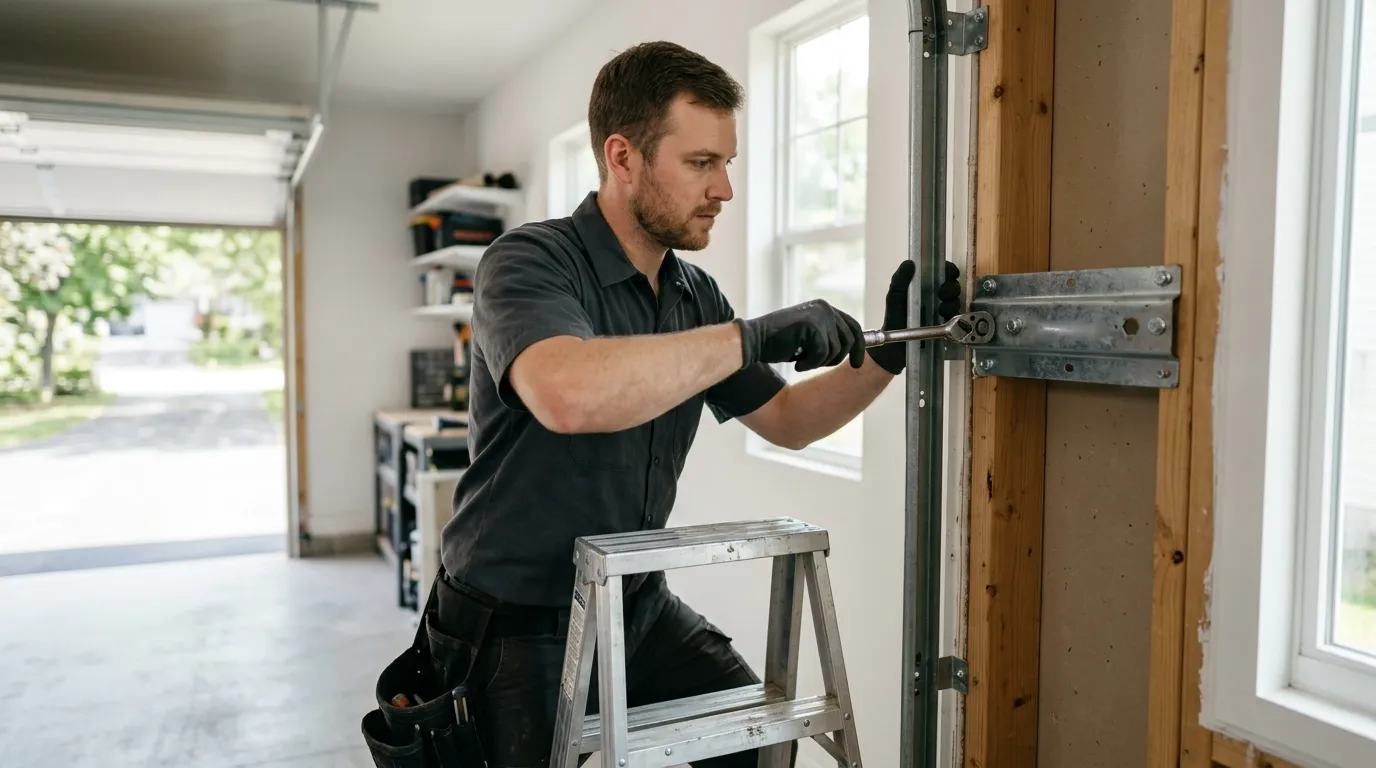
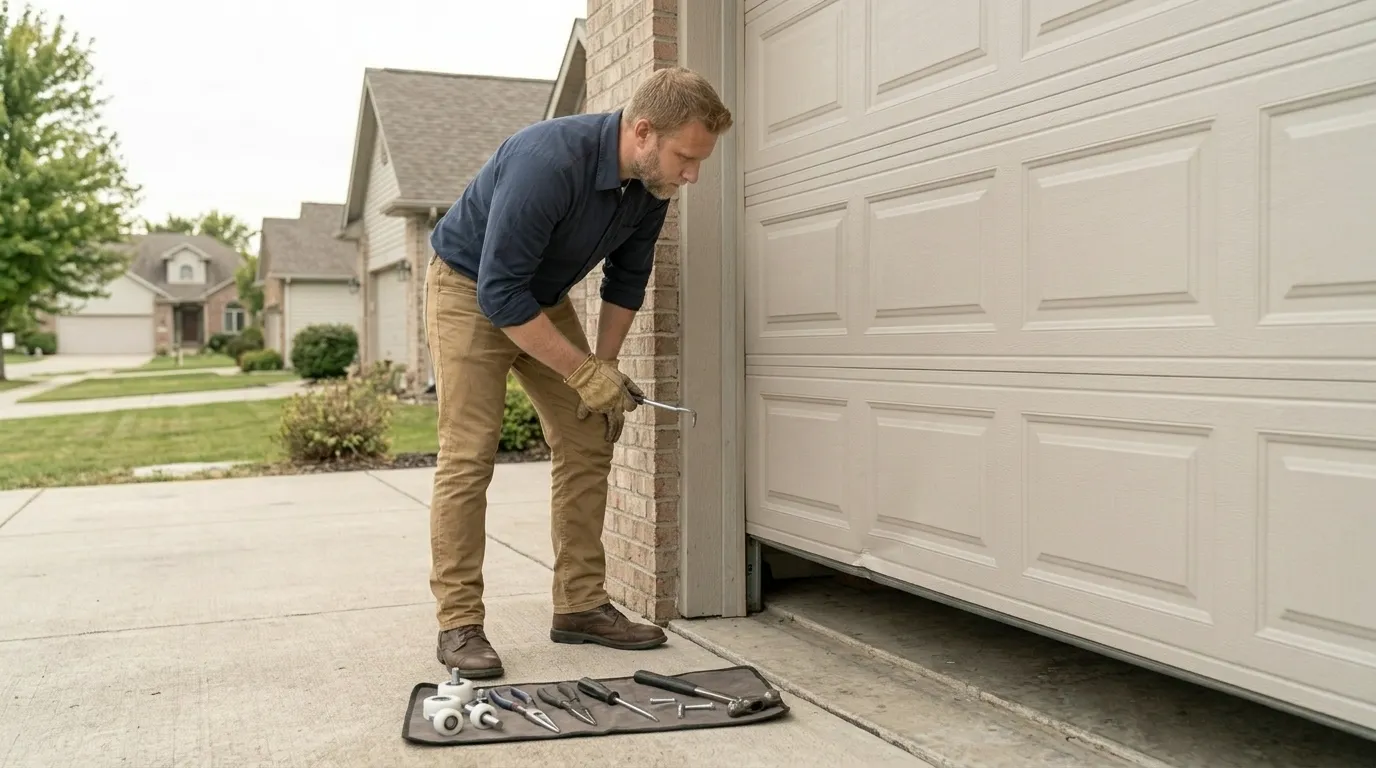
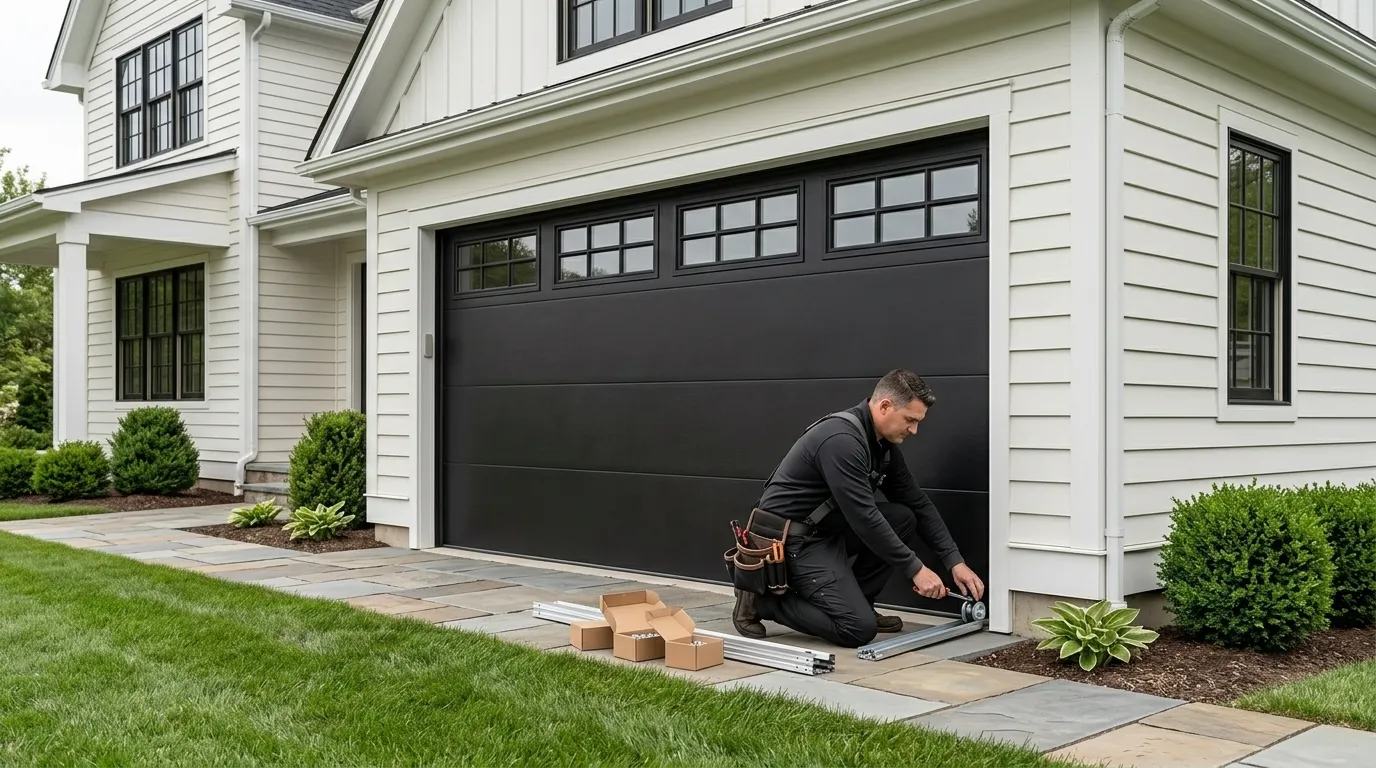
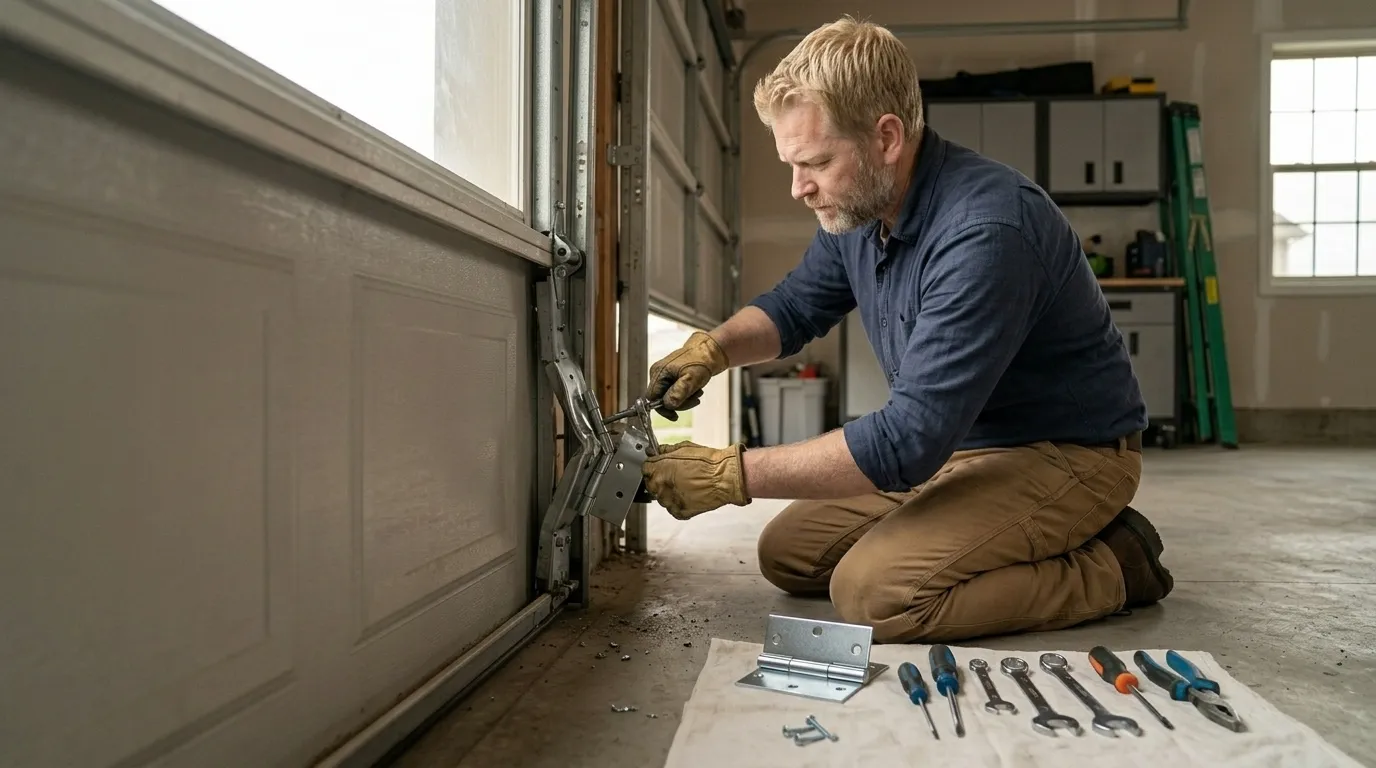
Rollers and hinges wear out more quietly - they don't cause an emergency call on their own, but a worn roller riding in a bent track is often what turns a minor noise into a jammed door at the worst possible time.
How It Shows Up
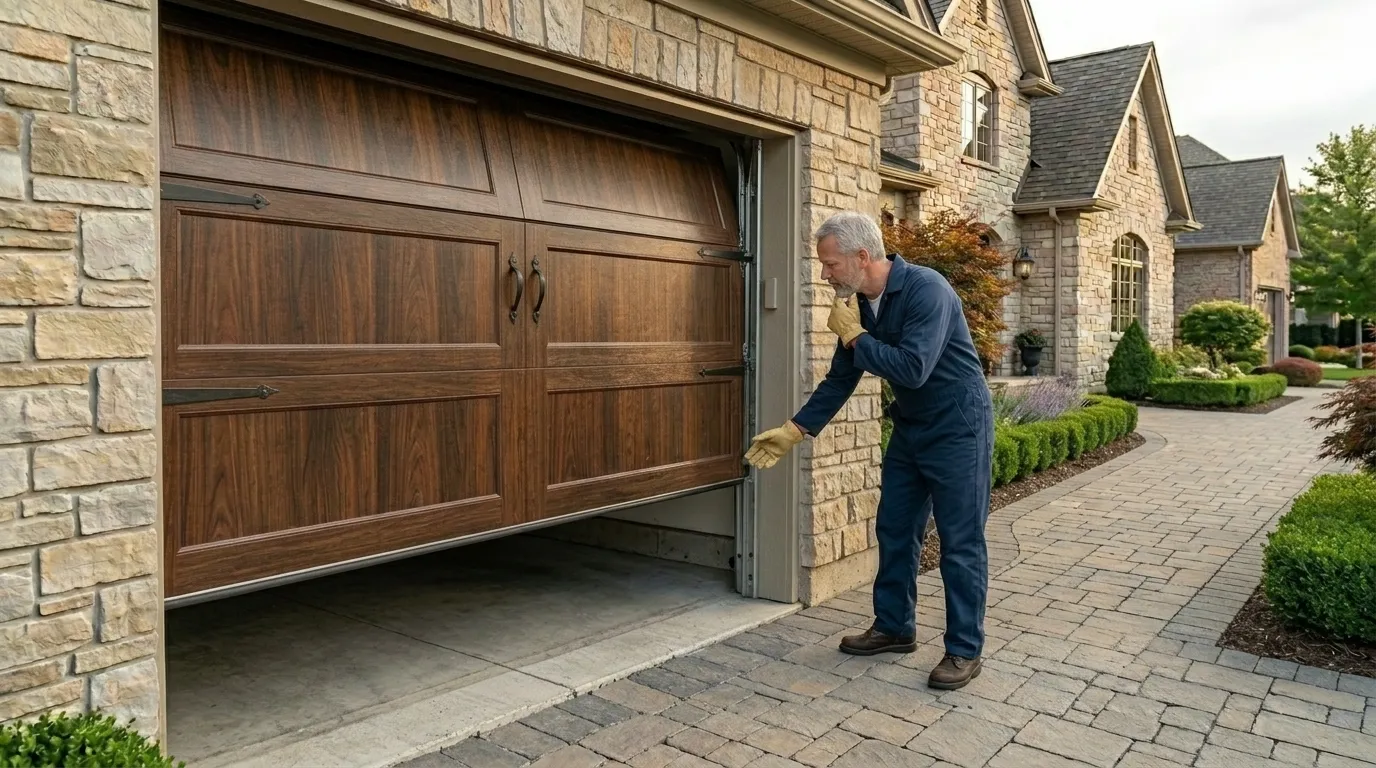
A broken spring almost always announces itself with a bang from the garage, loud enough to hear inside the house, followed by a door that either won't lift at all or feels like it weighs three times what it did yesterday. If someone tries the opener anyway, you'll hear the motor strain without the door moving much.
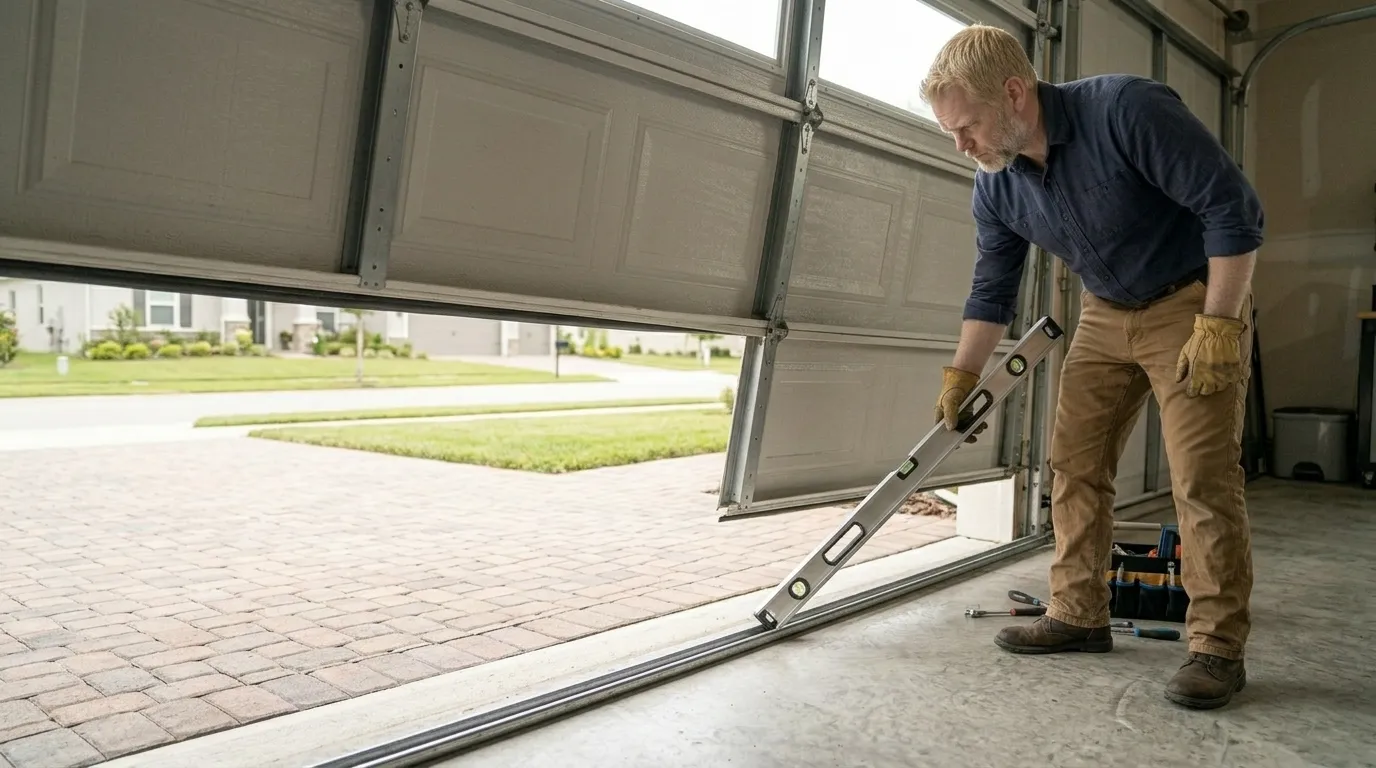
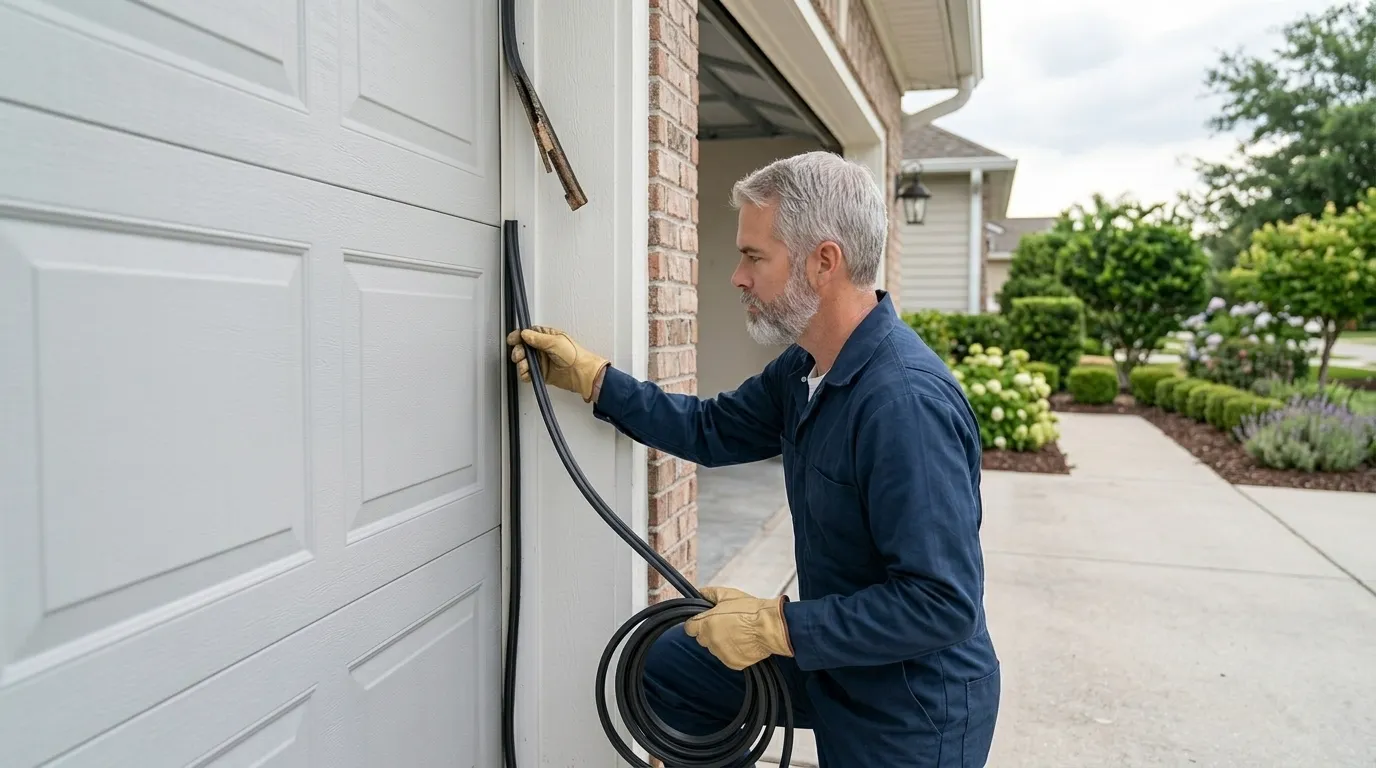
A snapped cable looks different - the door goes crooked mid-travel, one corner dropping lower than the other, sometimes jamming solid in the tracks. Don't force it by hand or with the opener; that's how a panel gets bent.
Opener trouble shows up as the motor running but the door staying put, a remote that works from one spot in the driveway but not another, or a door that reverses right before it touches the floor. In cold weather specifically, watch for a door that refuses to close and blinks the opener light - that's usually a photo-eye sensor knocked out of alignment or fogged over, not a structural problem.
A door that's slow to respond, groans on the way up, or needs a shove to get moving isn't an emergency yet, but it's usually a spring or roller on its way out. Catching that before the bang saves a Saturday morning.
How it works
From “it’s stuck” to “it’s fixed”
01
Tell us what’s wrong
Describe the symptom - won’t open, loud bang, opener runs but the door won’t move.
02
On-site diagnosis
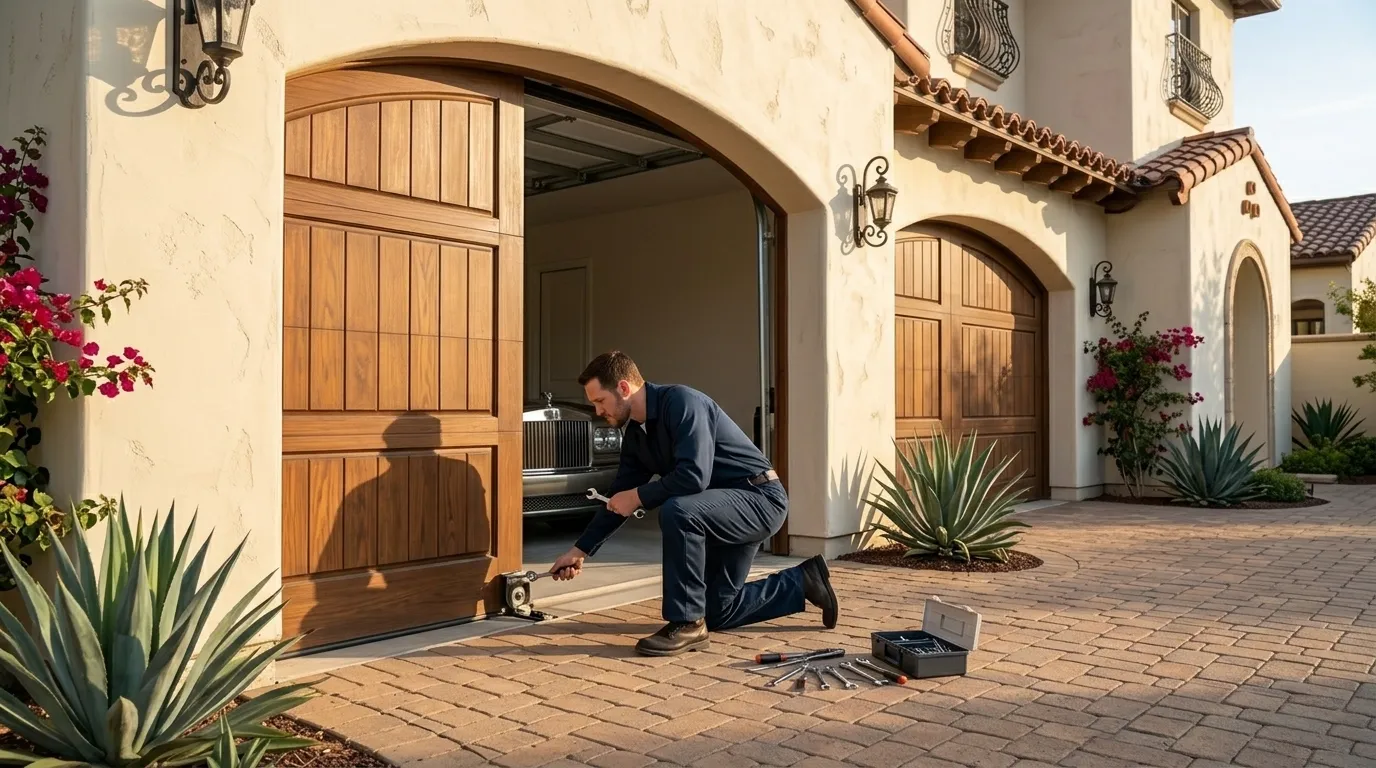
A technician tests the door under power and by hand and finds what actually failed.
03
Clear, up-front plan
You get the fix that’s needed and what drives the cost - before any work starts.
04
Repaired & tested
The repair is done, the door is set true and tested, and the work area left clean.
Serving Orem, UT - tell us what your door’s doing and we’ll take it from there.
Straight answers about garage door repair in Orem. Still unsure? Ask us directly.
My garage door won't open and I heard a loud bang - what happened
That bang is almost always a torsion spring letting go. The spring holds the weight of the door, so once it breaks, the door either won't lift or feels extremely heavy if you try by hand. Don't force it with the opener - that strains the motor and can bend the track. Leave it shut and call for a spring replacement.
Is it safe to open my garage door manually if the opener isn't working
It depends on why the opener stopped. If a spring or cable broke, the door can be far heavier than it looks or drop suddenly, so forcing it by hand is how people get hurt. If it's just an opener issue with the spring intact, manual release usually works fine. When you're not sure which it is, treat it as unsafe and call.
Why does my door act up more in winter
Cold makes steel springs and cables stiffer and more brittle, so a spring that's already worn is more likely to snap on a hard freeze morning than in mild weather. Cold also causes condensation on photo-eye sensors, which can make a door refuse to close even when nothing mechanical is wrong. Both are common calls once temperatures drop.
Do you give a price over the phone for emergency repairs
For a straightforward broken spring, we can give a close estimate over the phone. For anything involving a damaged track, bent panel, or opener failure, we need to see the door first - the cost depends on exactly what's damaged, and we'd rather give you a real number on-site than a guess that changes once we're there.