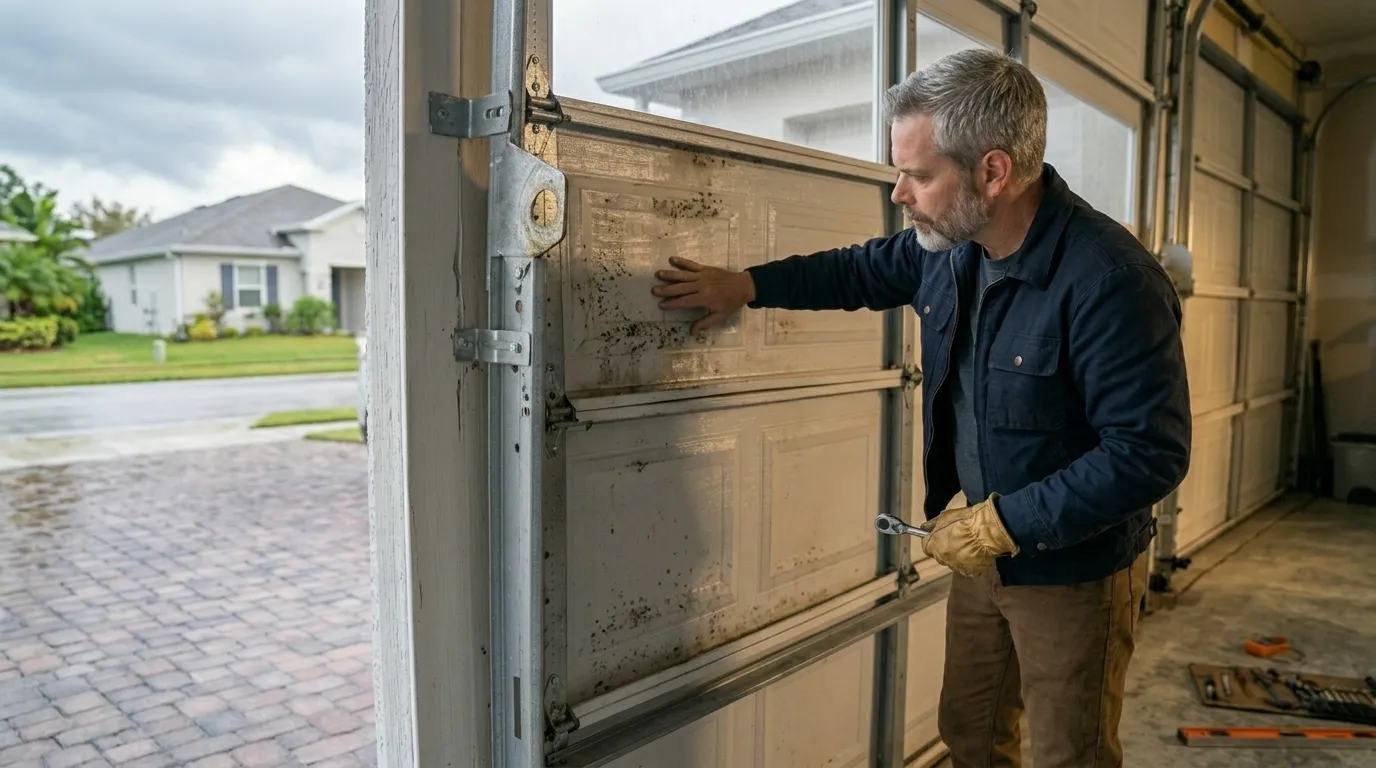
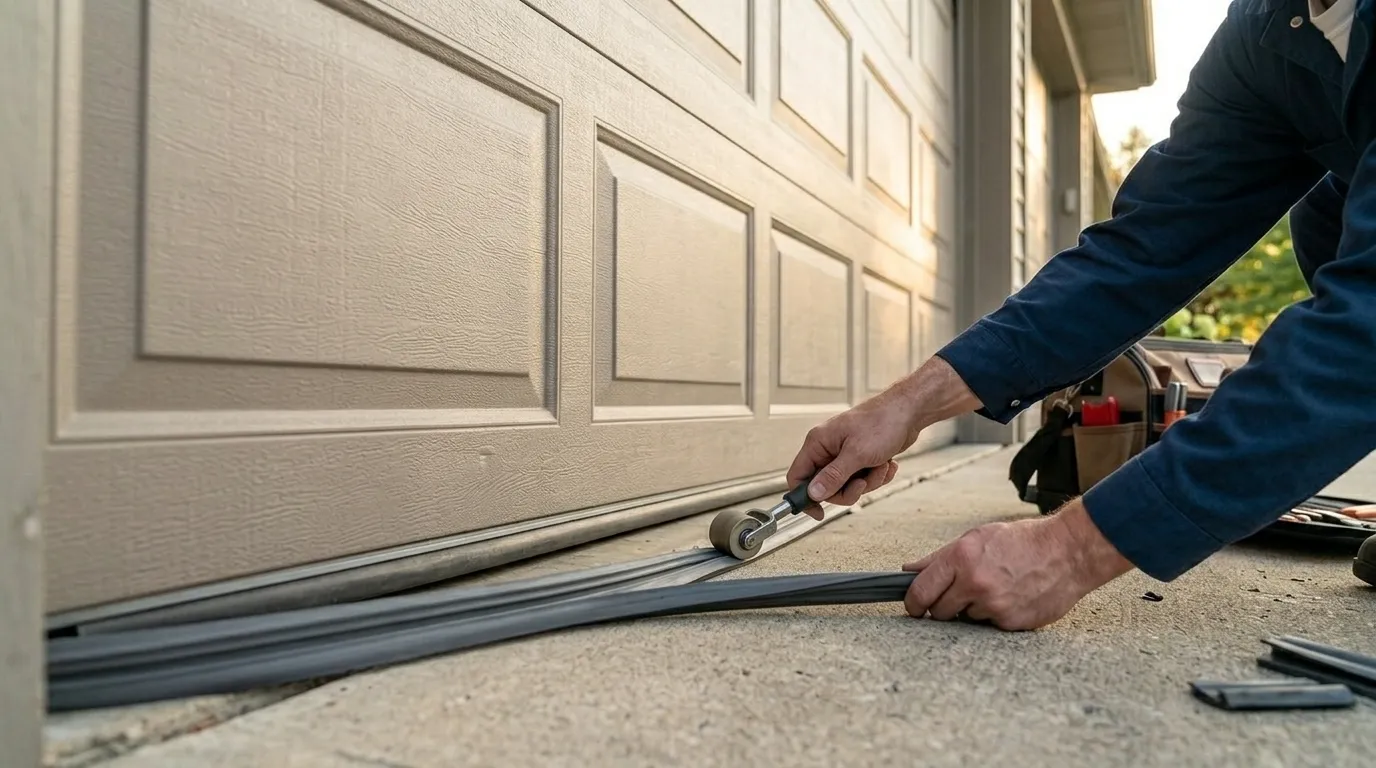
Torsion spring repair for Orem homes built mostly between 1977 and 2015, sized for cold-climate cycle counts and the area's typical two-car door weight.
Most of the housing stock in this service area went up between 1977 and 2015, with a median build year around 1999, and a heavy concentration of 1980s and 90s construction spread across the 25 named neighborhoods we cover. That matters for springs because builders in that window standardized on torsion spring setups sized for the door weights common then - double-car steel doors on a single center shaft. Thirty-plus years of daily cycling on the original-spec springs is a lot of wind-and-unwind, and a lot of these houses are now hitting the point where the spring's rated cycle count runs out.
The climate band here is cold-moderate, and that's the other half of the story. Cold snaps stiffen the steel and make a spring that's already near the end of its life more likely to snap on a cold morning rather than fail gradually. We see the same pattern house after house: a spring that was fine in September lets go in January because the metal doesn't flex the way it did when it was new and the shop was 70 degrees.
Houses with a north-facing garage bay, or ones set back where the door doesn't see direct sun in winter, tend to run a few degrees colder inside the garage than the rest of the block, and that shows up in spring failures skewing toward the coldest stretch of the season rather than being spread evenly across the year.
What It Costs
We don't quote a spring repair over the phone without knowing the door weight, spring size, and whether you've got one spring or two, so we're not going to put a number here that doesn't apply to your door. What drives the price on any given job is the spring wire size and length (bigger, heavier doors need heavier springs), whether it's a single or double door, and whether one spring failed or both are close enough to end-of-life that replacing just one doesn't make sense.
Given the median household income across this service area sits at $107,617, most of the jobs we run are straightforward repairs, not full door replacements - a spring swap is a fraction of the cost of a new door, and for a door in otherwise decent shape it's almost always the right call over replacing the whole unit.
The honest limitation here: if your door is original to a house built in the earlier part of that 1977-2015 window and the track, rollers, and cables are all worn together, a spring alone won't fix a door that's failing in three places at once. We'll tell you straight if that's what we're looking at instead of selling you a spring and having you call back in a month.
What Can Go Wrong
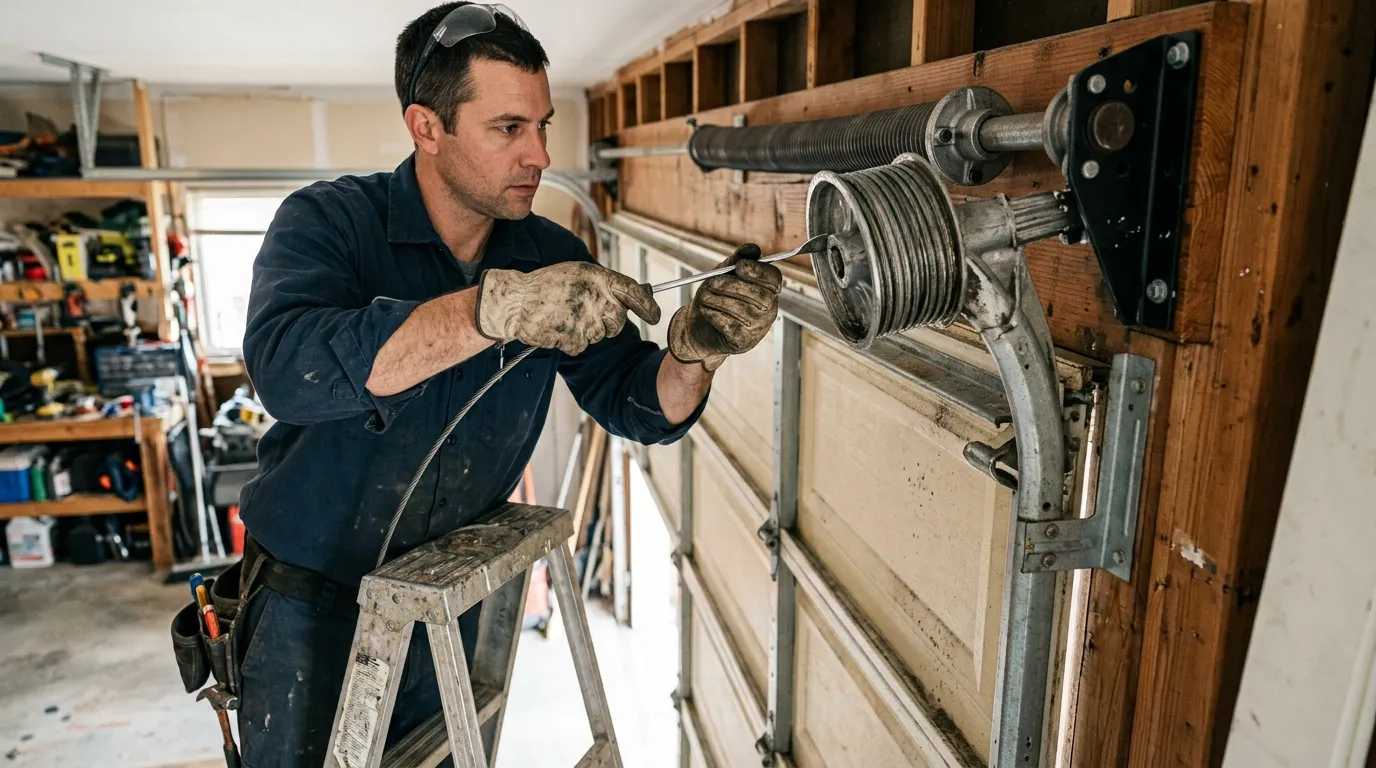
A torsion spring under tension is not something to guess at. The most common mistake we see from DIY attempts is winding the spring with the wrong size winding bar or not counting turns correctly, which either leaves the door underpowered - the opener strains and burns out early - or overpowered, which snaps cables and can put the door off its track hard enough to bend a panel.
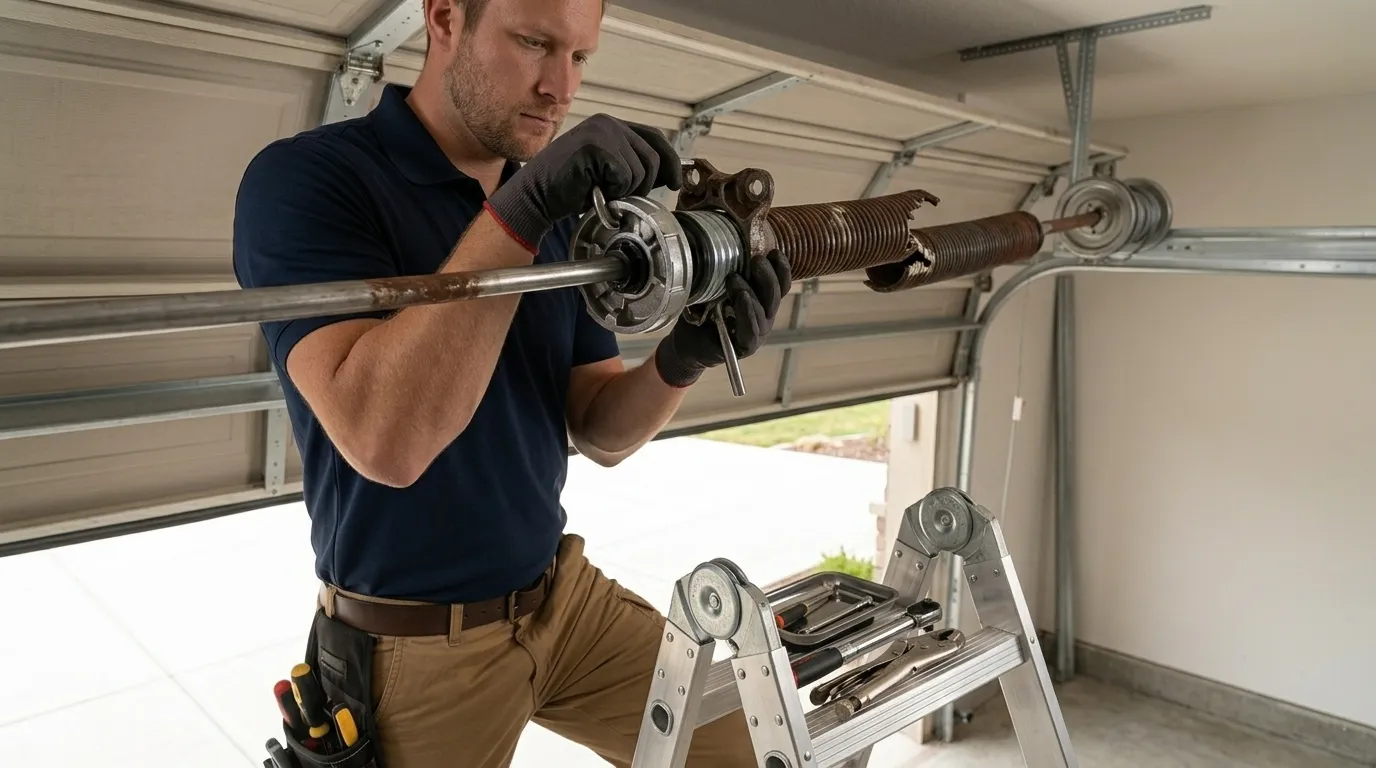
On the double-door setups common in the 1980s and 90s construction across this area, a single spring failure often gets missed because the second spring is still holding some of the weight, so the door still opens, just slower and heavier on the opener. Left alone, that second spring fails weeks later, usually with the door partway open and nobody standing near it - which is the scenario that causes an injury, not the initial snap.
We also see cables fray on the same schedule as the springs, since they're taking the same cycle load. Replacing a spring without checking the cable next to it is a callback waiting to happen, and we check both every time regardless of which one brought us out.
How It Shows Up
The classic sign is a loud bang from the garage - that's the spring letting go, usually with the door closed. After that, the door either won't budge by hand or the opener strains, grinds, and reverses partway up. Some owners notice it earlier: the door starts closing crooked, dropping faster on one side than the other, which means one spring is weaker than its pair rather than fully broken yet.
A slower warning sign is the door getting noticeably heavier to lift manually over a few weeks - if you ever disconnect the opener and lift by hand, a healthy spring setup should leave a properly balanced door nearly weightless. If it's getting harder to lift month over month, the spring is fatiguing, not failing all at once, and that's the easier and cheaper time to call.
Across the towns and unincorporated areas we run in - American Fork, and the rest out to Eagle Mountain - the failure pattern tracks the housing age more than the town line. Older stock in any of these areas shows the same symptoms at the same rate.
How it works
From “it’s stuck” to “it’s fixed”
01
Tell us what’s wrong
Describe the symptom - won’t open, loud bang, opener runs but the door won’t move.
02
On-site diagnosis
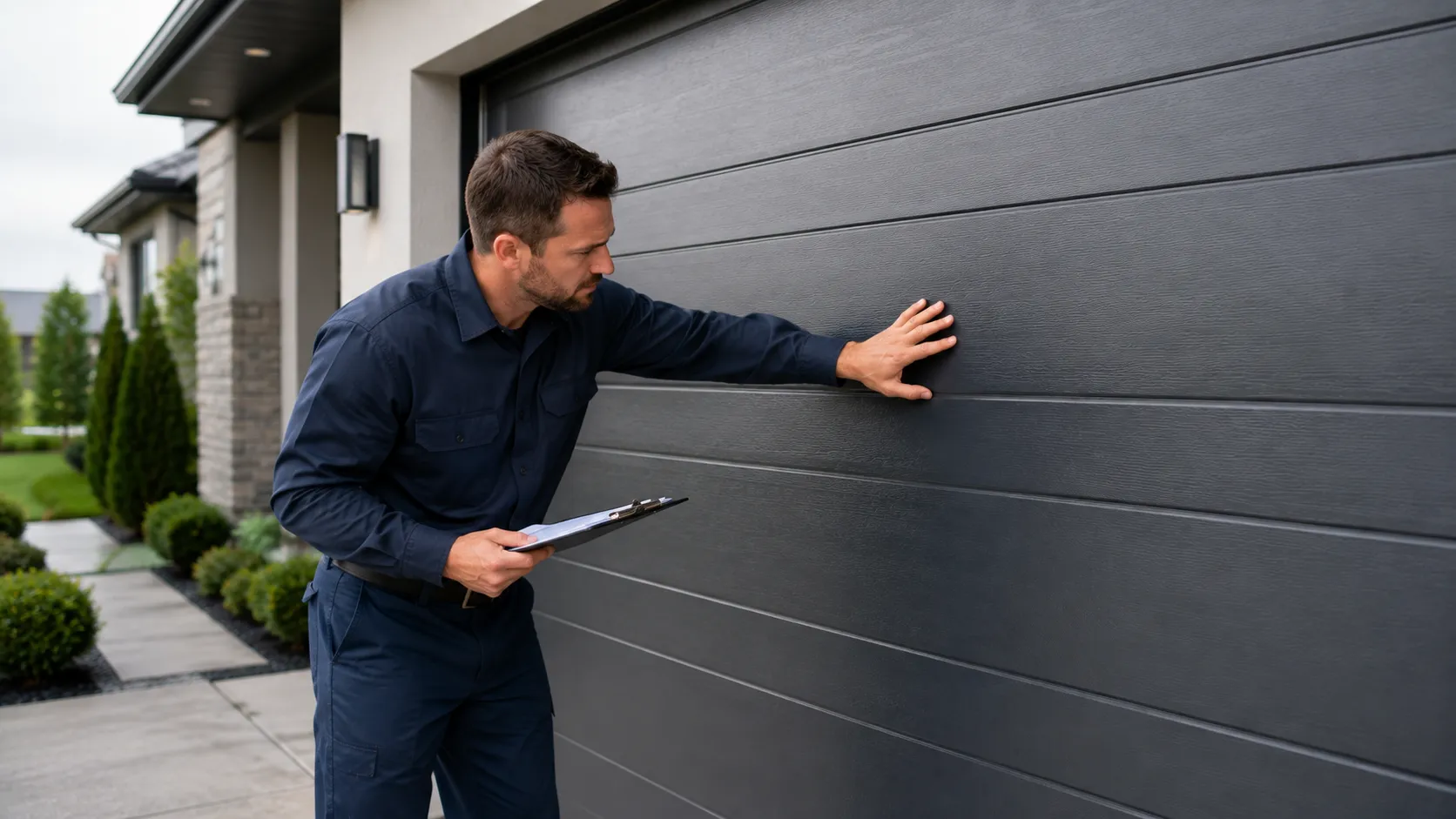
A technician tests the door under power and by hand and finds what actually failed.
03
Clear, up-front plan
You get the fix that’s needed and what drives the cost - before any work starts.
04
Repaired & tested
The repair is done, the door is set true and tested, and the work area left clean.
Serving Orem, UT - tell us what your door’s doing and we’ll take it from there.
Straight answers about garage door repair in Orem. Still unsure? Ask us directly.
How do I know if it's the spring or the opener?
If the door is heavy or won't move by hand with the opener disconnected, it's the spring. If the door moves fine by hand but the opener struggles or won't respond, the problem is likely the opener or its gearing, not the spring. A loud bang followed by a dead-weight door is almost always a broken spring.
Can I just replace one spring if I have two?
You can, but we usually don't recommend it. Springs on a double-torsion setup age at close to the same rate since they carry the same cycles, so if one has failed the other is often close behind. Replacing both at once costs less than two separate service calls a few weeks apart.
Is it safe to leave a broken spring until the weekend?
Leave the door closed and don't force it open or closed by hand or with the opener. A broken spring means the door's full weight is unsupported, and forcing it can bend track or drop the door suddenly. It's fine to wait a few days if the door stays put, just don't operate it.
Why did my spring break in winter and not before?
Cold makes spring steel less flexible, so a spring that's already near the end of its cycle life is more likely to snap outright in a cold stretch rather than just weaken gradually. It's less about the cold causing damage and more about cold exposing a spring that was already due.