Doing It Yourself
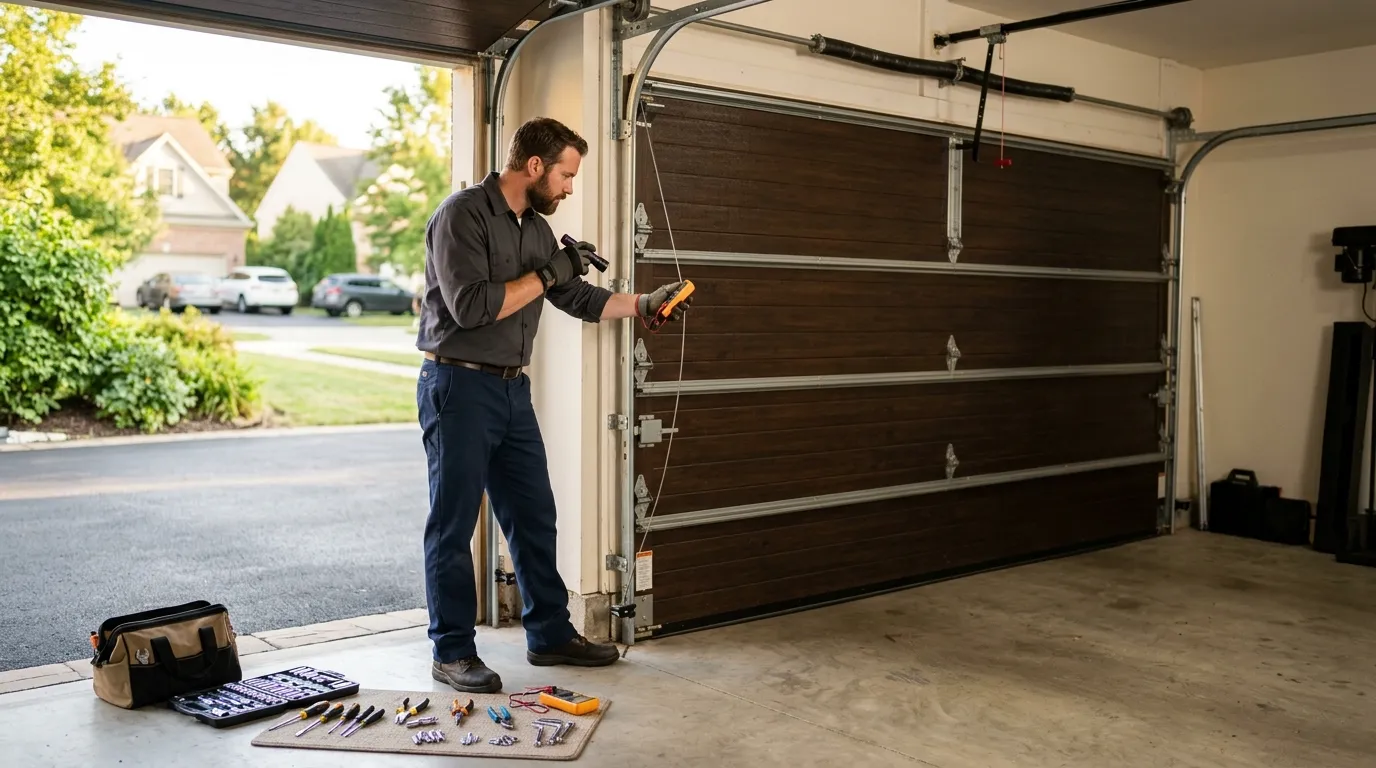
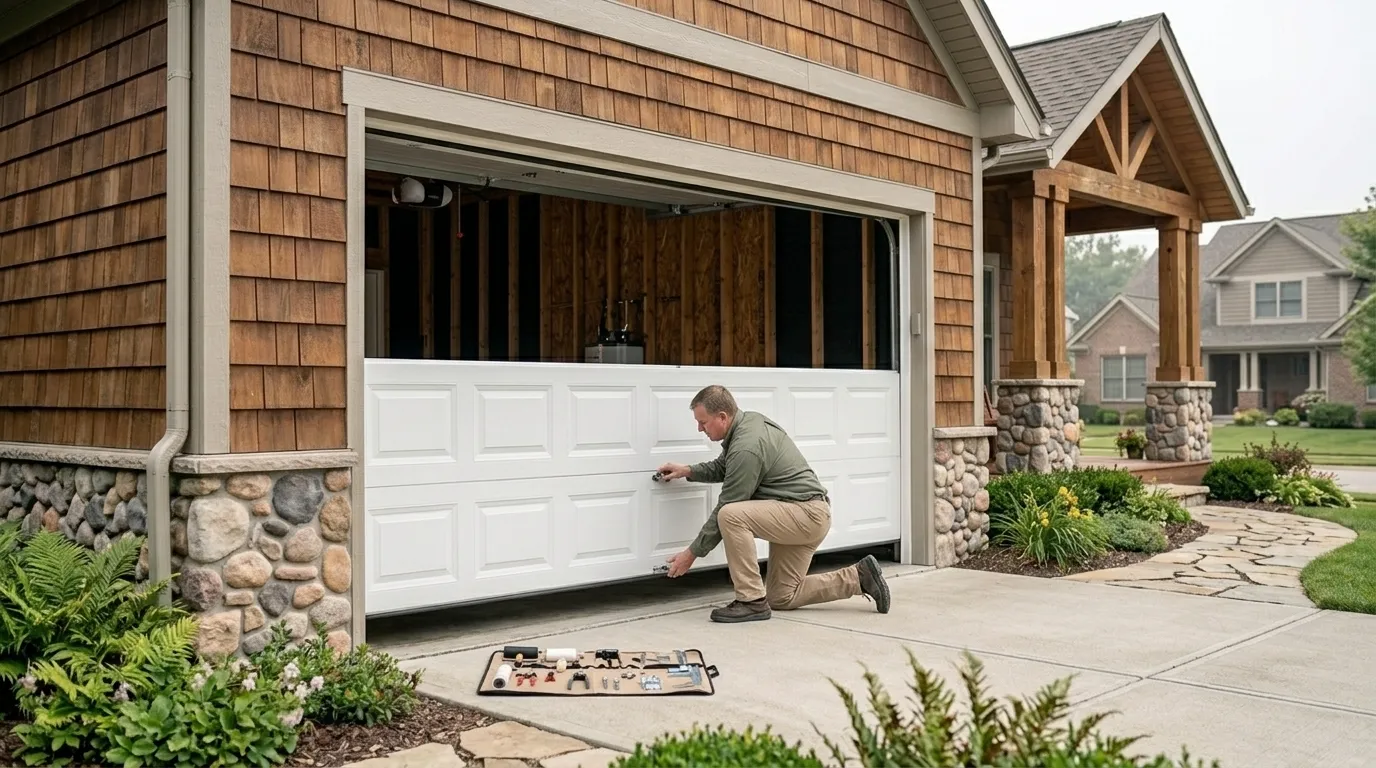
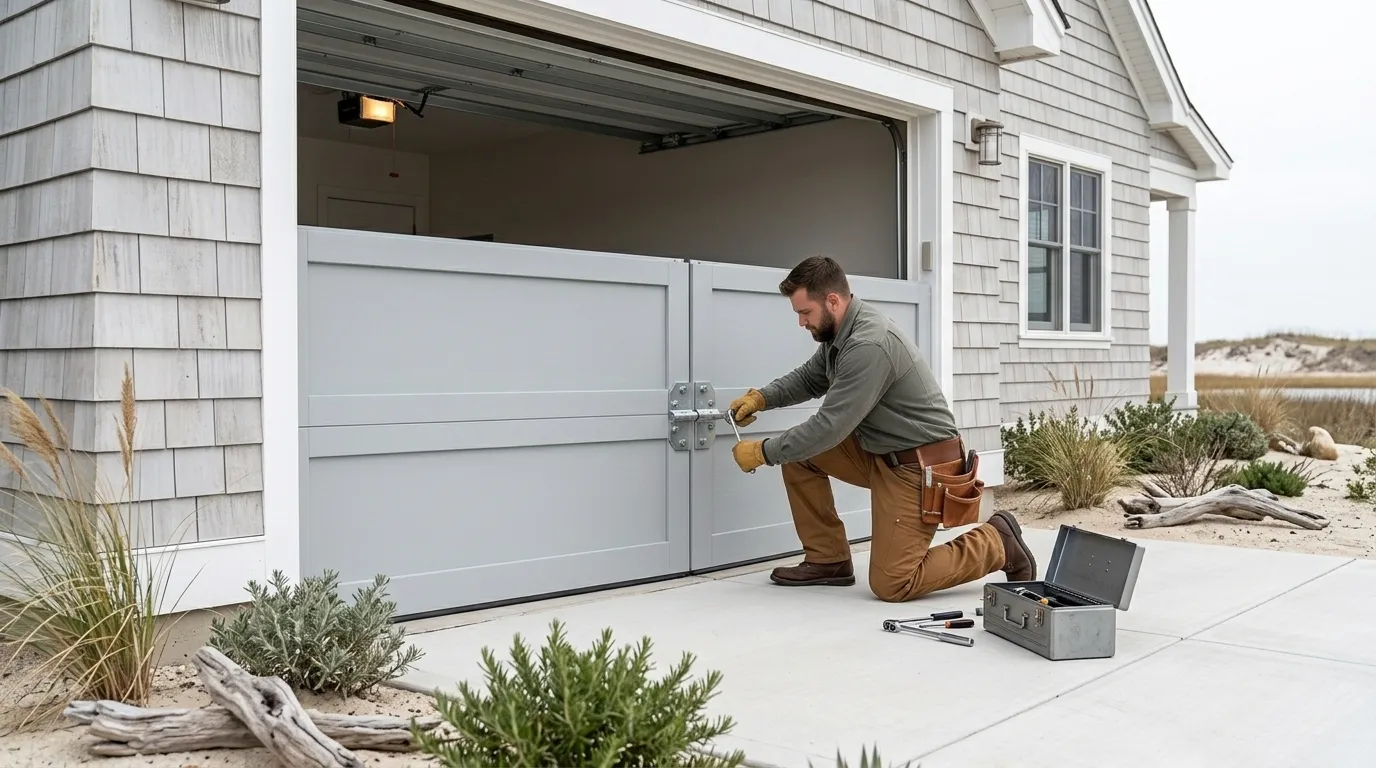
There's a short list of things worth checking before you call anyone. Wipe down the photo-eye sensors near the bottom of the tracks - dust and cobwebs on a new build's still-open lot settle on those lenses fast, and a dirty or knocked-out-of-alignment eye is the single most common no-reason-the-door-won't-close call we'd otherwise drive 16 miles for. Look at the two sensors and confirm both have a steady light, not a blinking one.
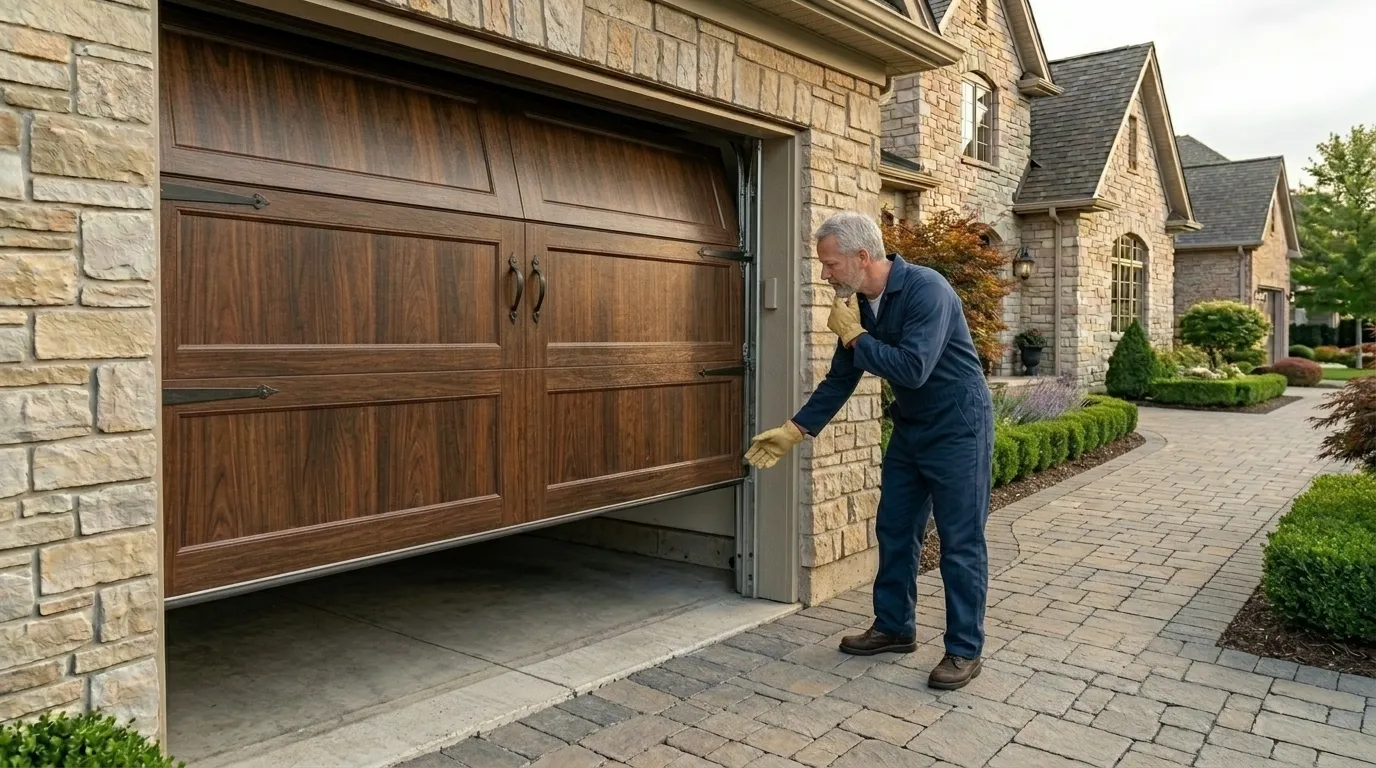
You can also lubricate rollers and hinges with a garage-door-specific lubricant, not household oil, twice a year. And if the door reverses partway instead of closing, check the track for anything resting against it - a bike, a bin, a stray toy.
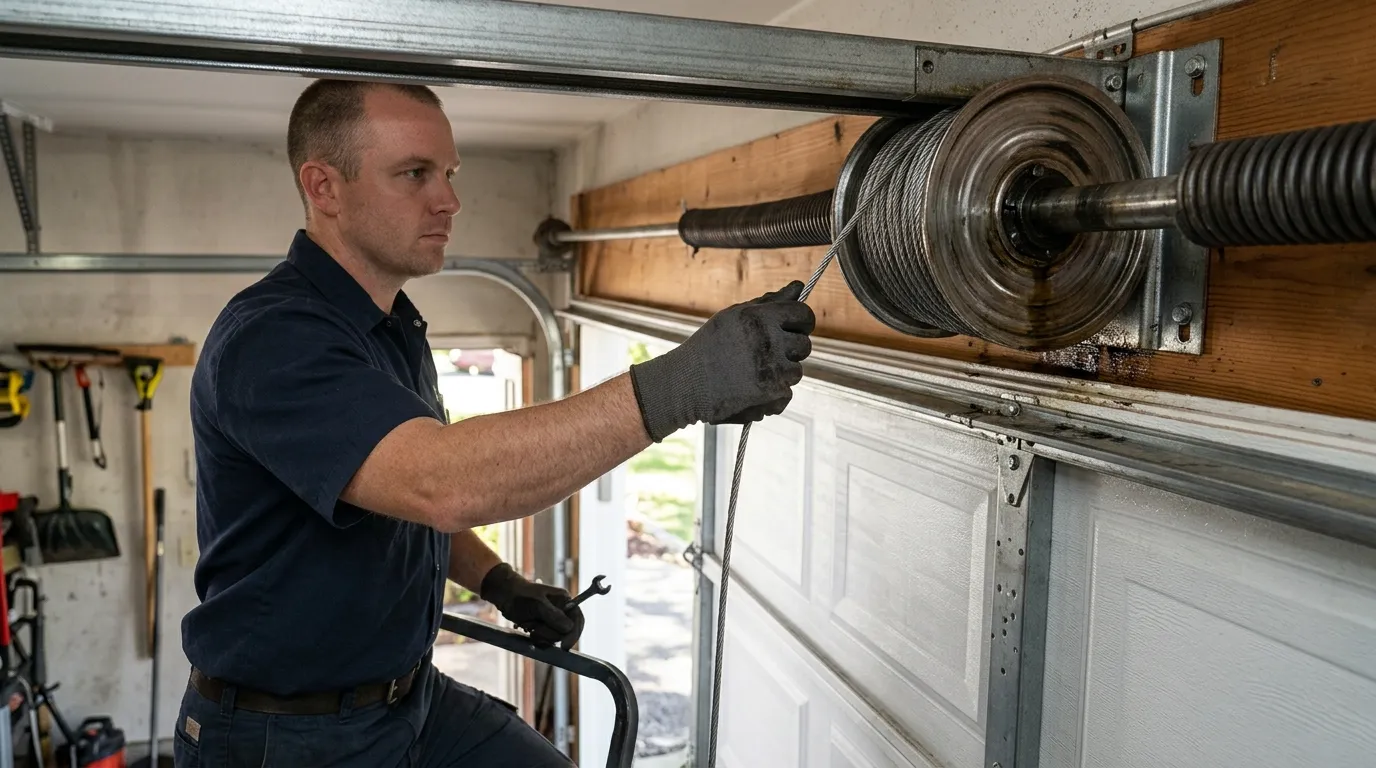
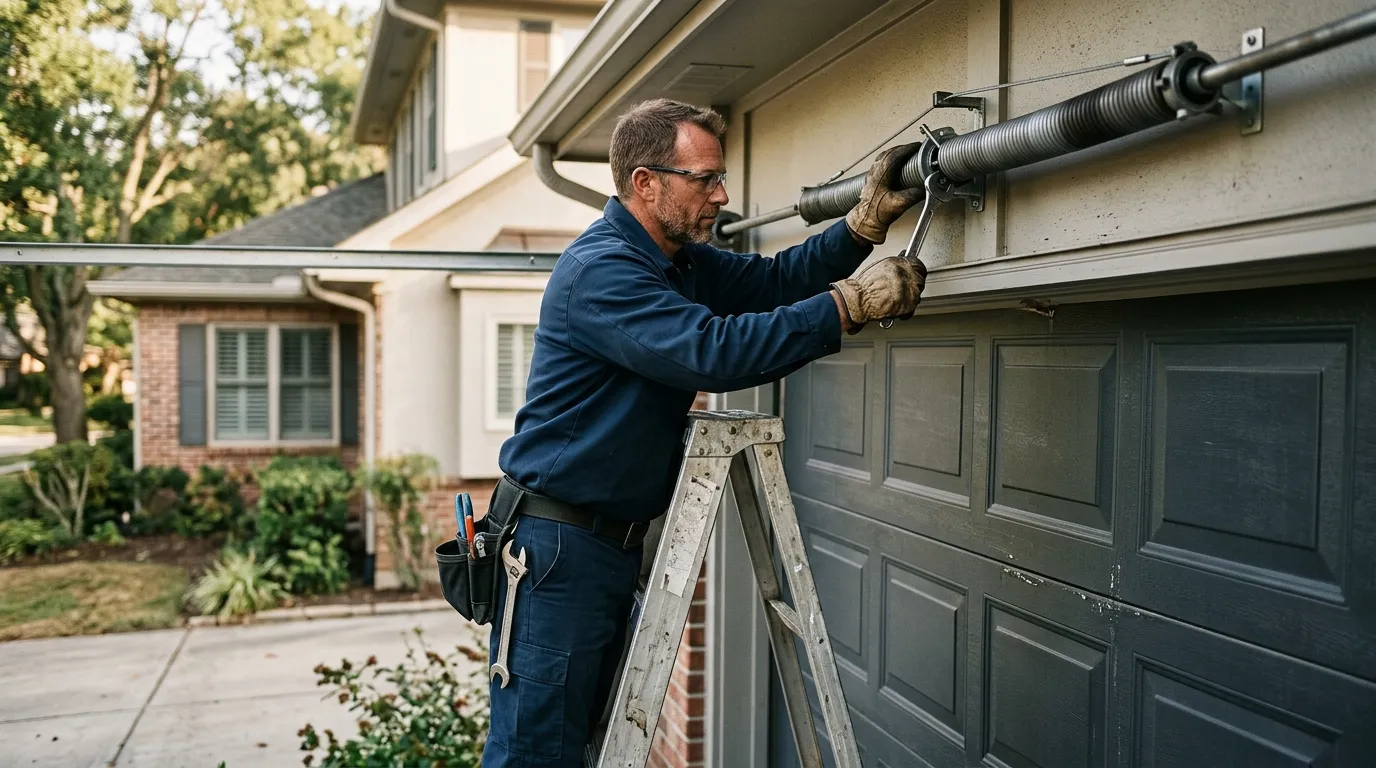
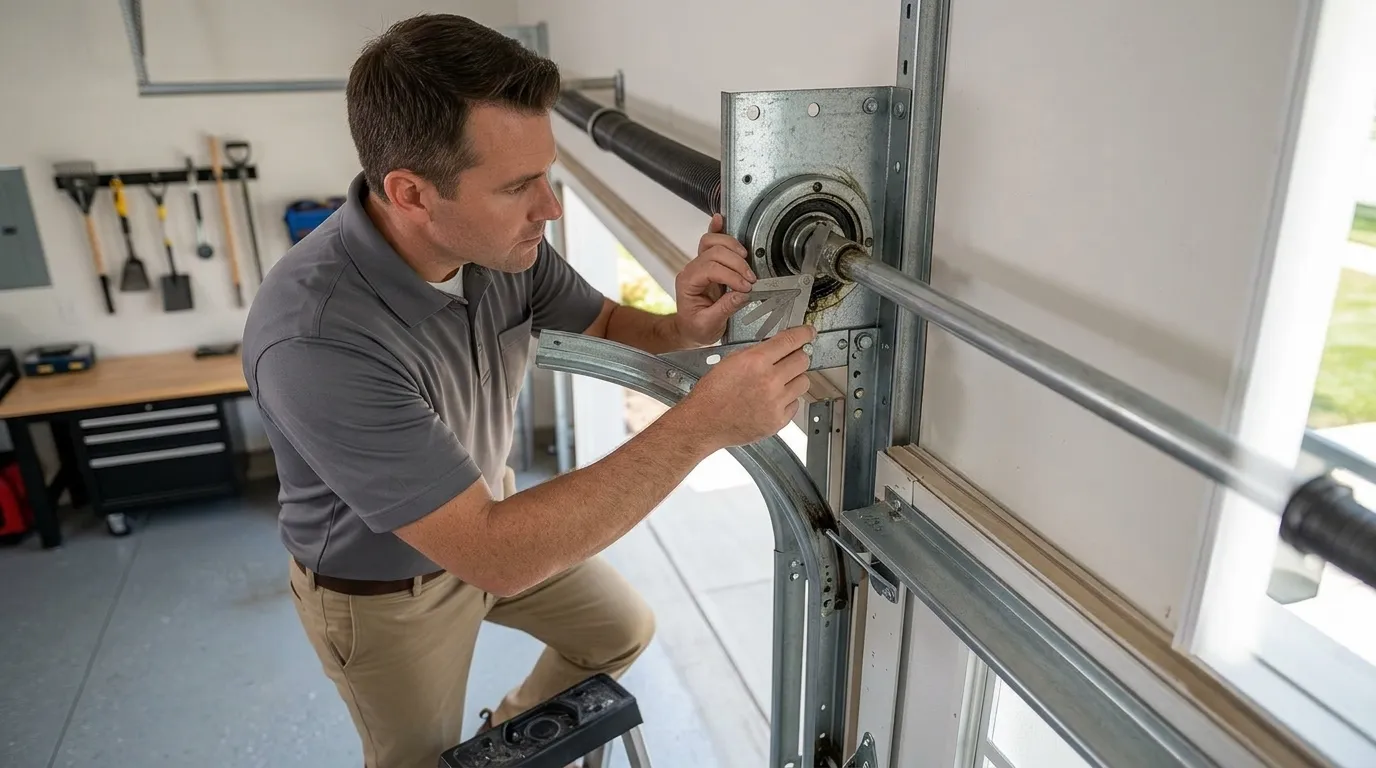
What you should not do: touch a torsion spring, loosen the cable drums, or try to force a door back onto a bent track. Torsion springs store enough force to break bones, and on a door this size that risk doesn't change because the house is newer. If the door won't move and you hear a bang beforehand, that's a broken spring - stop there and call.
What Can Go Wrong
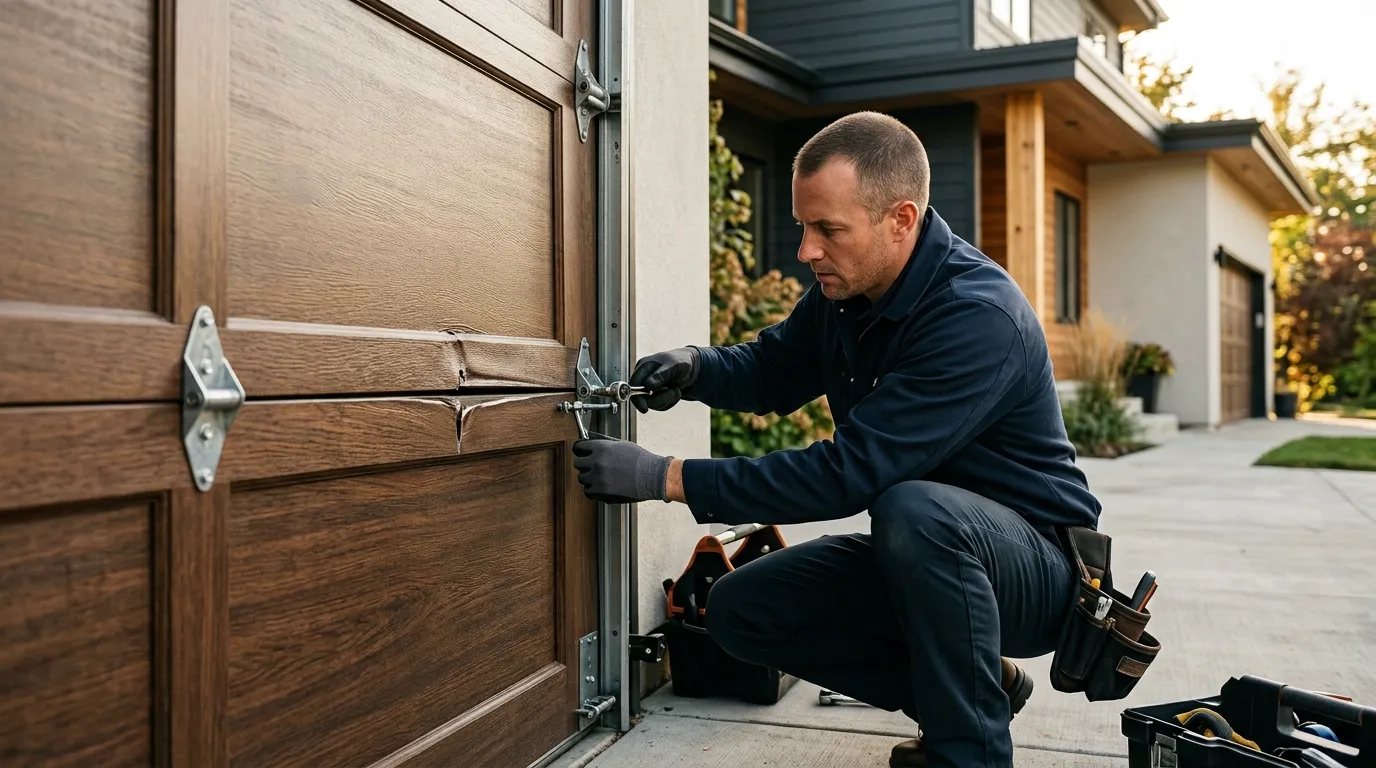
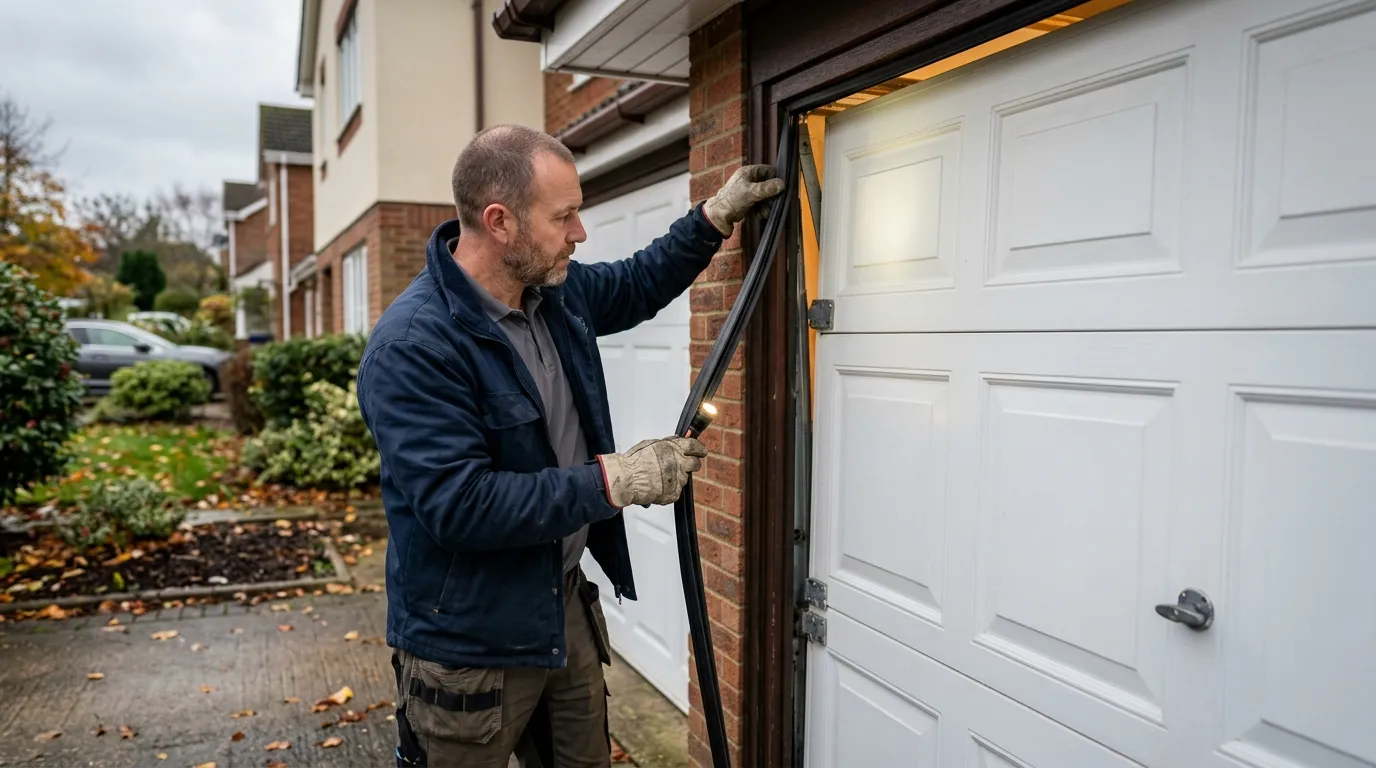
Foundation settling is the fault we see most in this town specifically. A lot of Eagle Mountain went up on cleared, graded lots inside the last fifteen years, and slabs on newer fill keep shifting for a few years after the pour. That shift pulls the track brackets on the wall out of plumb, which binds the rollers and eventually cracks a hinge or bends the track itself - a fault that's rare on a street that settled decades ago.
The second common call is opener board failure. Circuit-board openers, standard on homes built this century, are more sensitive to power surges during cold nights than the older chain-drive relay openers on 1980s hardware. A hard freeze followed by a heater kicking the circuit can trip a board that a mechanical relay opener would have shrugged off.
We also see broken torsion springs on double doors carrying insulated panels - heavier sections mean more cycles of stress on a spring that's undersized for the door, especially if a builder installed a standard-weight spring on an upgraded insulated door.
What Causes It Around Here
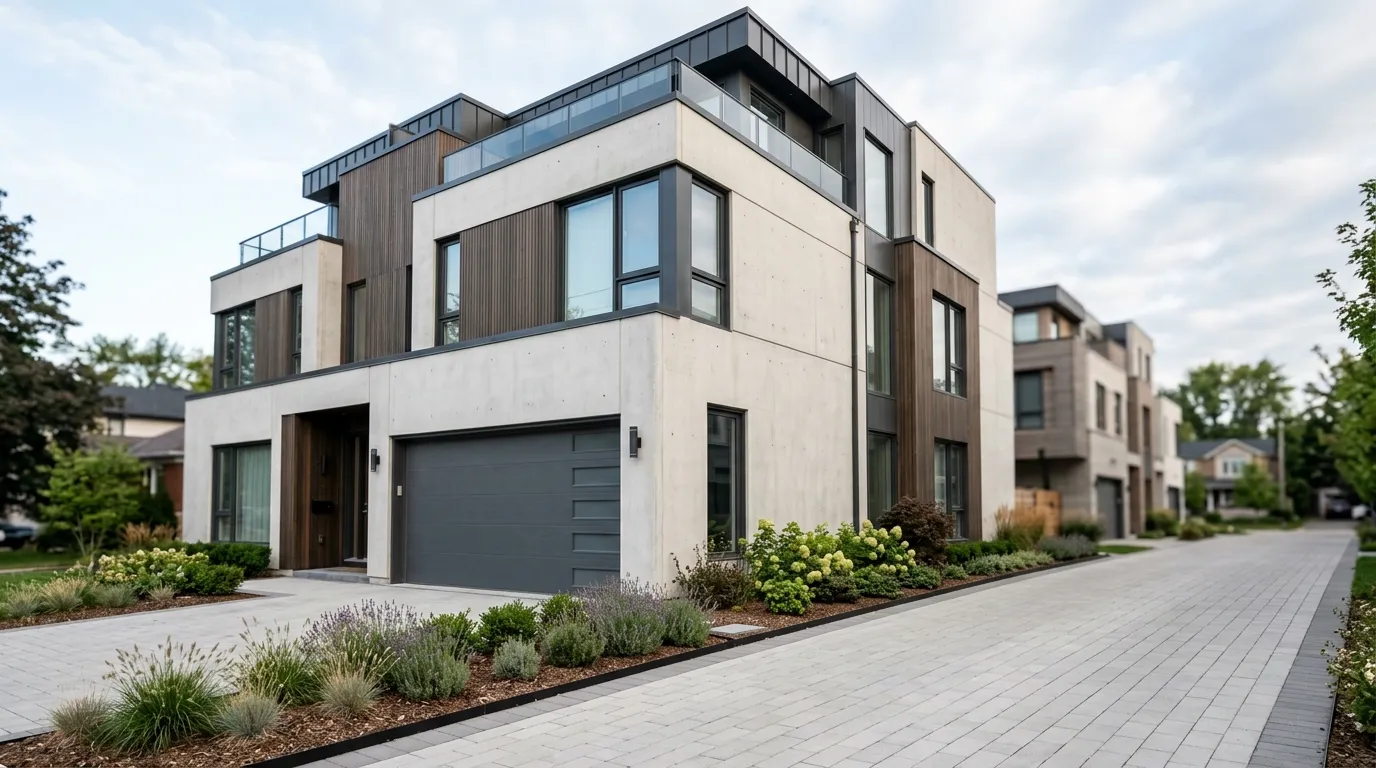
Two things drive most of the calls we get from this side of the valley. First, the build year: with a median home dating to 2010, Eagle Mountain's garages are almost all running insulated steel doors on lighter, more sensitive circuit-board openers rather than the mechanical relay units still common on older housing stock. Second, the ground itself - newer subdivisions on graded, cleared lots keep settling for years, and that settling is what pulls track brackets out of true and puts uneven load on hinges and rollers.
Winters here sit in the same cold-moderate band as the rest of our service territory, and the cold snaps that follow a clear night do more damage to circuit boards than to the older relay-style openers, which just don't have the same components to fail. With 11,851 households in town, most on lots developed well after 2000, this settling-plus-cold-electronics combination is close to the default fault we plan for before we even see the door.
What It Costs
We don't publish a flat number for emergency calls because the actual cost depends on what's actually broken - a photo-eye realignment is a different job than an opener board replacement, and a bent track from a settling foundation is different again from a torsion spring sized for an insulated door. Any of those can be the fault behind the same symptom of "the door won't close."
What we can tell you plainly: a call that starts as a sensor or track adjustment tends to run less than a job that ends with a new board or spring, and if we get out there and the fix turns out to be bigger than the phone call suggested, we'll tell you before we start the work, not after. We travel from Orem for this call, so the drive is part of what we quote - we'll give you a number over the phone once we know roughly what we're dealing with.