Doing It Yourself
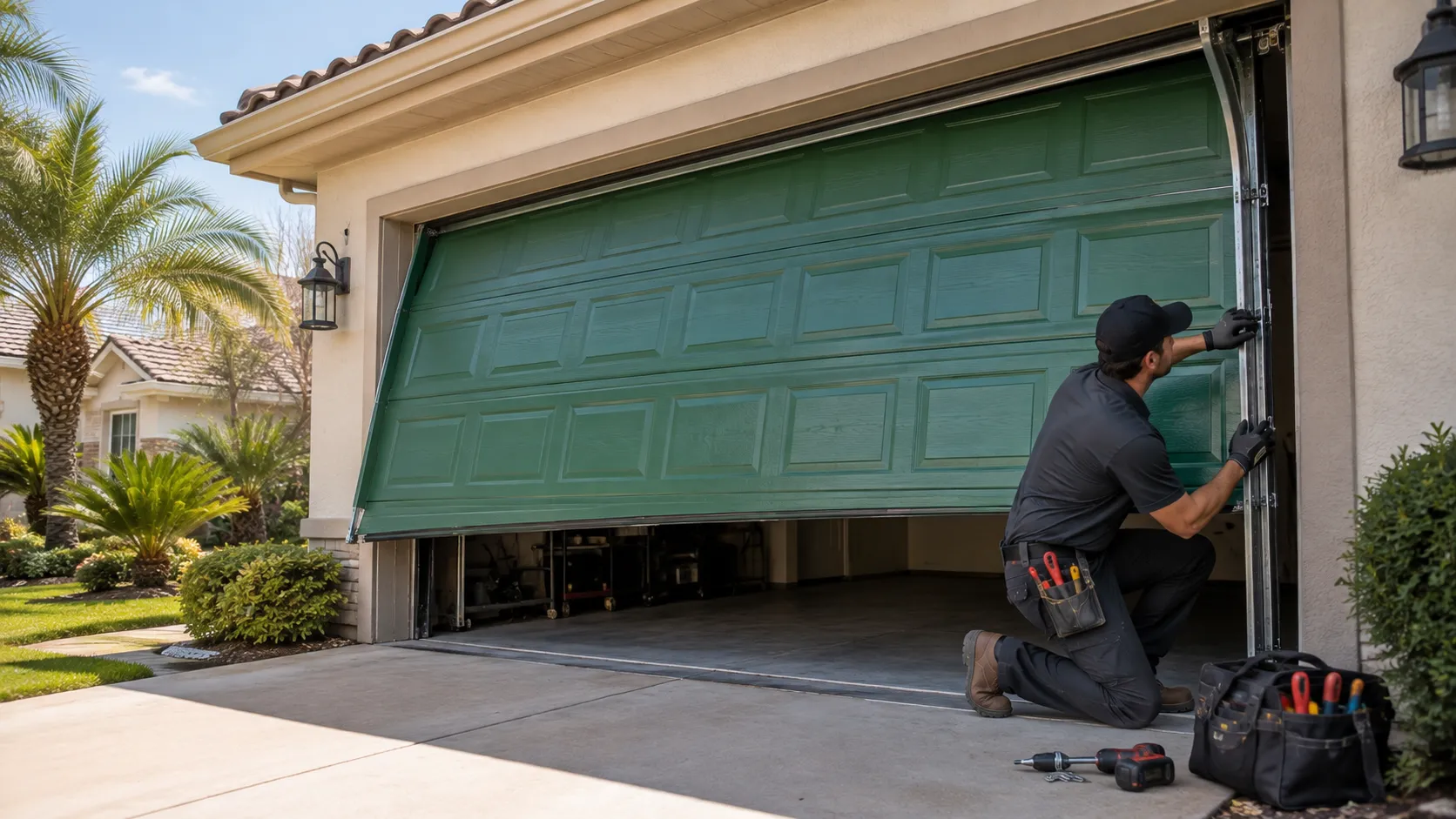
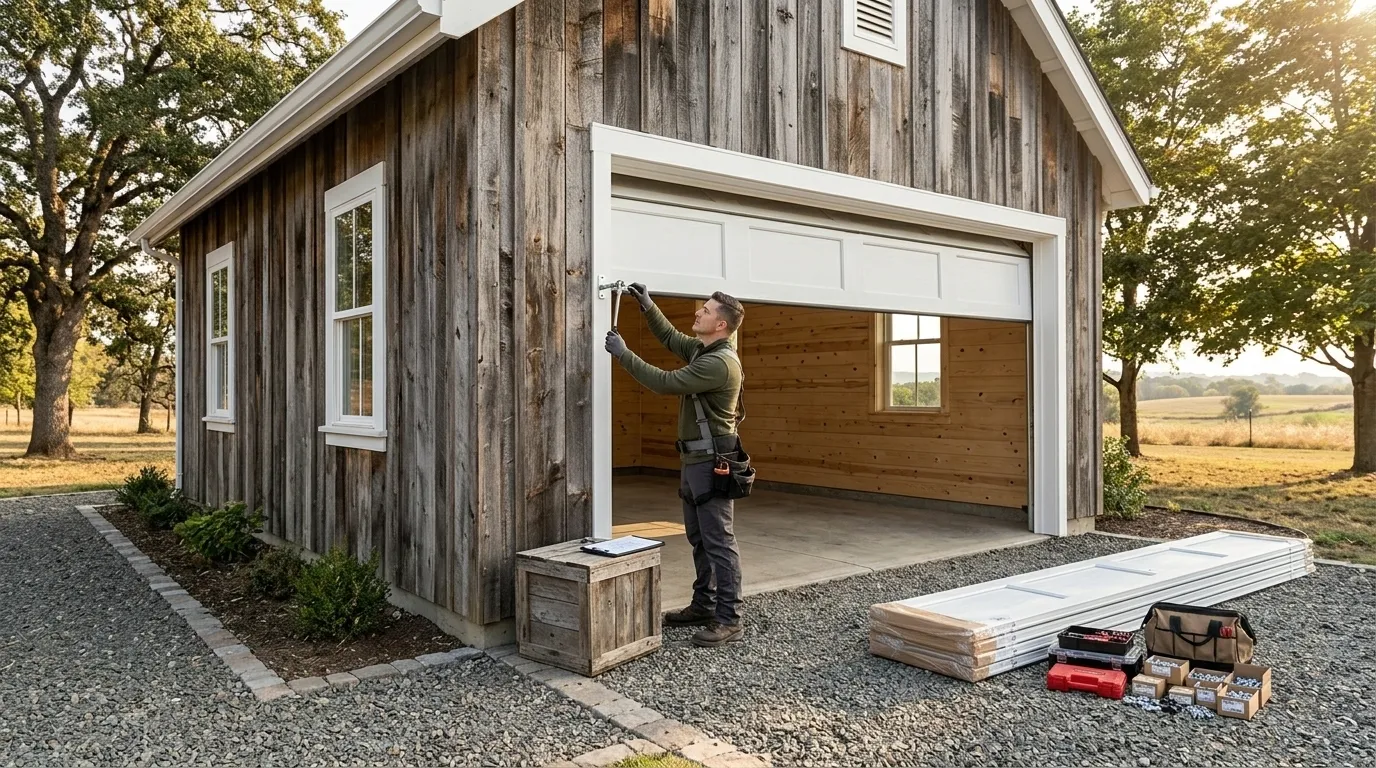
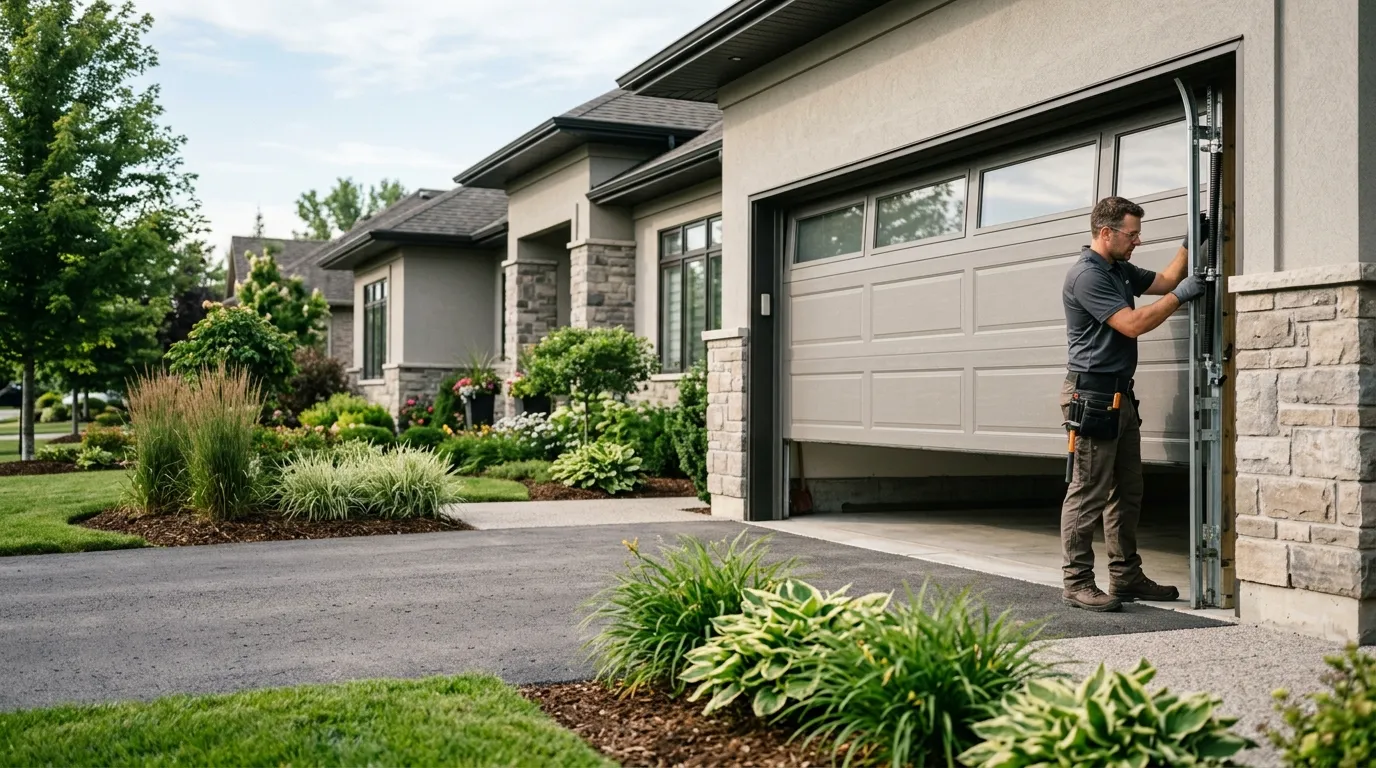
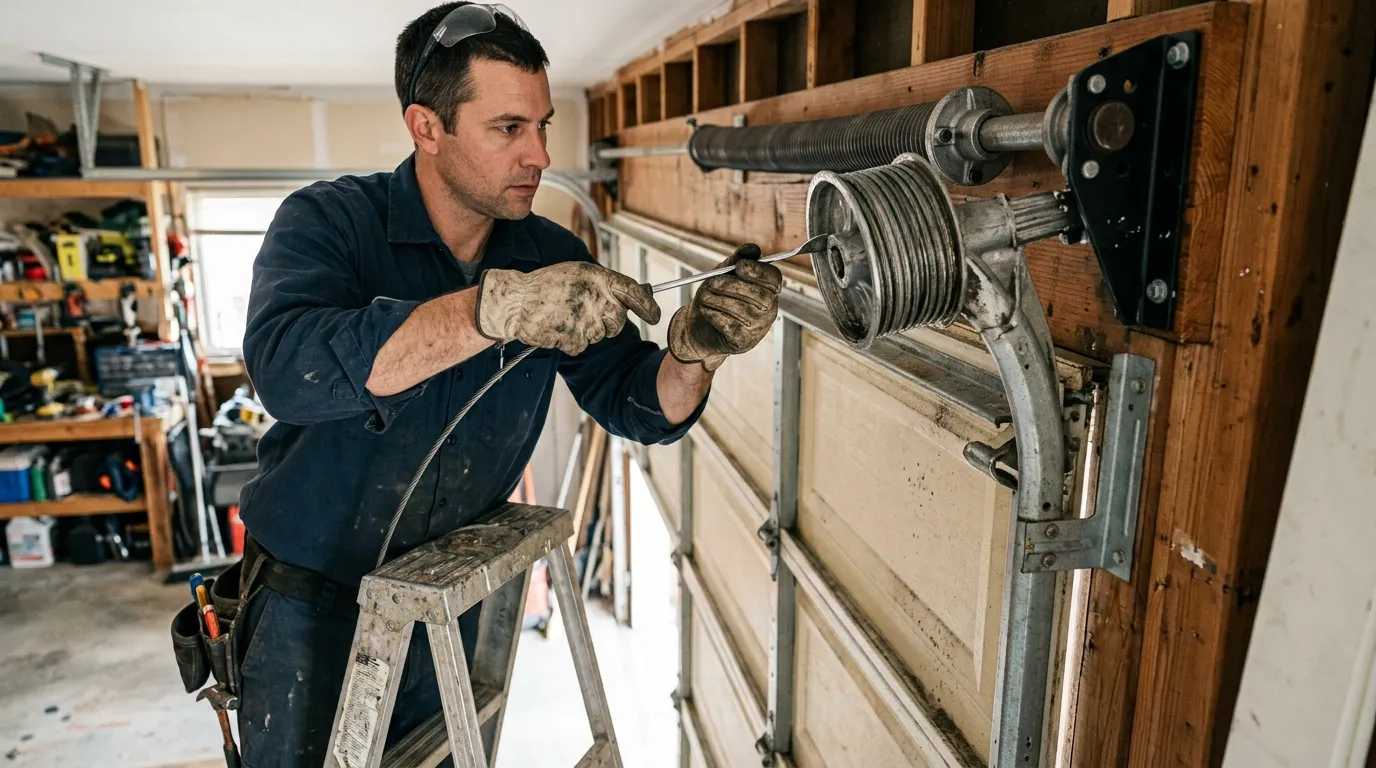
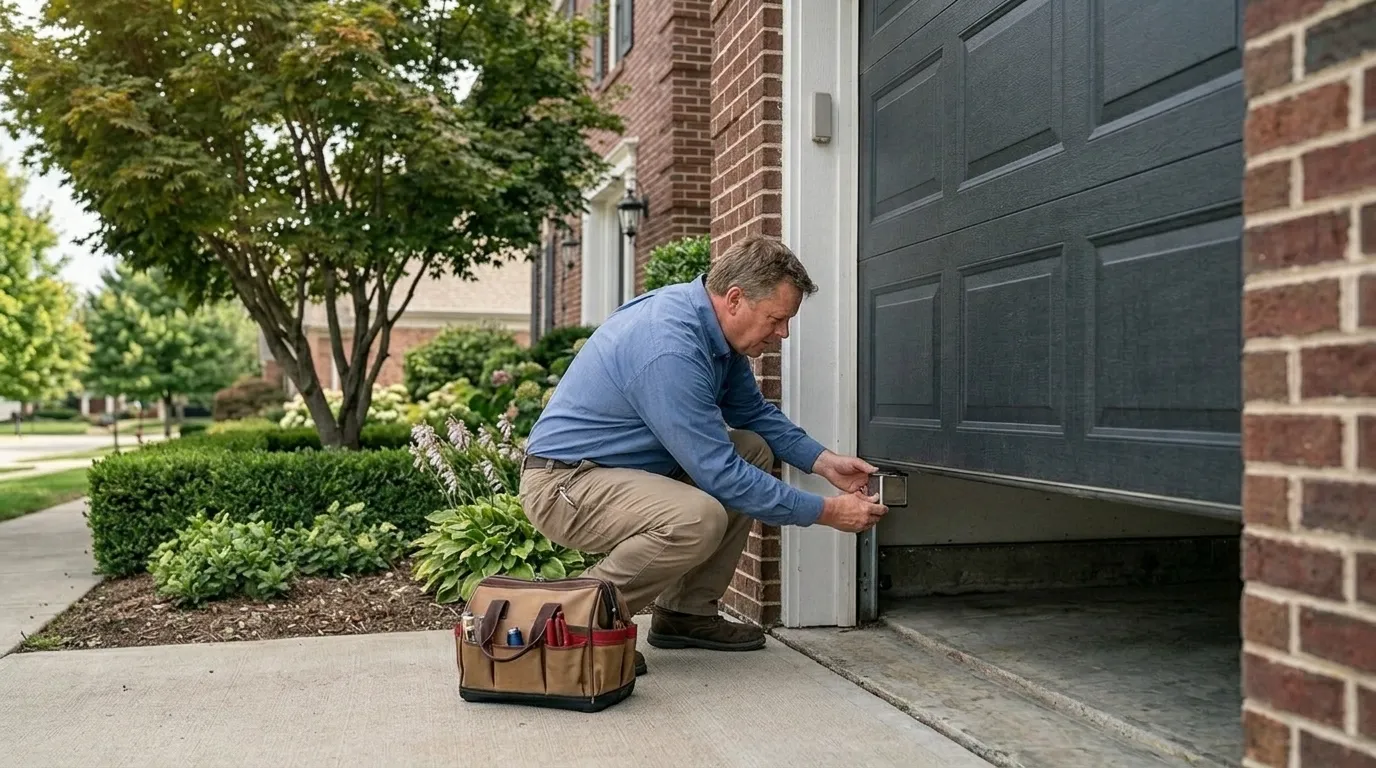
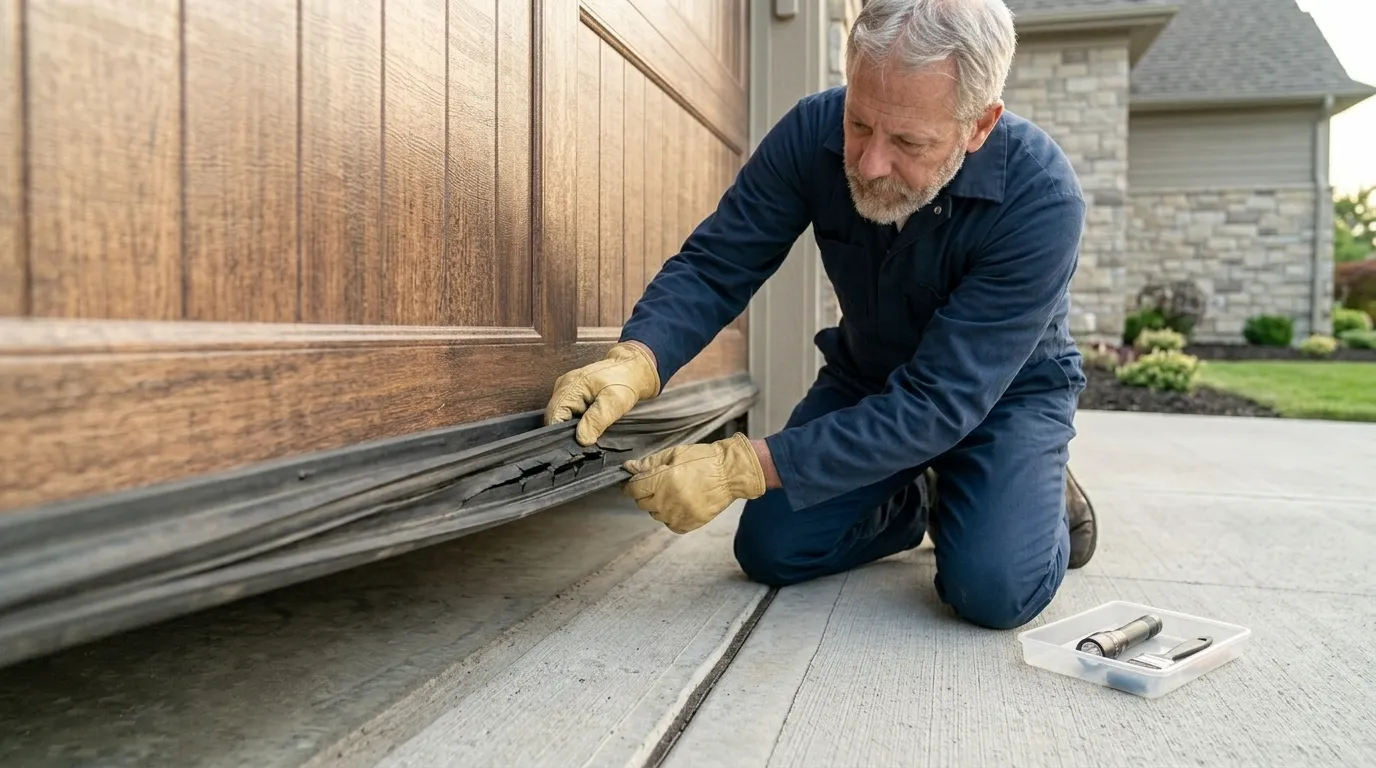
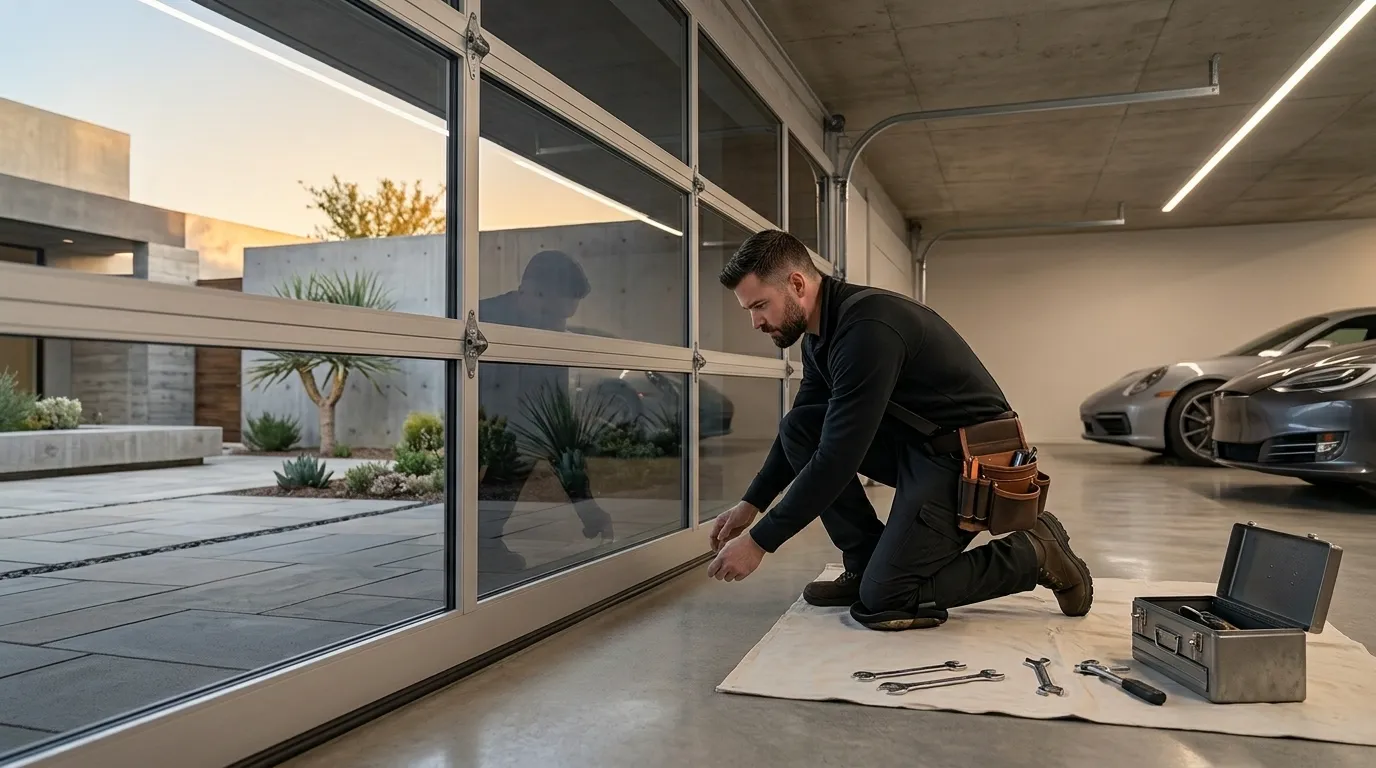
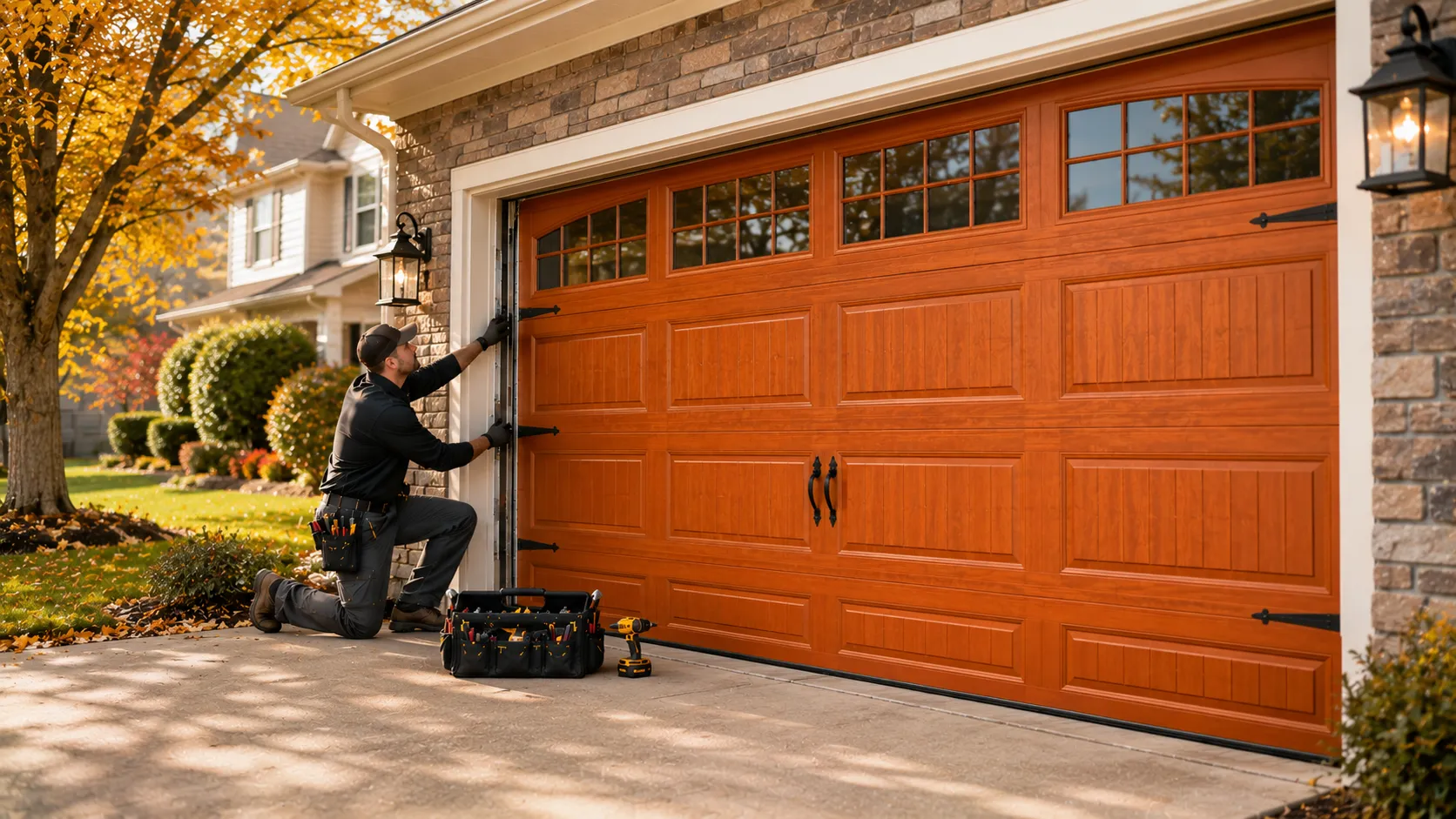
Swapping a single panel sounds like a bolt-off, bolt-on job, and on paper it is. In practice the panel has to match the door's exact width and the section height, and a 2010-era door often uses a track profile and hinge spacing that differs from the last decade's models. Get the match wrong and the door binds on the track or won't seal at the bottom. If it's a top or bottom panel, you're also dealing with the weatherstrip and sometimes the bottom bracket that holds the cable - those pull double duty and are easy to reinstall wrong. We're not going to tell you it can't be done with a truck lift and a Saturday, but we will tell you that ordering the wrong panel because a dent bent the frame more than it looks is the most common DIY mistake we see, and by the time the correct part ships, the door's been sitting unbalanced for a week.
What Can Go Wrong
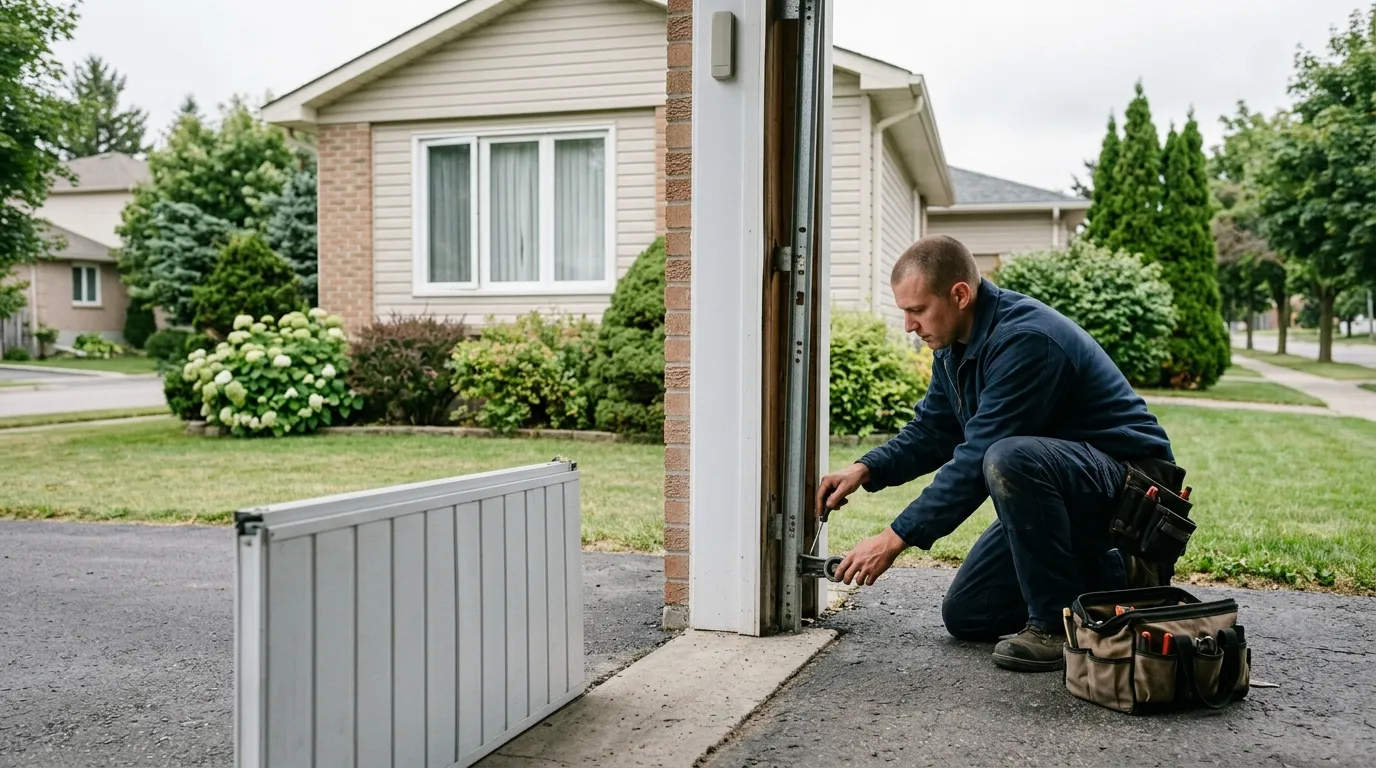
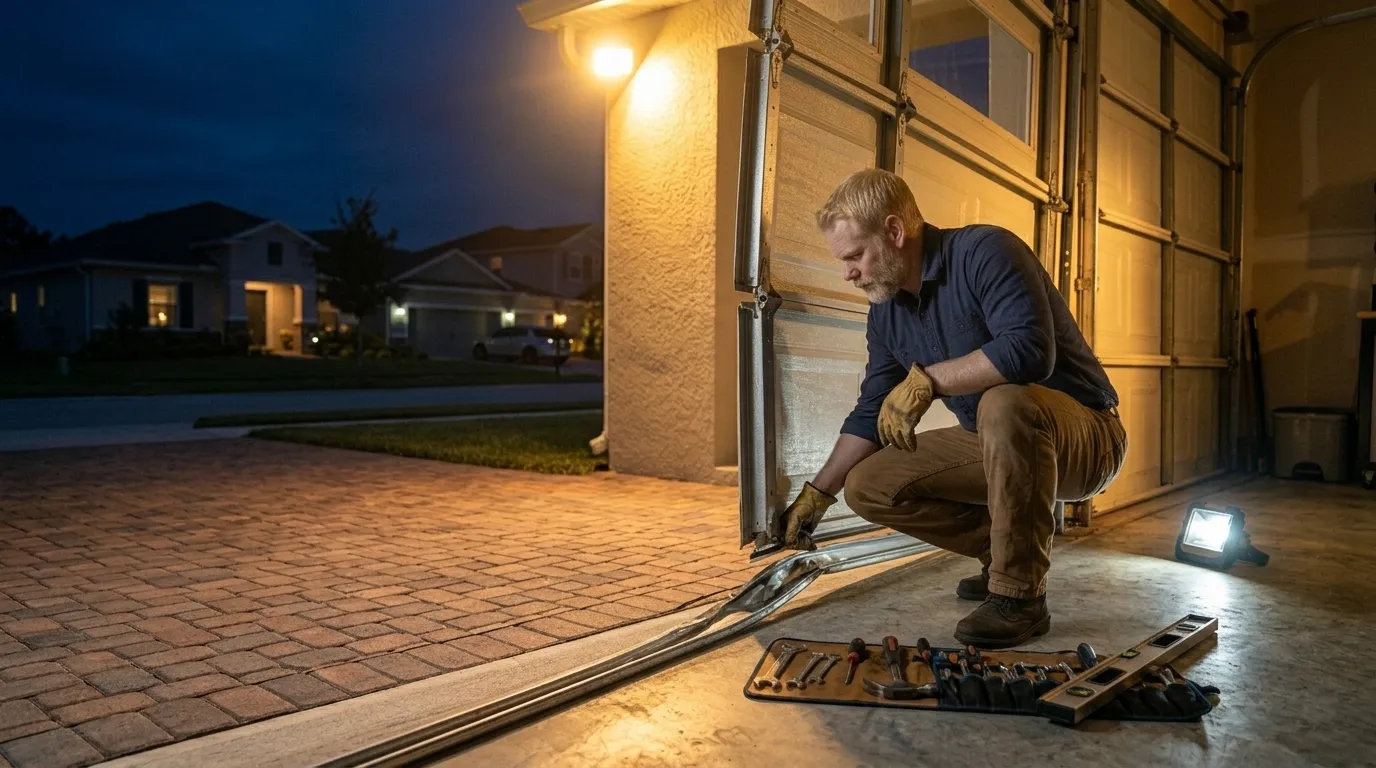
On a door this age, the panel itself usually fails from an impact - a car bumper, a basketball, a trailer hitch backing in wrong - rather than from age or weather rot you'd see on an older wood door. Because the panels are wider on these newer double-car doors, a dent or crack tends to run the full width of the section, which means you're replacing the whole panel and not just patching a corner. The bigger risk is what the impact does downstream: a bent panel can throw the whole door out of square, which puts extra load on the rollers and the track on that side. We've seen owners replace a panel and skip checking the track alignment, and six months later they're back with a roller that's chewed through the channel.
What Causes It Around Here
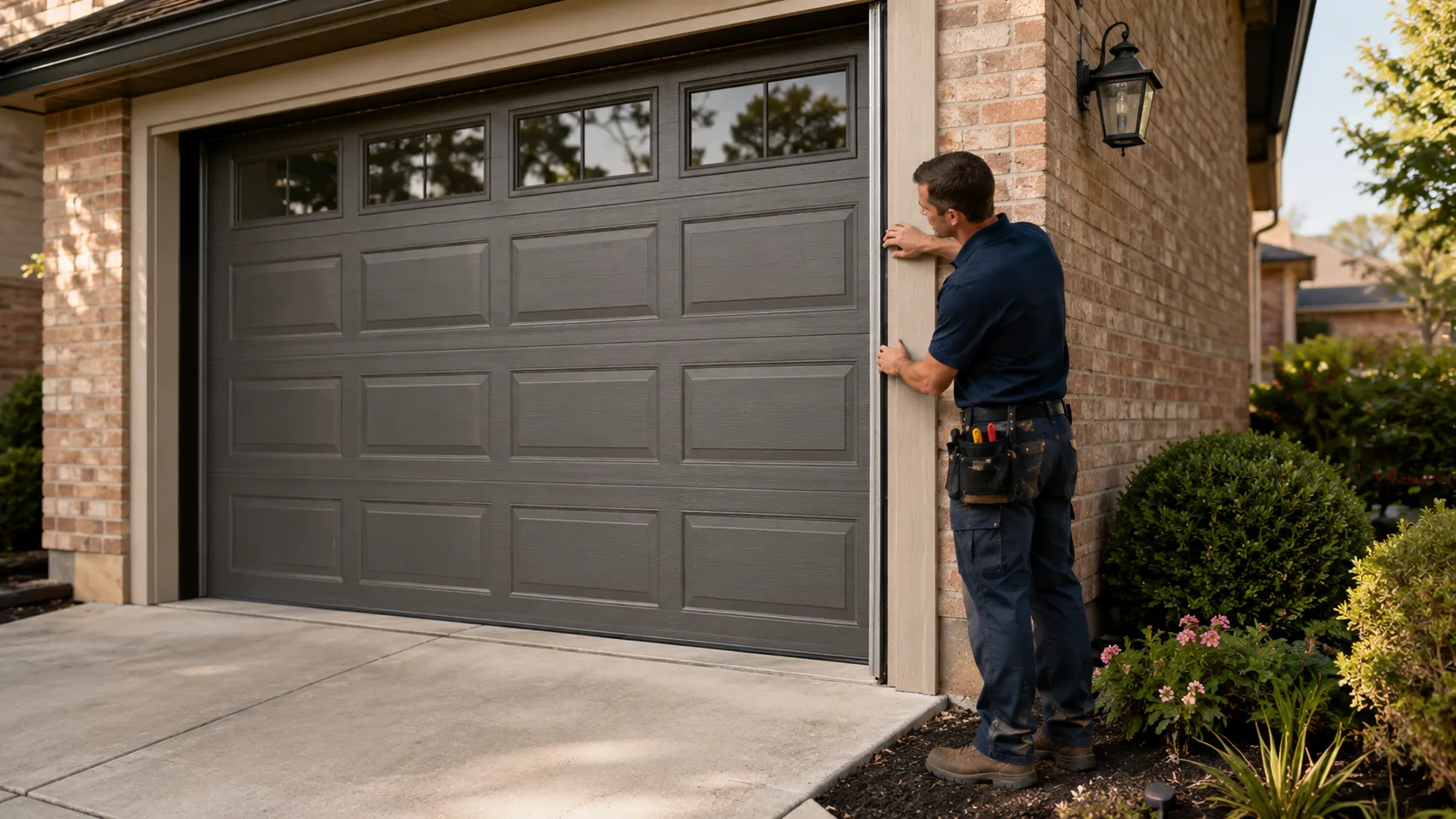
The panel damage we see in Eagle Mountain tracks pretty closely to what you'd expect from a neighborhood built mostly in the 2010s: wider driveways, wider garages, and more vehicles and trailers backing into a door that's a foot or two wider than the older 8-foot single models. A wider panel section also flexes more under a direct hit than a narrower one does, so the damage tends to spread across more of the door rather than staying in one corner. Winter is a secondary factor - the cold-moderate swings here can make a foam-backed panel slightly more brittle at the point of impact than it would be in warm weather, though that's a contributing factor, not the main cause. We don't see much rot or warping on doors this age, which is one advantage of a newer build - the failures are almost always mechanical, not weather damage from decades of sitting.
What Costs
We don't have a fixed number to quote here without seeing the door - the price swings on whether the panel is steel or another material, whether it's insulated, and whether the track needs adjustment along with the panel itself. What we can tell you is that a wider double-door panel, which is what most Eagle Mountain jobs call for, costs more than the narrower single-door sections we replace closer to Orem, simply because there's more material and more insulation in it. We price the part and the drive together when we quote, since the 16-mile trip out here is a real cost we don't pad separately or hide in a callout fee. If the panel damage turns out to be minor - a scuff, a shallow dent that doesn't affect the seal - we'll tell you that a repair paint job is cheaper than a full swap, because a panel replacement you don't need is not a job worth doing.