Doing It Yourself
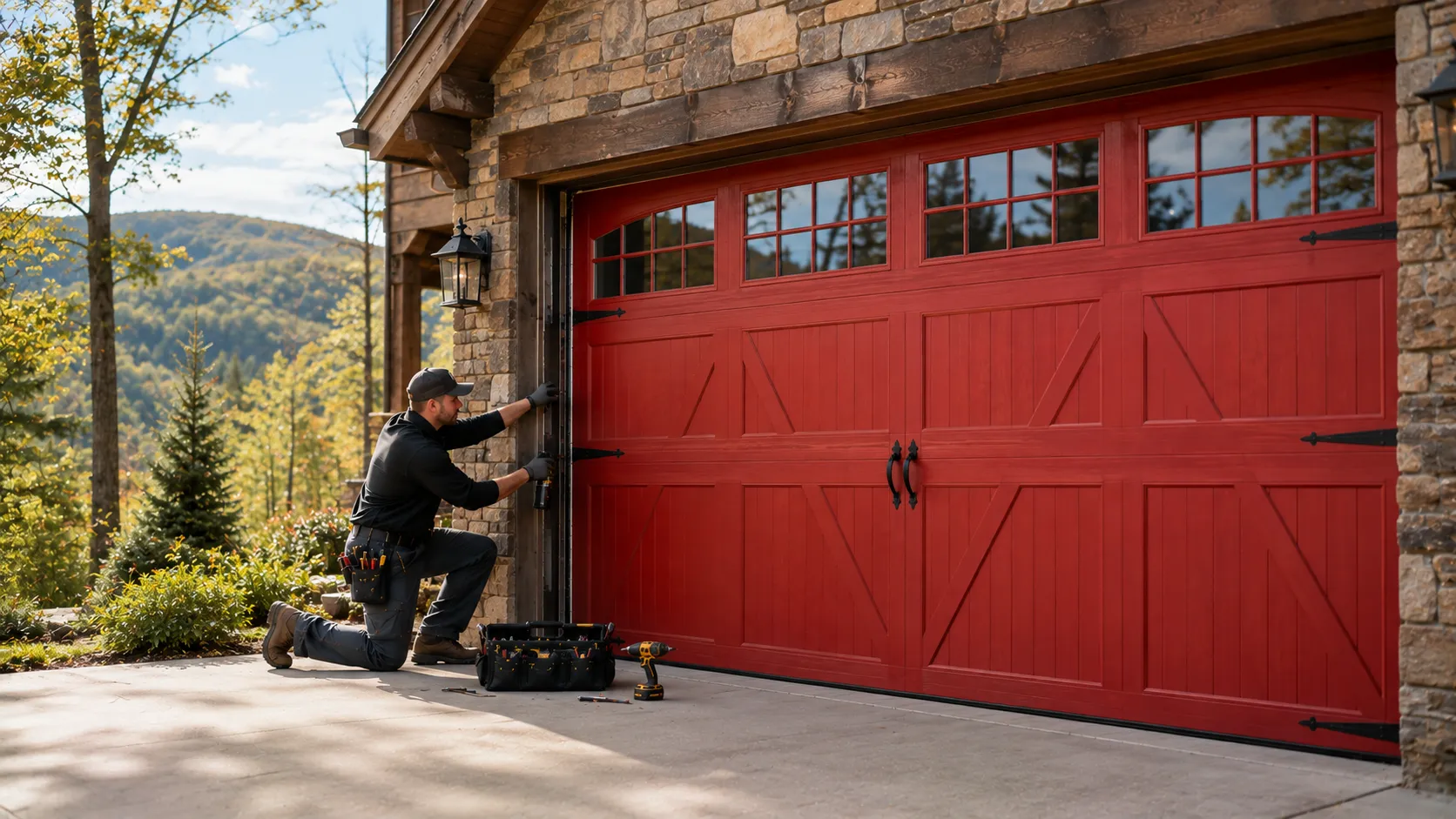
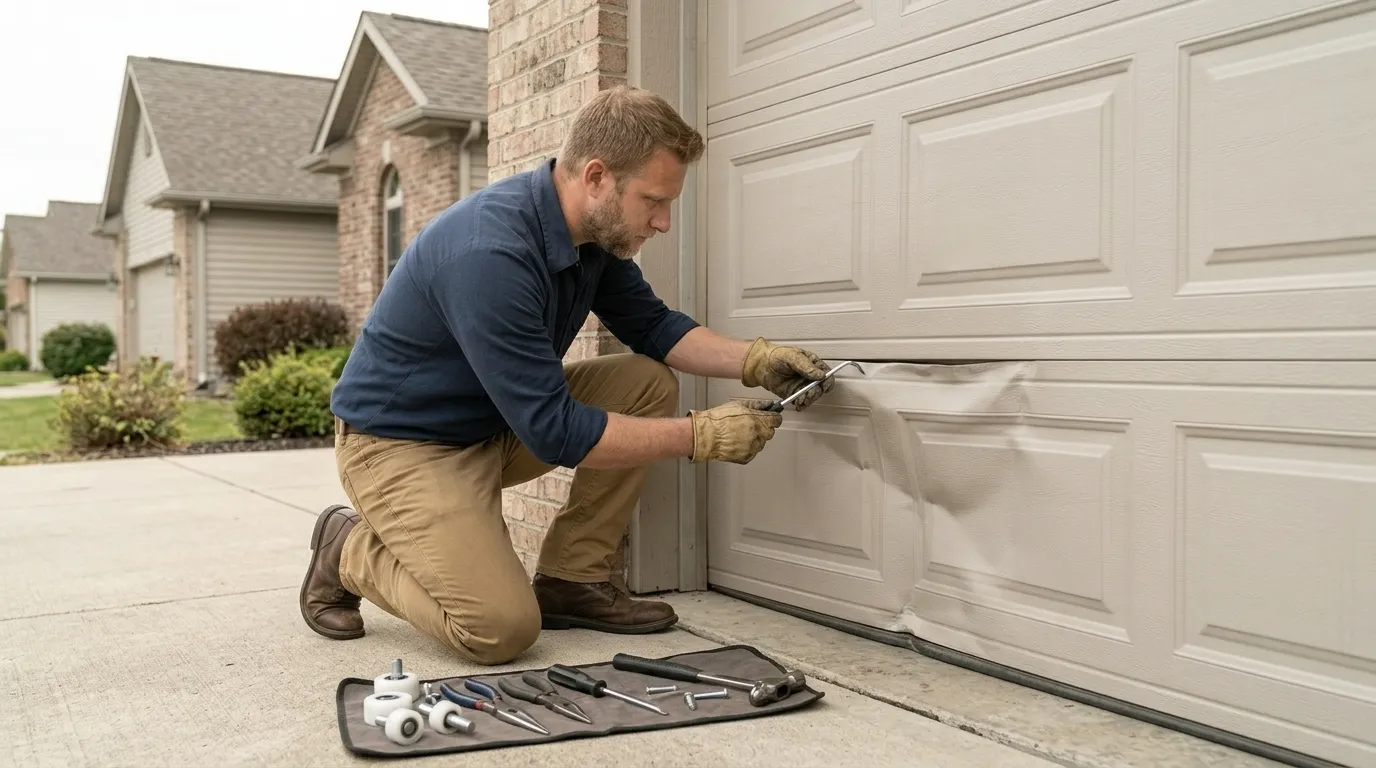
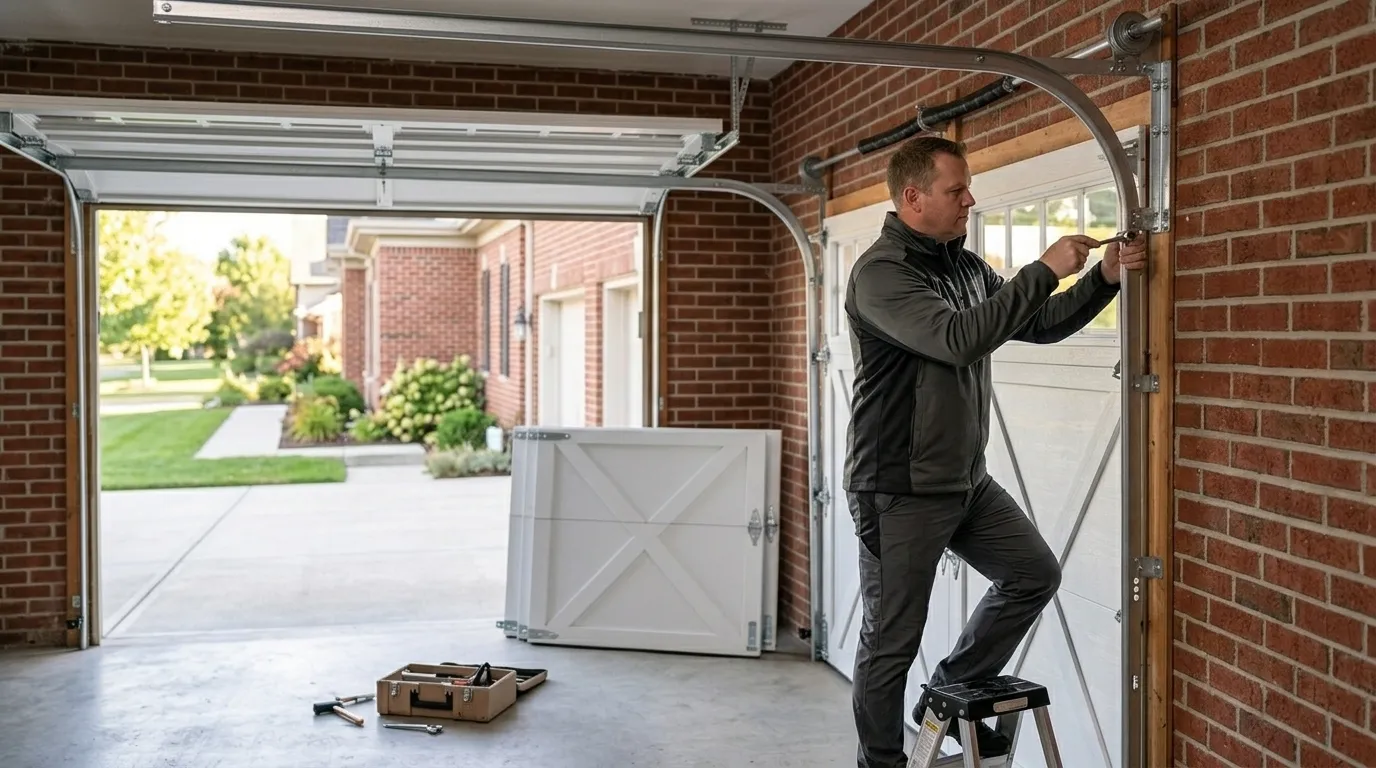
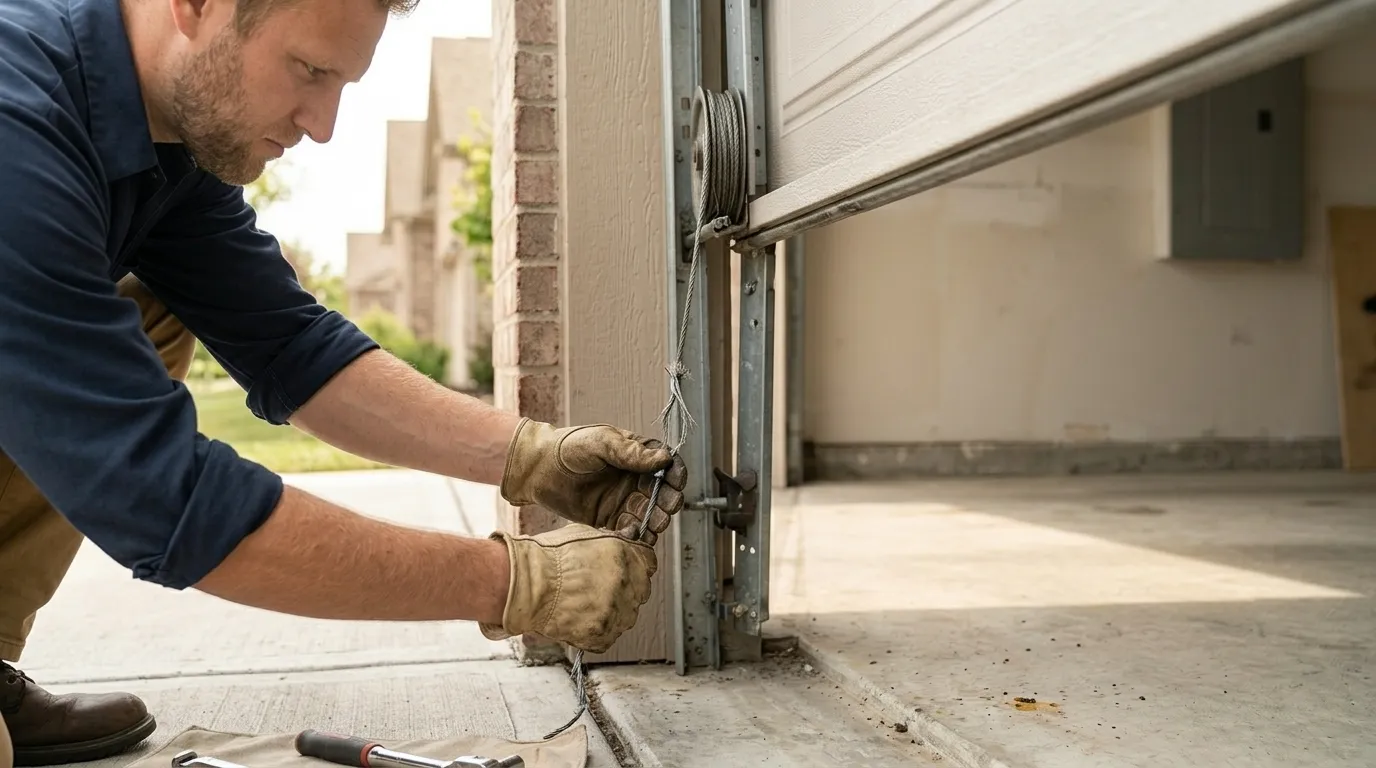
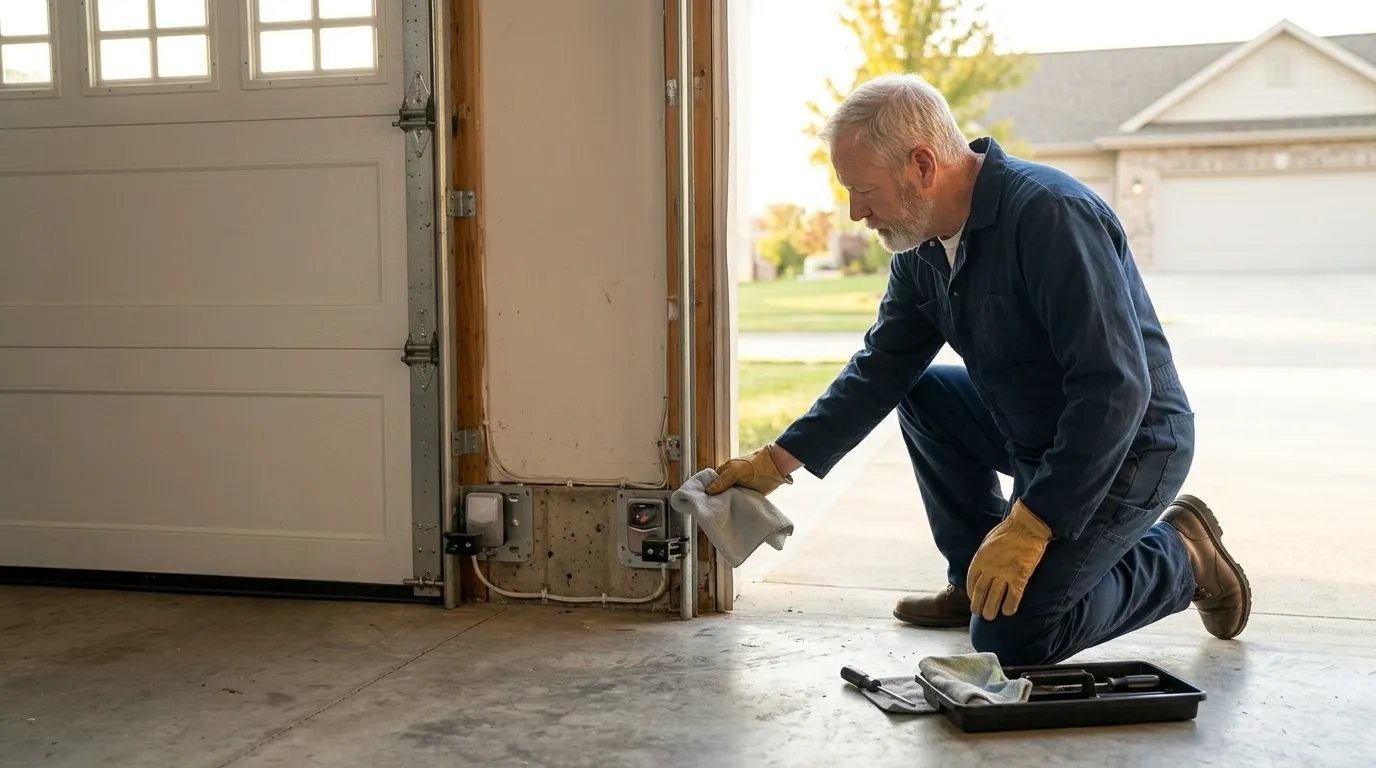
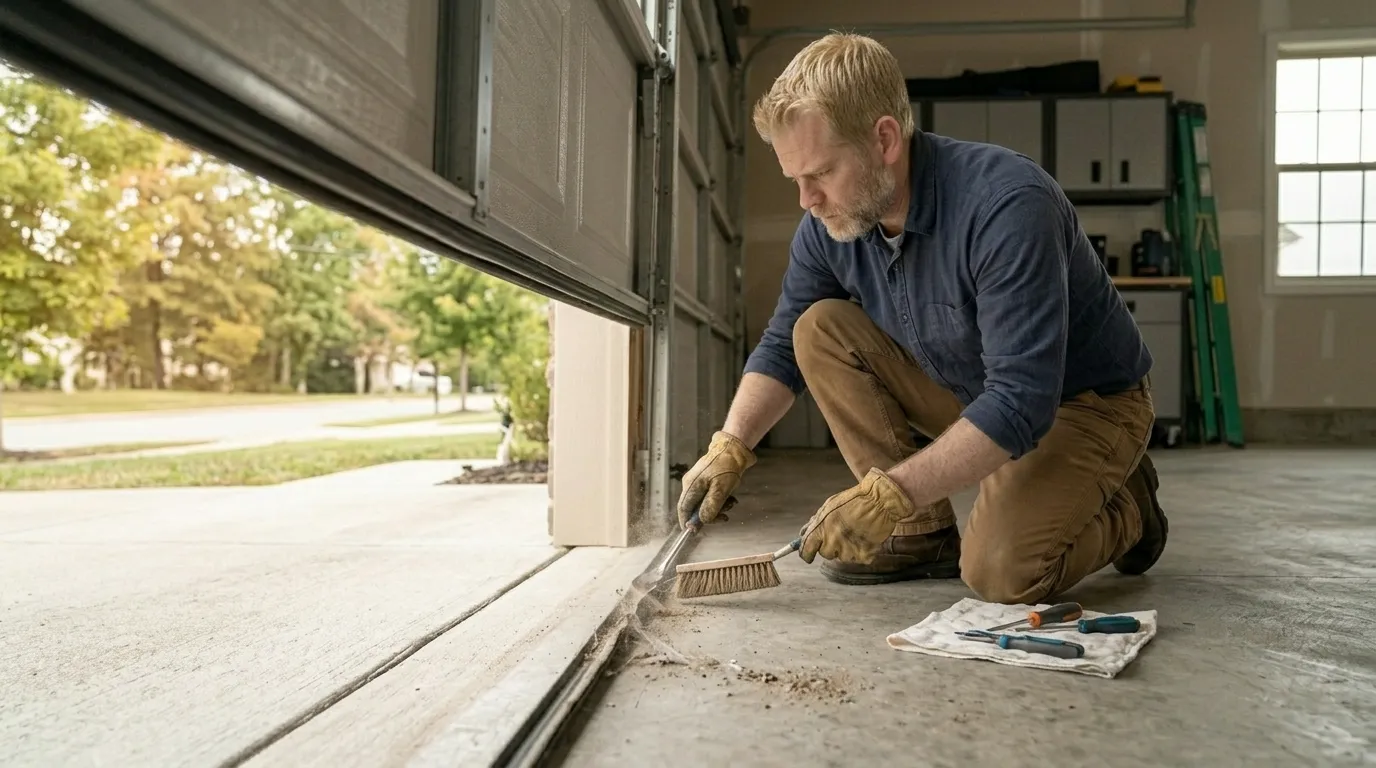
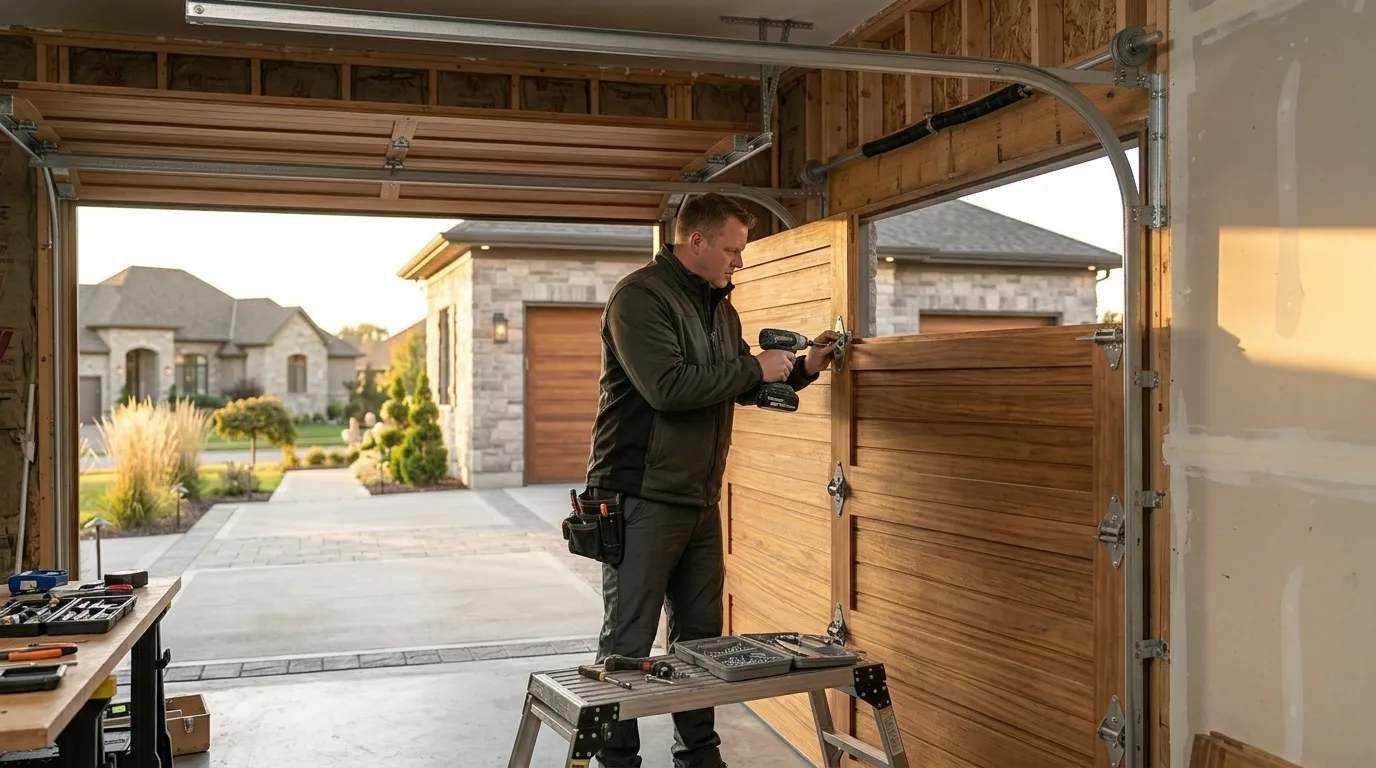
A homeowner can safely do a few things on a newer door: wipe down and lubricate the rollers and hinges twice a year, check that the photo-eye sensors near the floor are still aimed at each other and not knocked out of line by a lawnmower or a parked bike, and test the auto-reverse by setting a 2x4 under the door and watching it back off. What you shouldn't touch is the torsion spring itself. Even on a newer, lighter door, that spring is wound under enough tension to break a bone or worse if the winding cone slips. If your door won't open, or opens partway and stalls, that's a spring or opener problem, not a DIY fix. We'd rather get a call for something small than a call after someone's hurt.
What Can Go Wrong
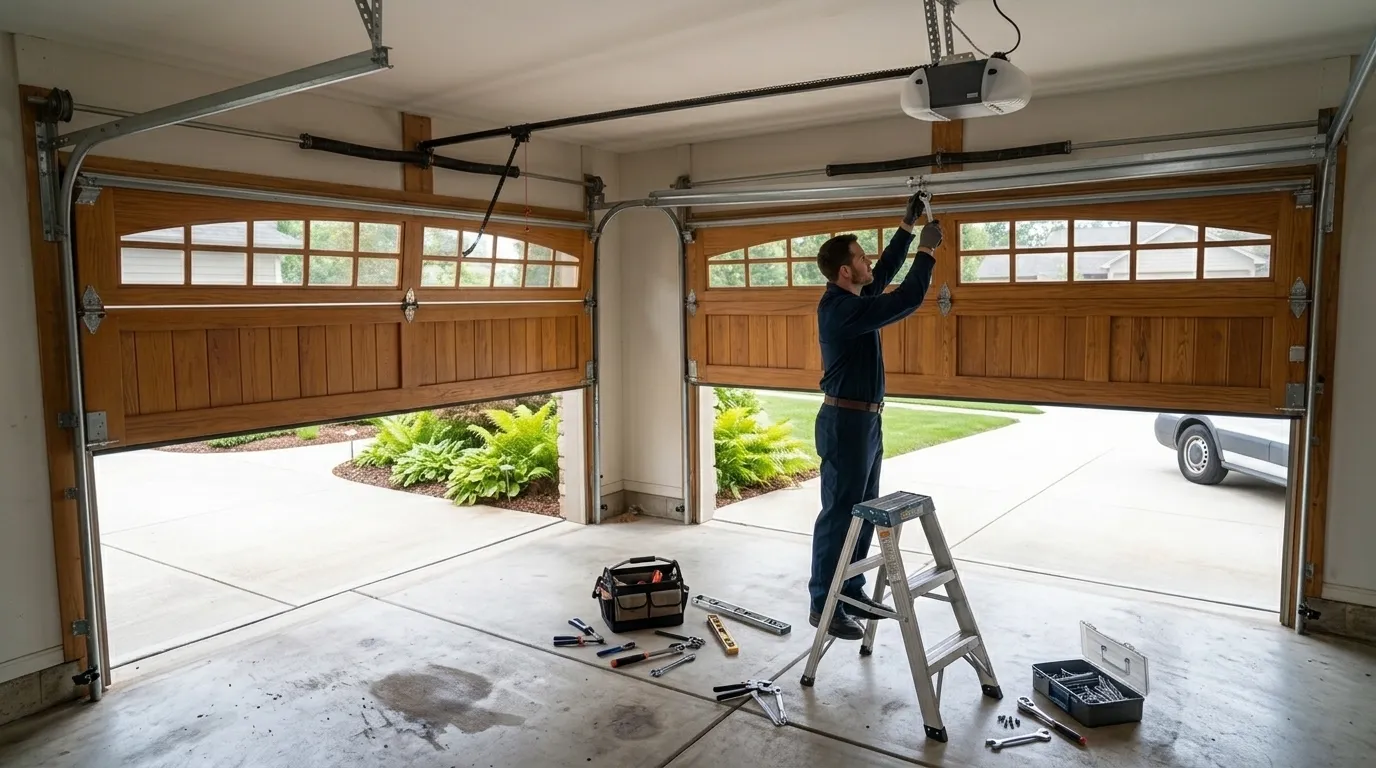
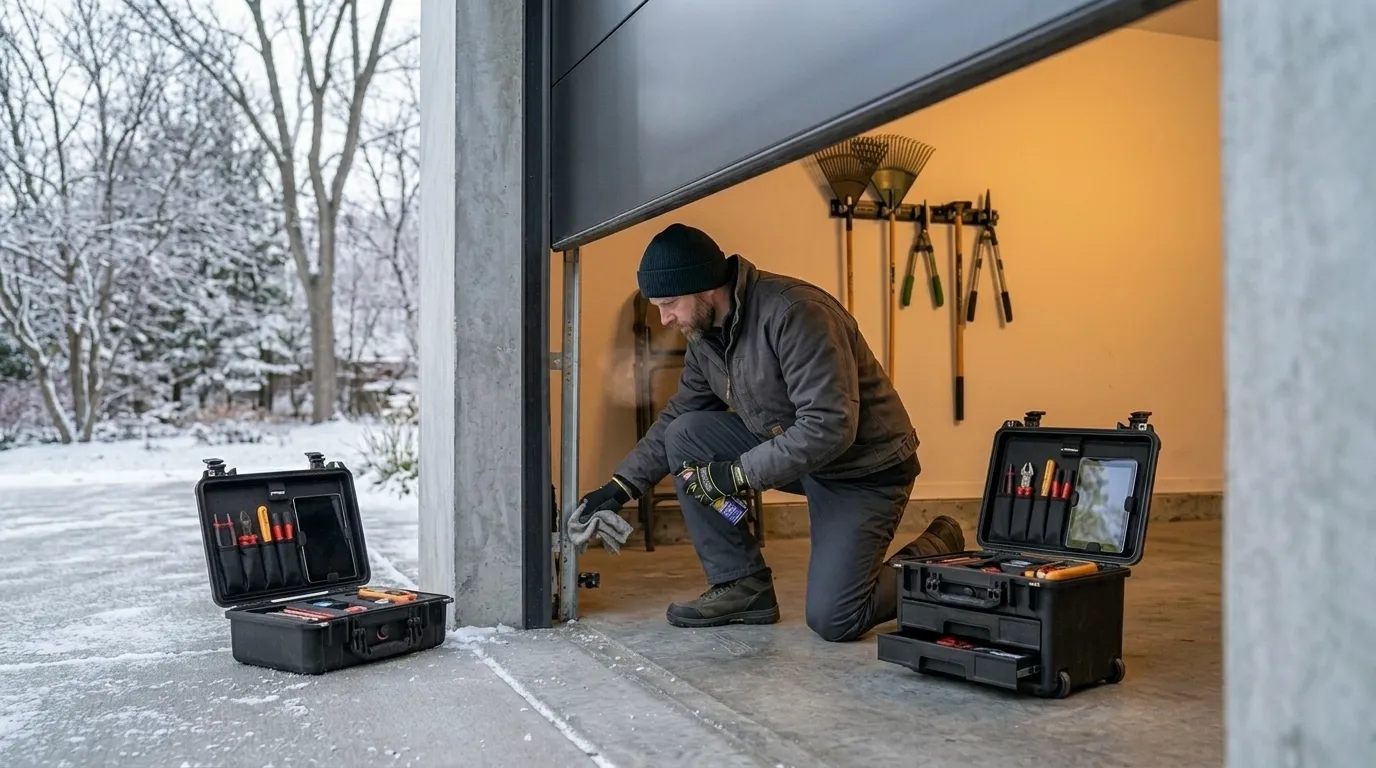
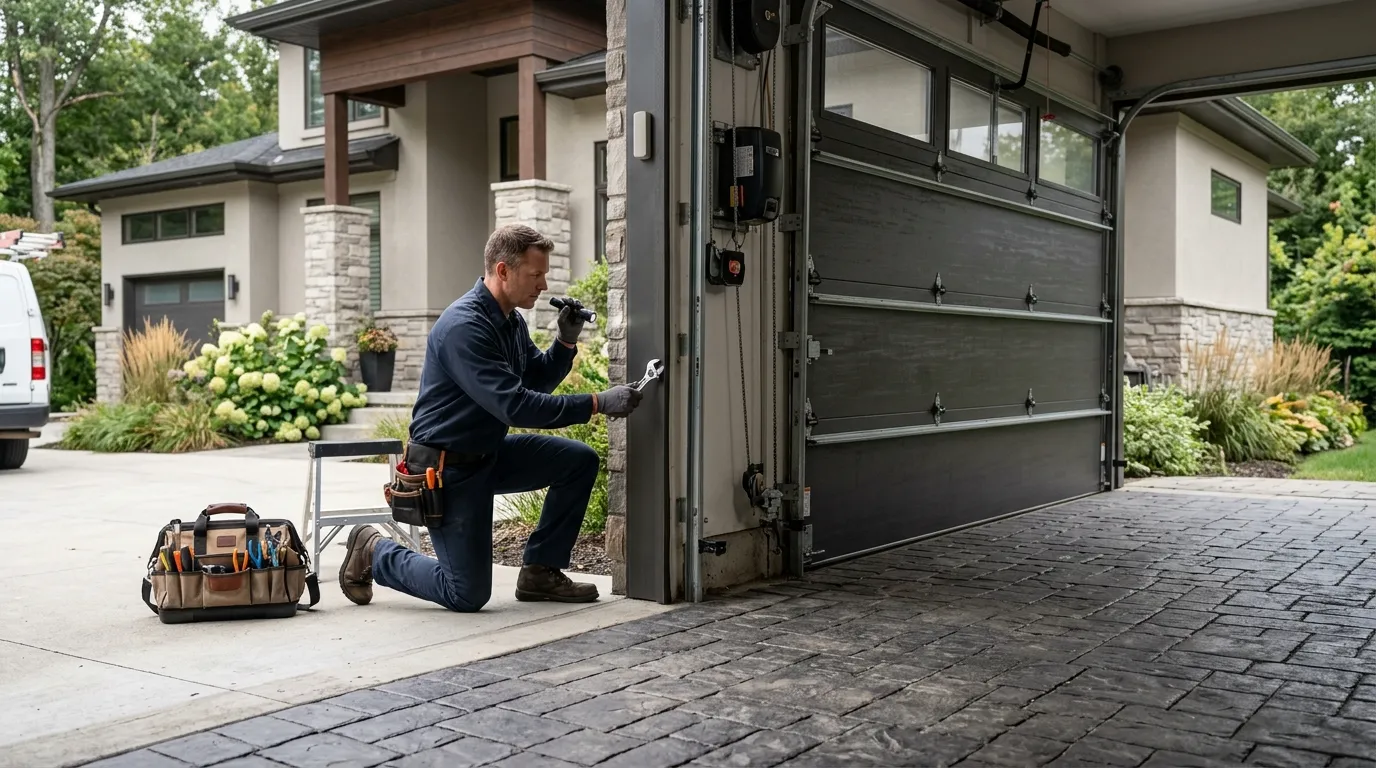
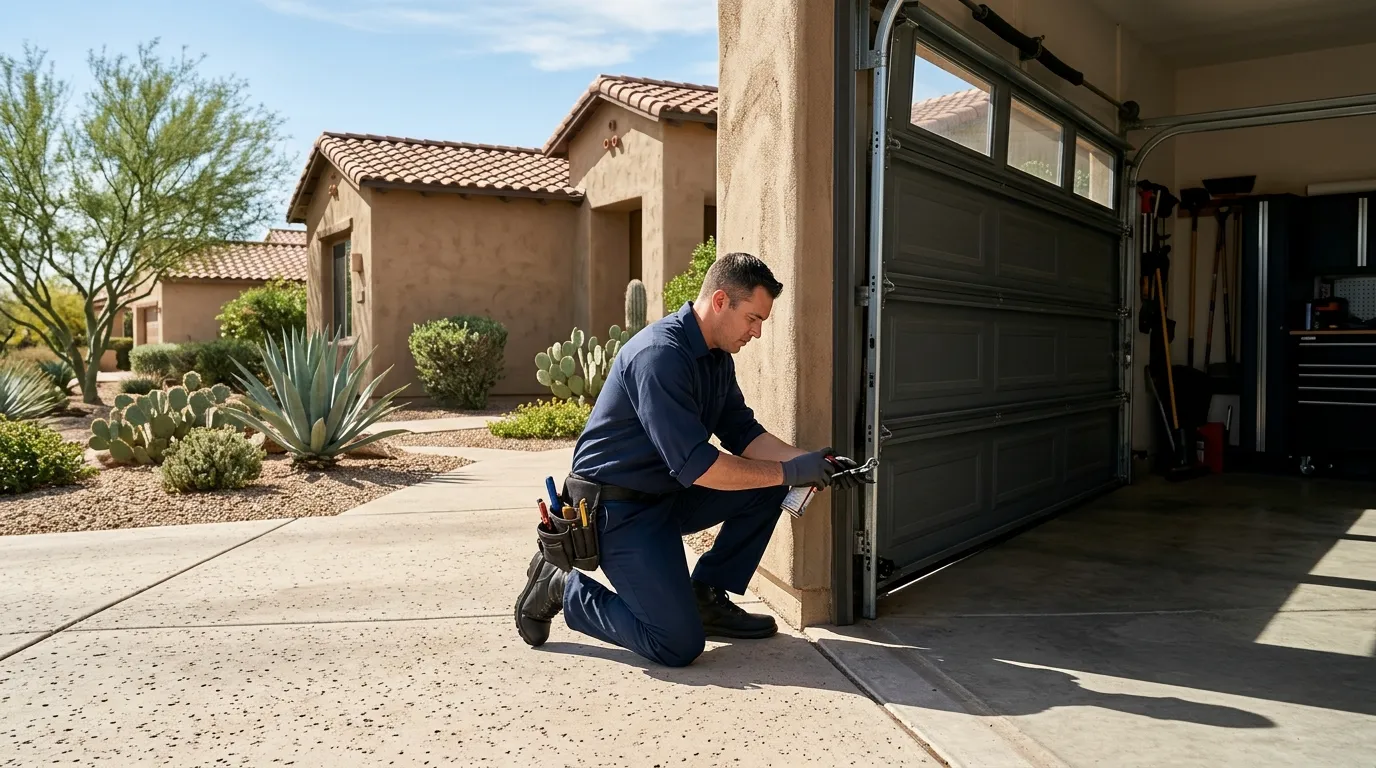
Because most doors in Eagle Mountain are running on openers under fifteen years old, the failure we see most is the plastic drive gear inside a belt-drive or chain-drive unit stripping out - it's a wear part, and it wears the same whether the house is five years old or fifteen. New-construction lots also settle for the first several years after grading, and that shift can knock a track out of plumb or throw the sensor alignment off even on a door installed correctly the first time. Cold snaps stiffen the lubricant in torsion springs and rollers, so a door that worked fine in October can start groaning or hanging up once temperatures drop, per the cold moderate climate pattern this area sits in. None of this is dramatic - mostly it's wear and settling, not disaster.
What Causes It Around Here
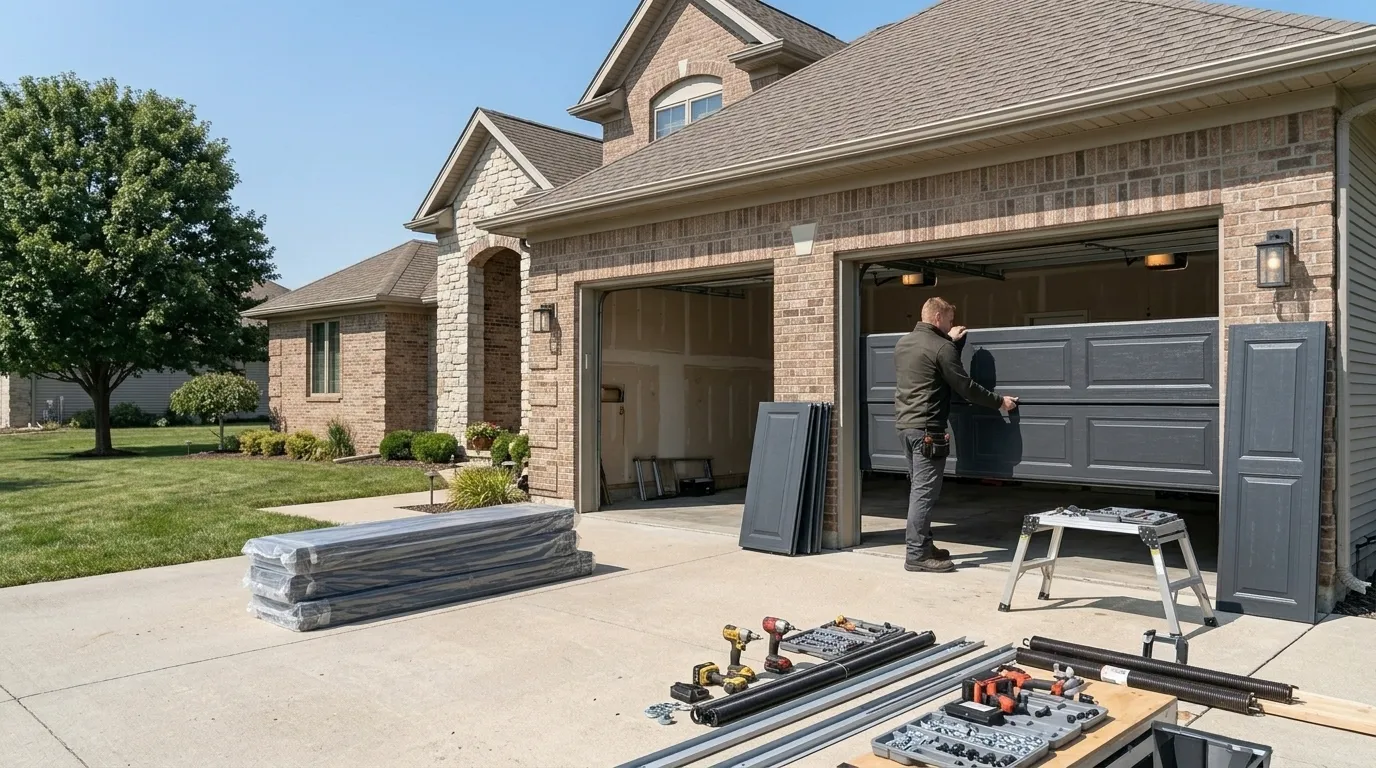
Two things line up in Eagle Mountain that you don't see together everywhere: a housing stock concentrated after 2010, and a cold moderate climate pattern that puts real temperature swings on that hardware every year. New builds mean openers and springs that are still within their expected service window rather than decades past it, so when something fails here it's usually a wear part - a gear, a roller, a sensor bracket - not a structural door problem. The settling that comes with newer subdivisions adds a second layer: tracks and door frames can shift slightly in the first several years after a house is built, which throws off alignment even on hardware that's otherwise fine. Cold weather doesn't cause failures by itself, but it speeds up whatever's already marginal.
What It Costs
We don't publish a flat price here because spring size, opener type, and whether it's a gear repair versus a full opener swap all move the number. What we can say is that Eagle Mountain's newer, lighter door stock generally needs less hardware than the older, heavier doors we service closer to Orem - smaller springs, standard-weight cables - so parts cost tends to run lower even if the trip itself factors into scheduling. We'll always give you the number for the actual repair before we start, not after.