Doing It Yourself
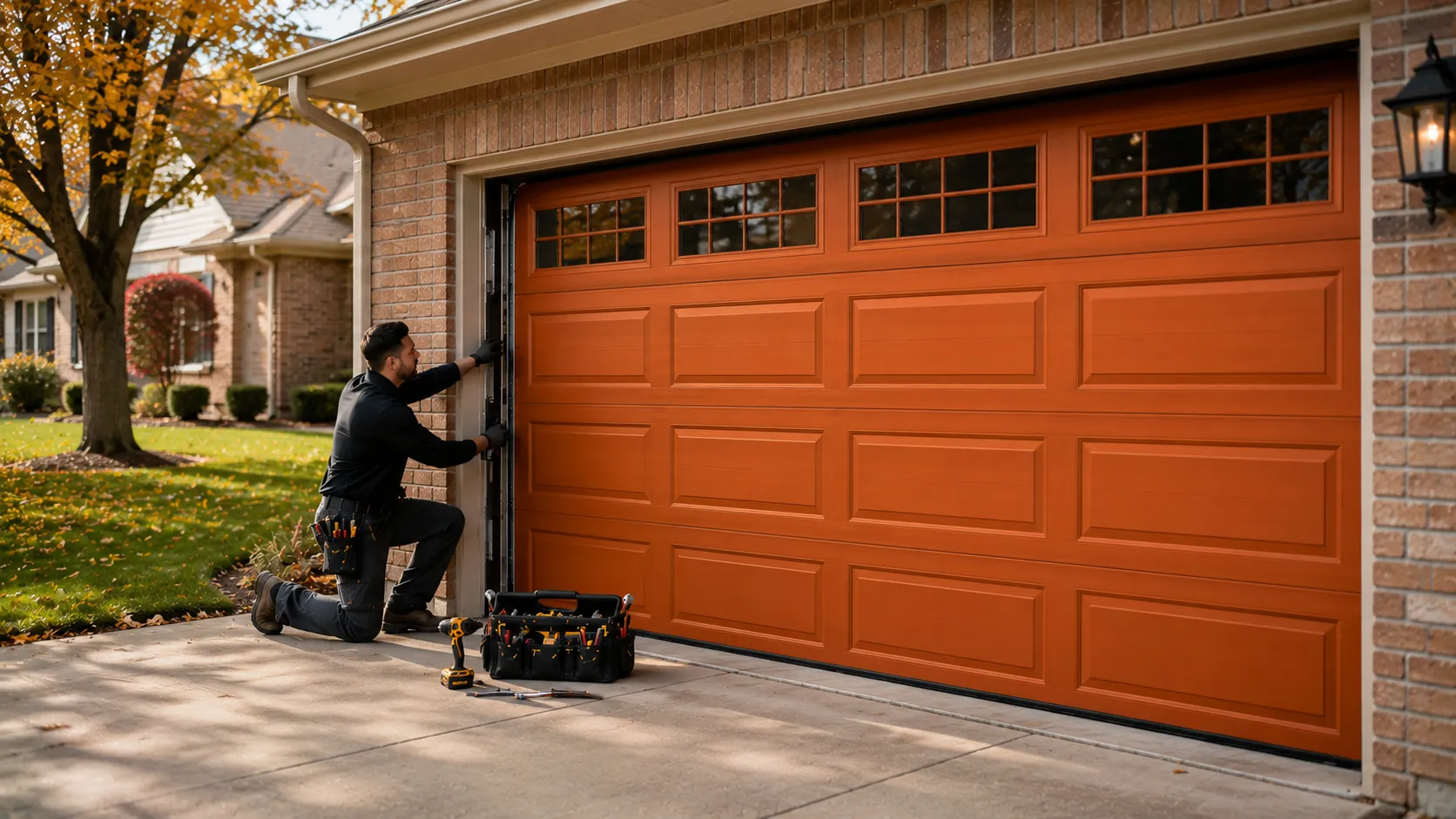
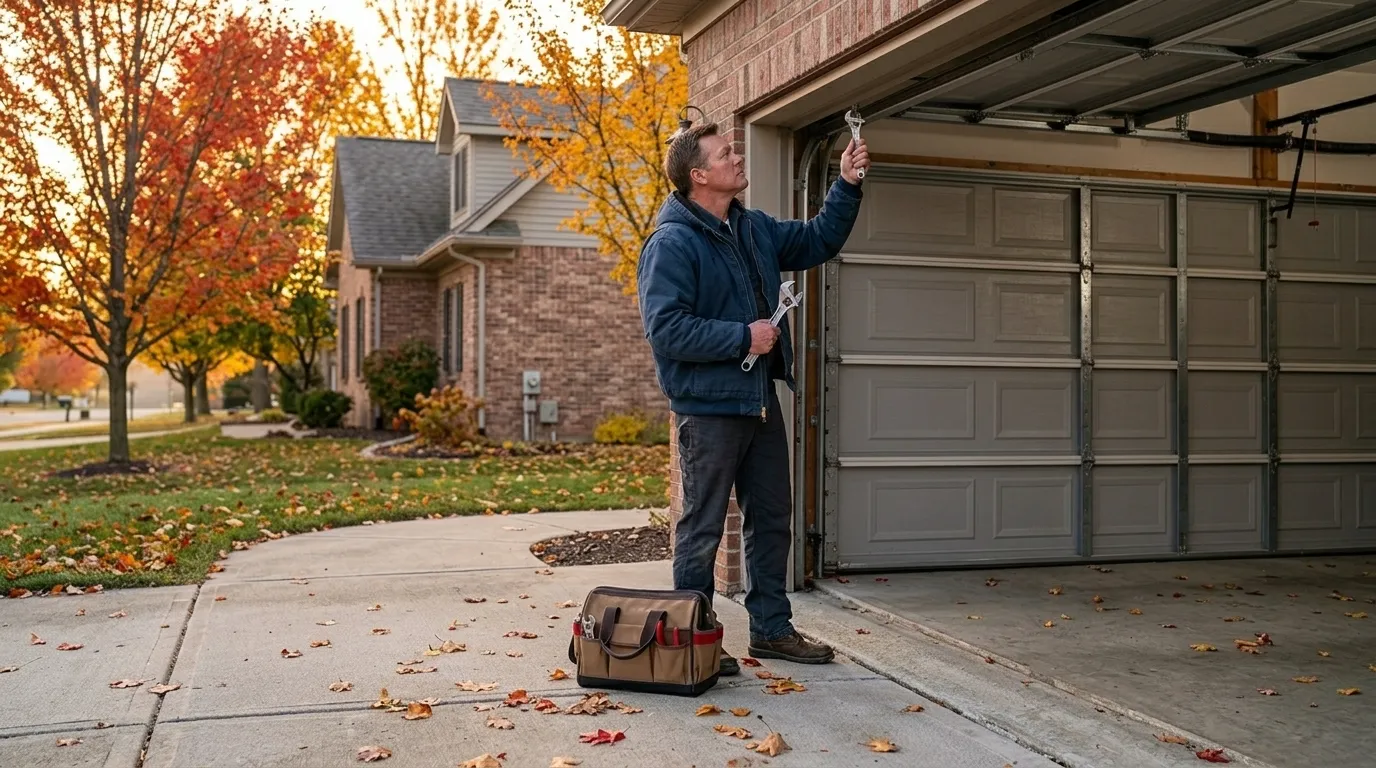
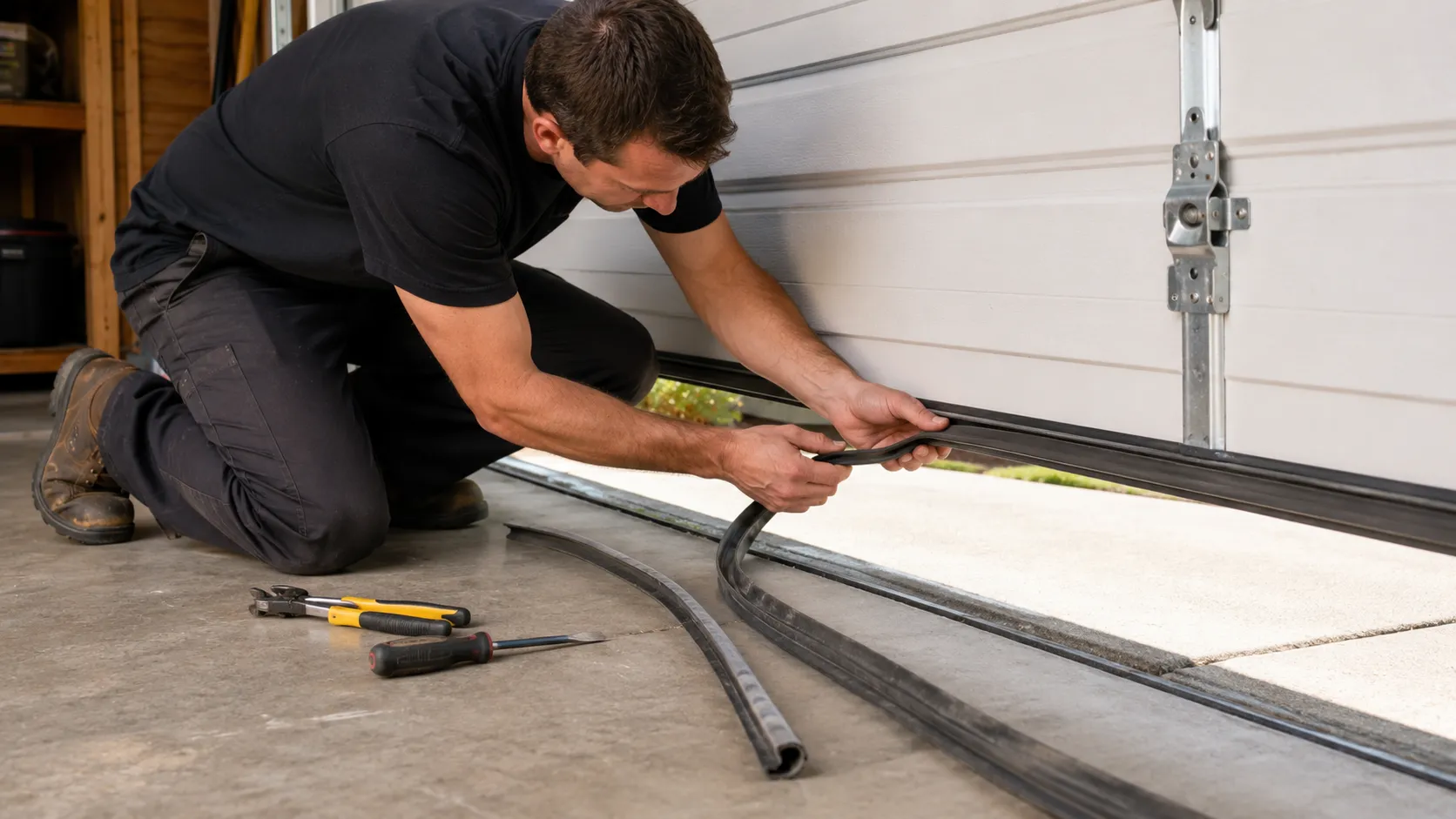
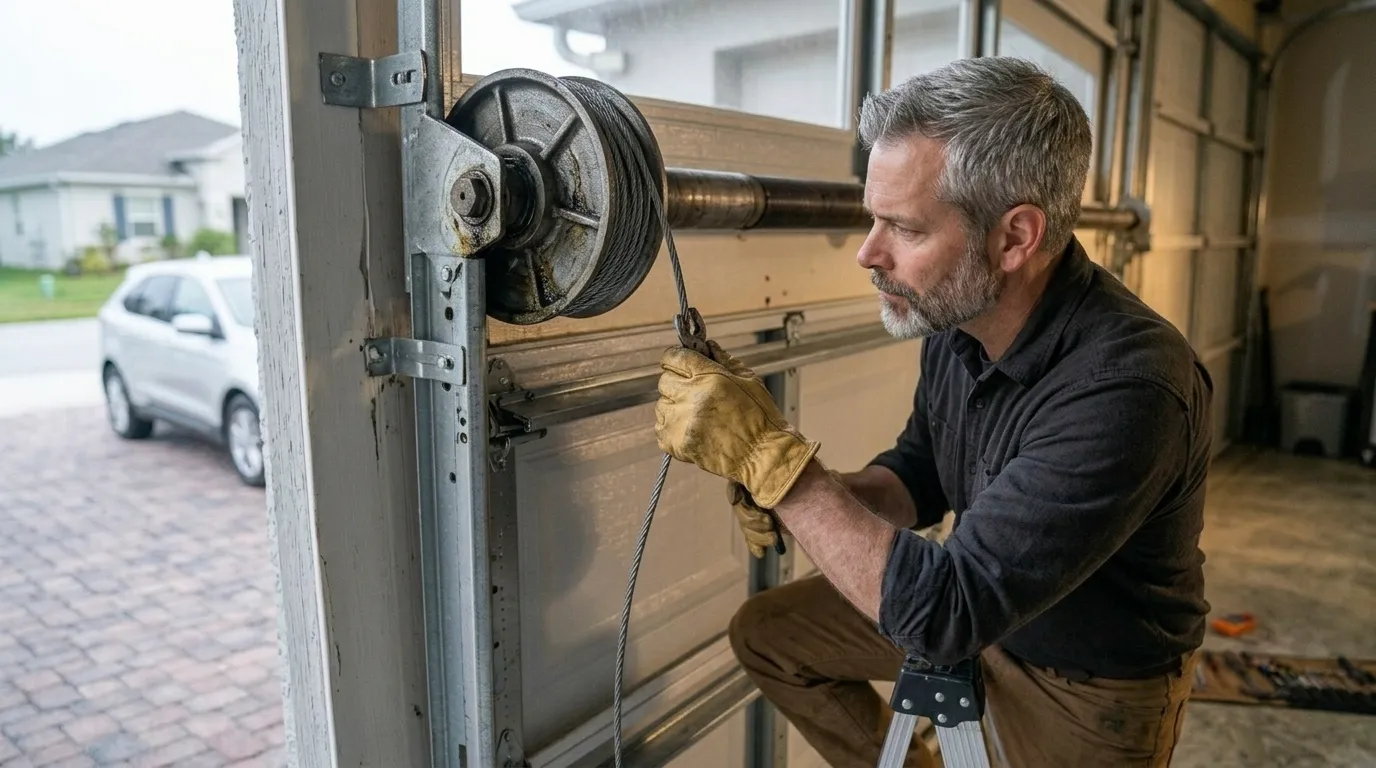
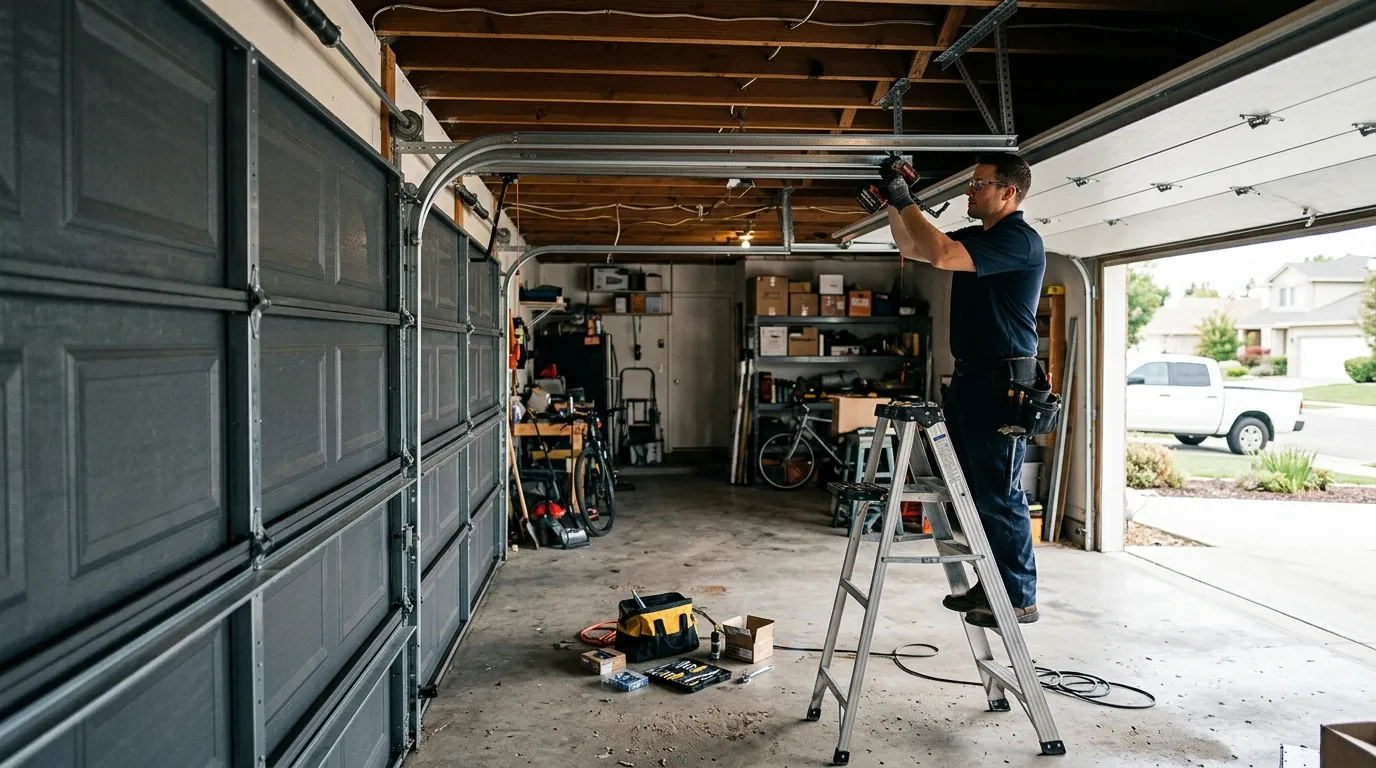
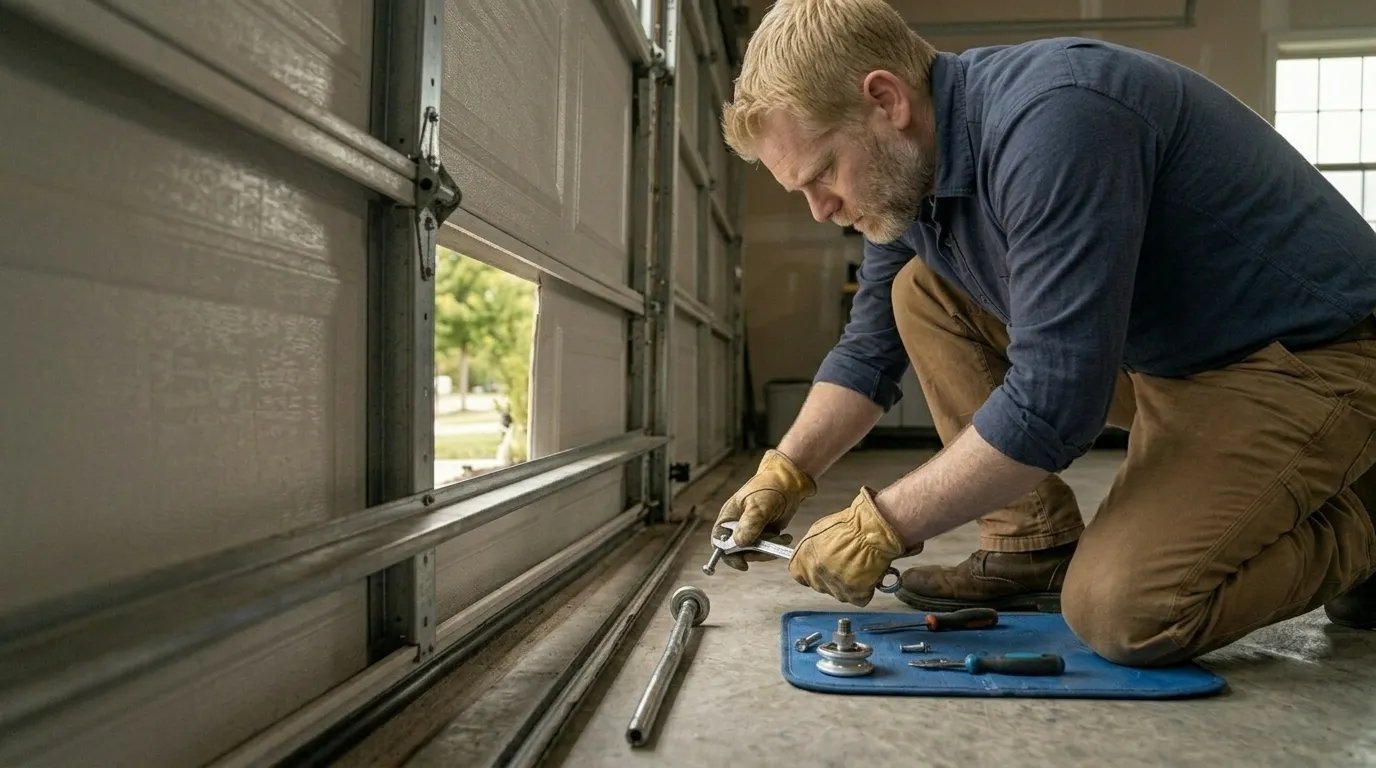
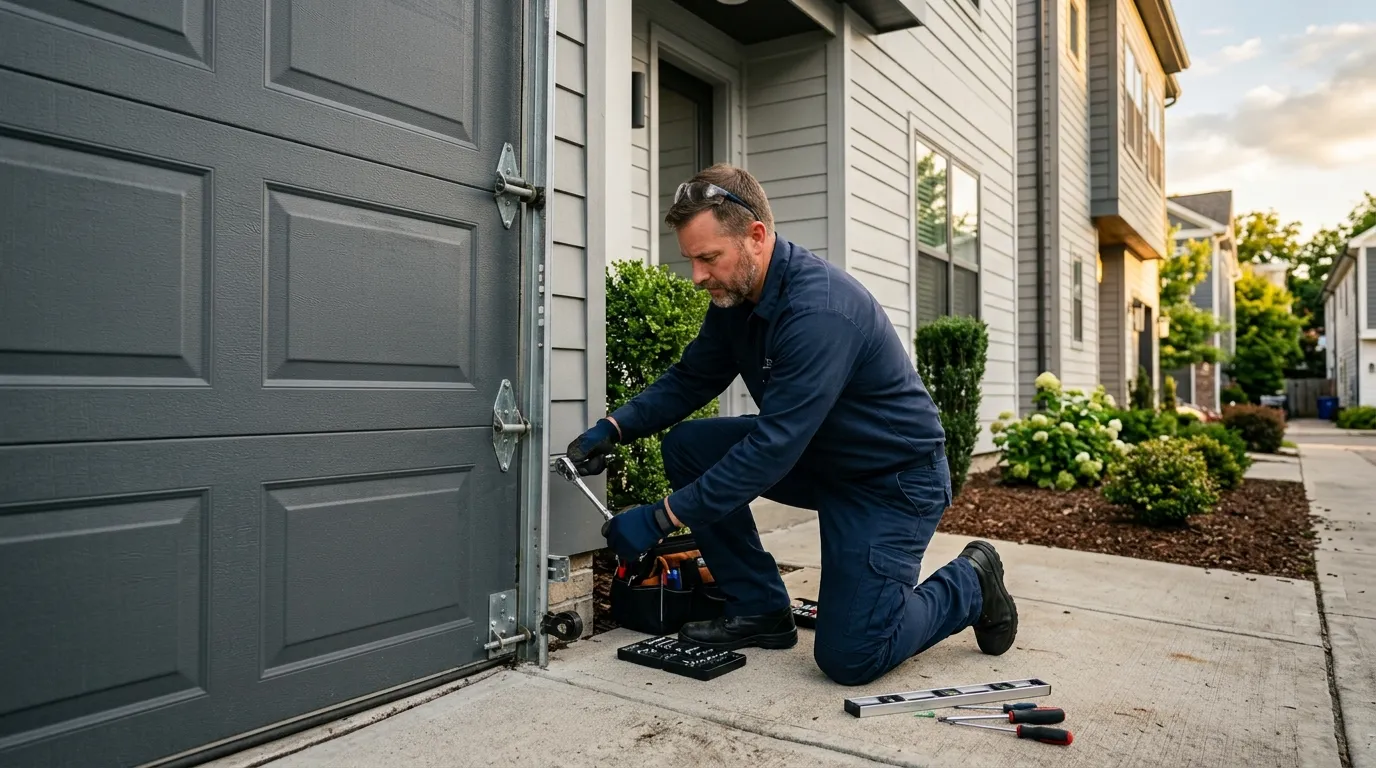
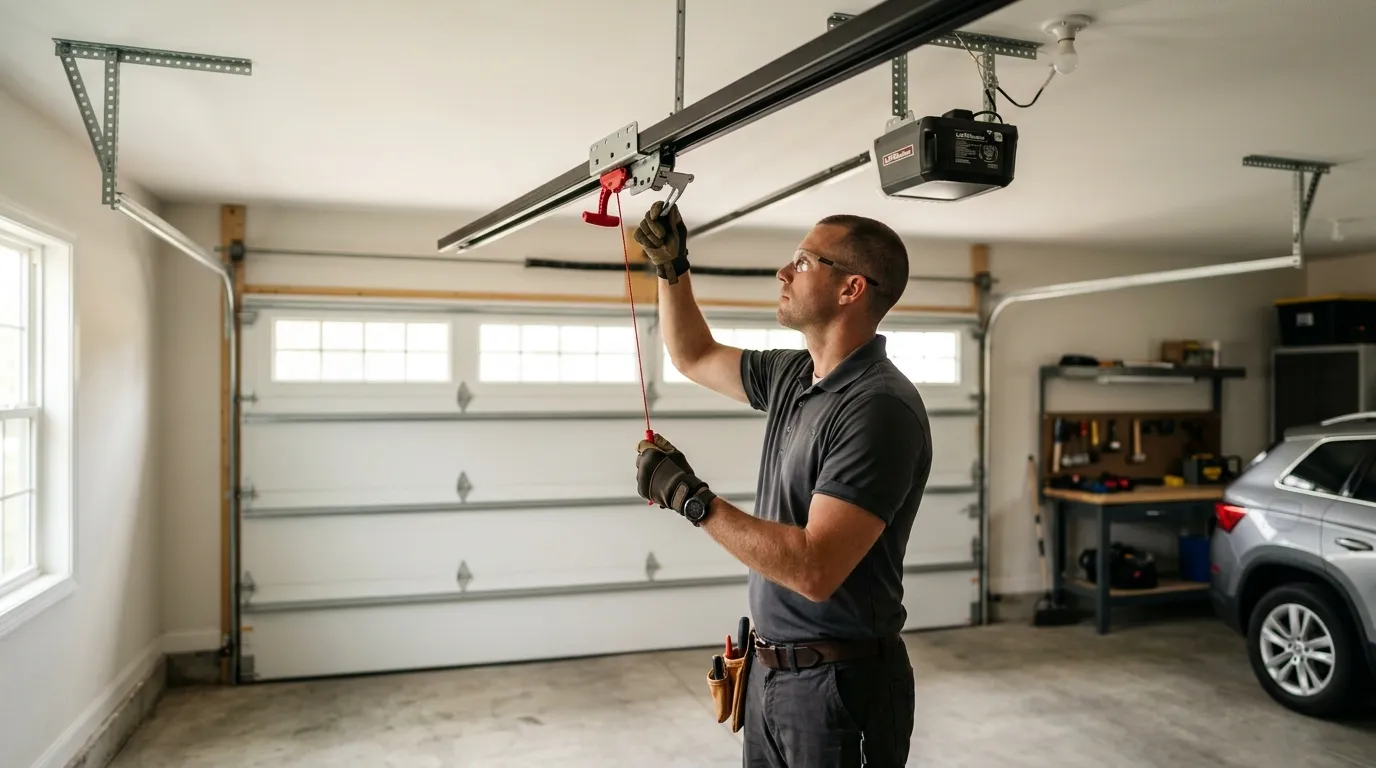
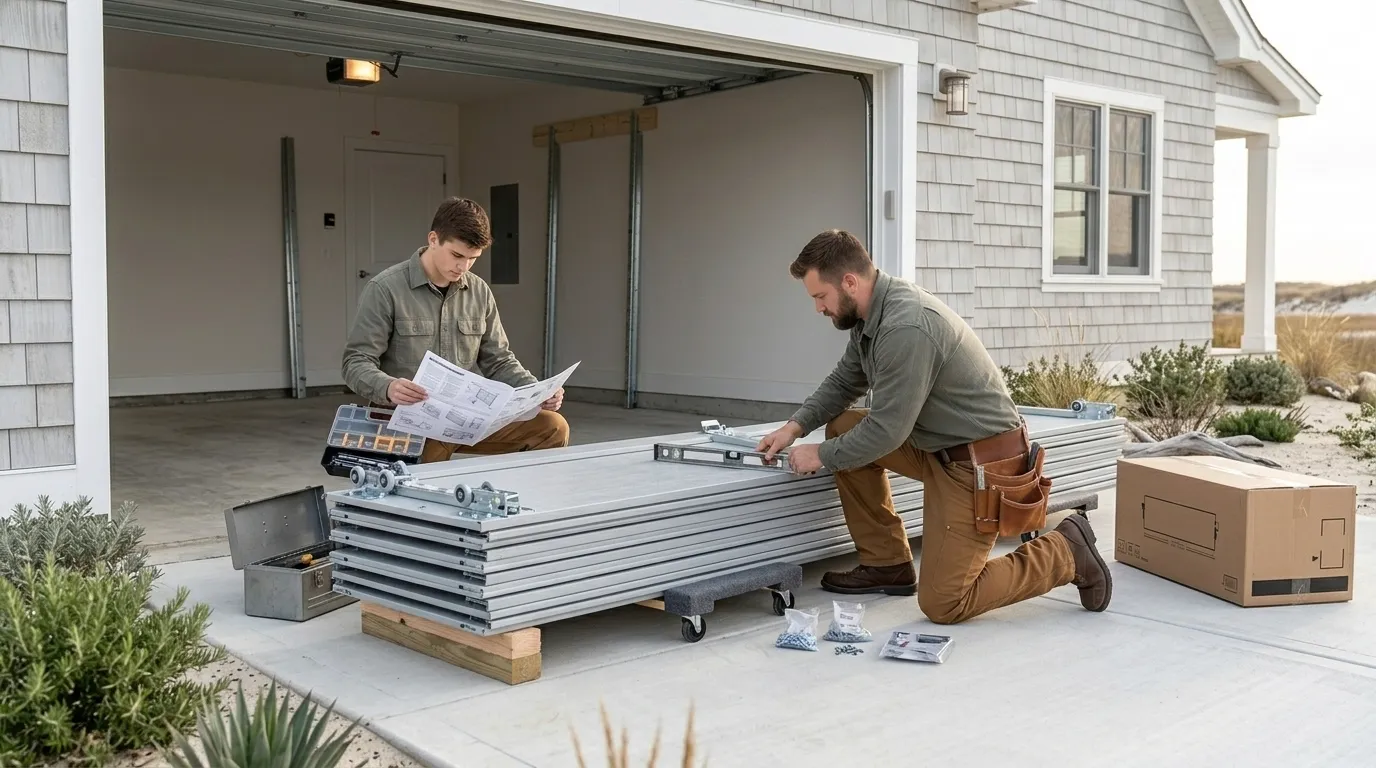
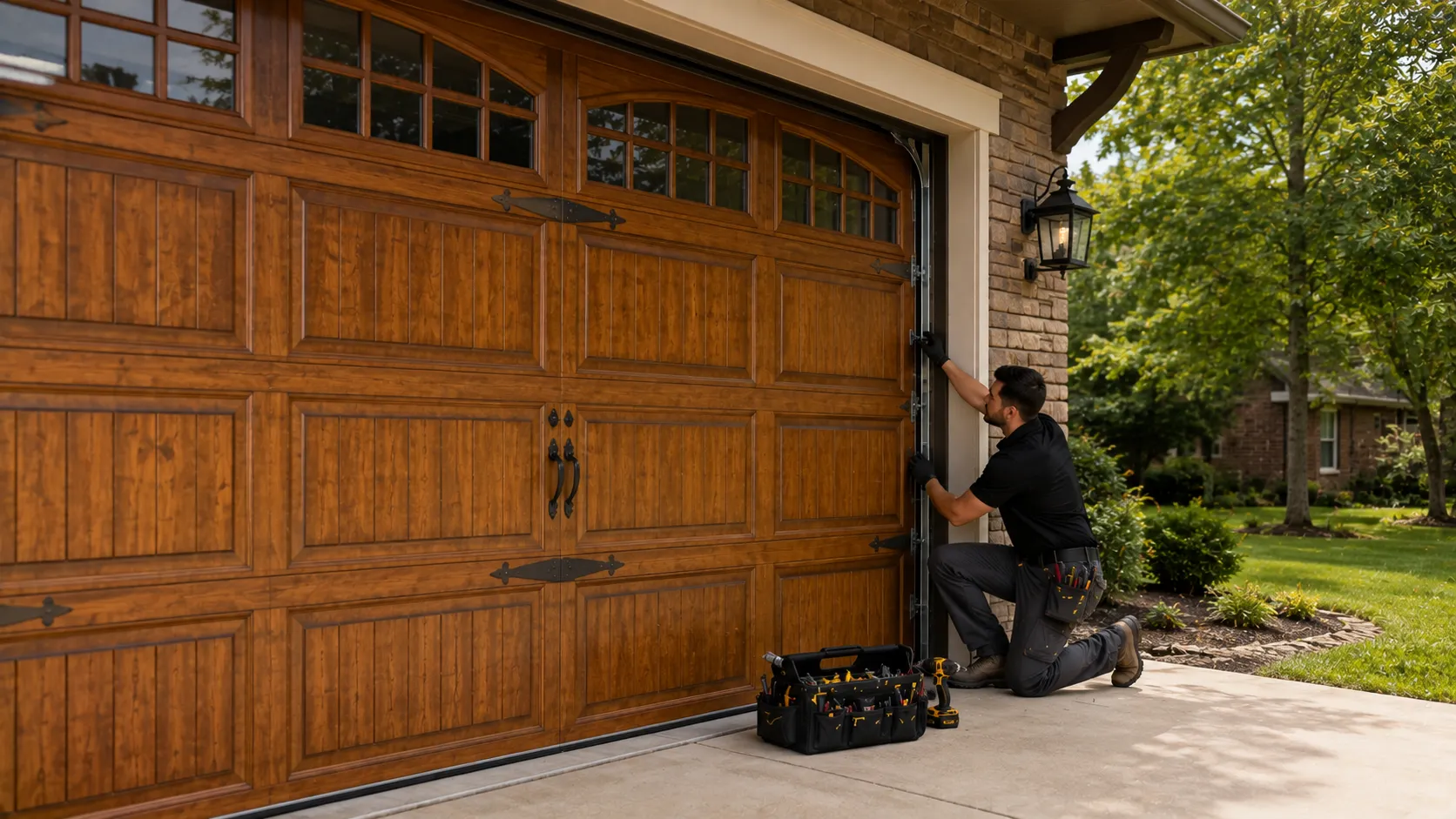
A homeowner can swap weatherstripping, replace a roller, or lubricate hinges without calling anyone. Those are low-risk jobs with low failure cost if you get them wrong.\n\nA torsion spring is not that job. Springs on a standard residential door hold enough stored energy to break a hand or a face if the winding bar slips, and a 2010-built door in Eagle Mountain is right at the age where original springs start going. We're not going to walk you through winding one here, because the risk-to-savings ratio doesn't work in your favor - the spring itself costs little, the wrong move costs a lot more.\n\nOpener installation is a gray area. If you're comfortable with wiring and can square a rail properly, a basic opener swap is doable. Where DIY installs go wrong most often is travel limits and force settings - set them wrong and the door either won't seal against the weatherstripping or it'll reverse on a car door. Full door replacement, where you're setting new track, new hinges, and balancing new springs against a new panel weight, is where we'd tell you to call rather than learn on your own garage.
What Can Go Wrong
Eagle Mountain's housing stock is younger than most of the towns we cover from Orem - the area median across our service territory runs from 1977 to 2015 with a midpoint of 1999, while Eagle Mountain itself centers closer to 2010. That means fewer of the old one-piece doors and hardware failures we see in older towns, but a different problem: builder-grade doors installed at construction, all reaching the same age at roughly the same time across whole subdivisions.\n\nThe symptom shows up as a door that's gotten heavier to lift by hand, or an opener straining and clicking off mid-cycle. That's usually a spring that's lost tension, not a broken opener. On non-insulated steel panels from that era, we also see denting and oil-canning on the wide sections - thin steel, no foam backing, so a basketball or a gust catches it.\n\nWinters here run in the cold-moderate band for this region, which means an aging seal at the bottom panel lets in enough draft to matter on an attached garage. That's a low-drama failure, but homeowners notice the heating bill before they notice the door.
What Causes It Around Here
With roughly 11,851 households in Eagle Mountain and most of that housing dating to around 2010, the town has a narrower age band of garage doors than places with a longer building history. That's a mixed blessing: fewer legacy doors with obsolete parts, but a concentration of the same builder-grade door and same low-end torsion spring installed across many houses in a short window. When one starts failing from age, a lot of neighbors are close behind it.\n\nThe cold-moderate climate band that covers this stretch isn't severe enough to crack panels outright, but it does stress weatherstripping and lubricant over repeated freeze-thaw cycles, which shows up as stiffness on cold mornings and a spring that feels weaker than it tested at installation.\n\nWe don't have wind, snow-load, or specific storm data for Eagle Mountain itself, so we're not going to claim a cause we can't back with a number. What we can say is that age and builder-grade parts, not weather extremes, explain most of what we're called out for here.
What Costs
At a median household income of $105,576 in Eagle Mountain, a full door replacement is a real budget decision but not an unreasonable one - it's close to the broader service area's $107,617 median, so the calculus here isn't much different than what we see across most of the towns we cover.\n\nWe don't publish a flat price on this page because door size, insulation level, and opener condition change the number too much to state one honestly. What we can tell you is the general rule we use: if the springs and rollers are original and the panel is dented but structurally fine, repair is almost always the cheaper and correct move. If the door is original from a 2010 build and the opener is straining, replacing the whole assembly at once - door, hardware, and opener together - usually costs less over five years than doing it in three separate service calls.\n\nCall for a walk-through quote specific to your door and opener. We'll tell you straight if a repair will hold or if you're better off replacing now instead of again in a year.