
How We Fix It
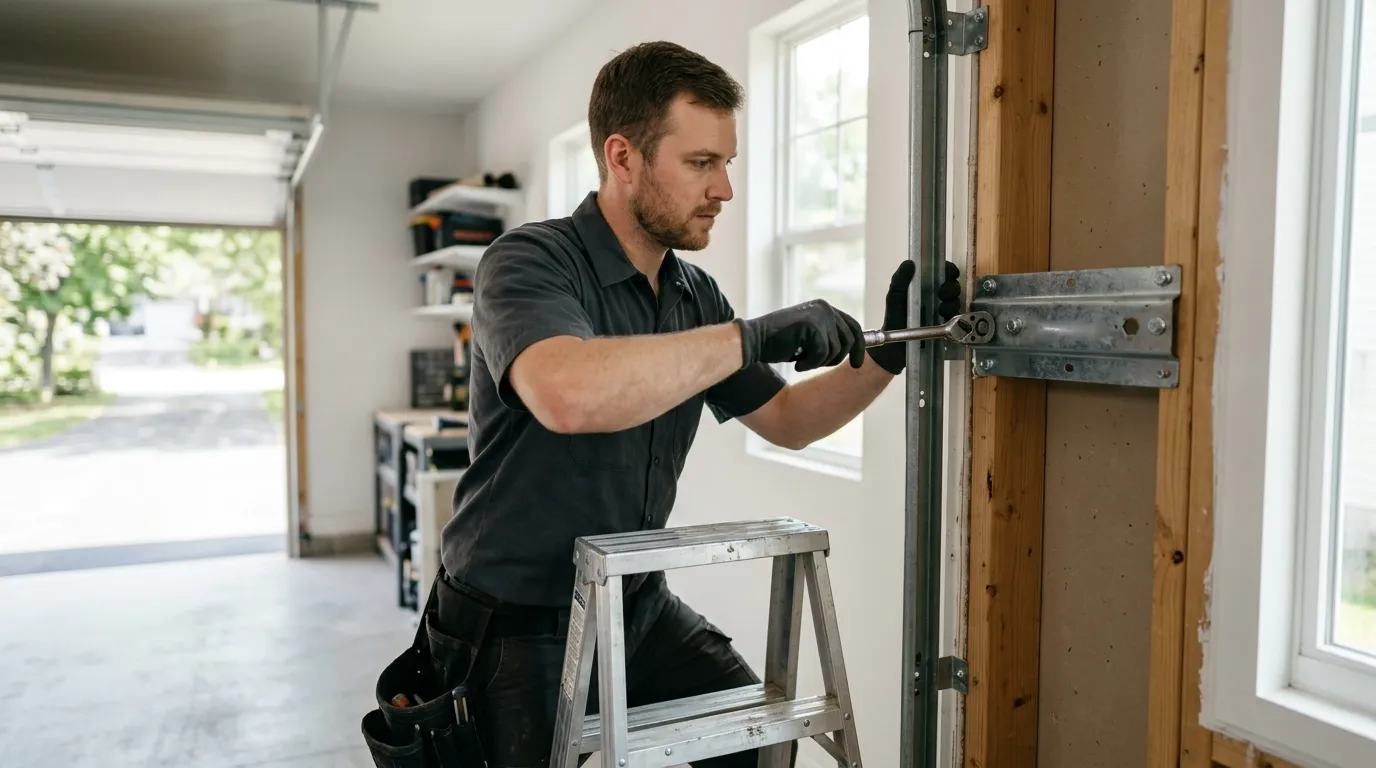
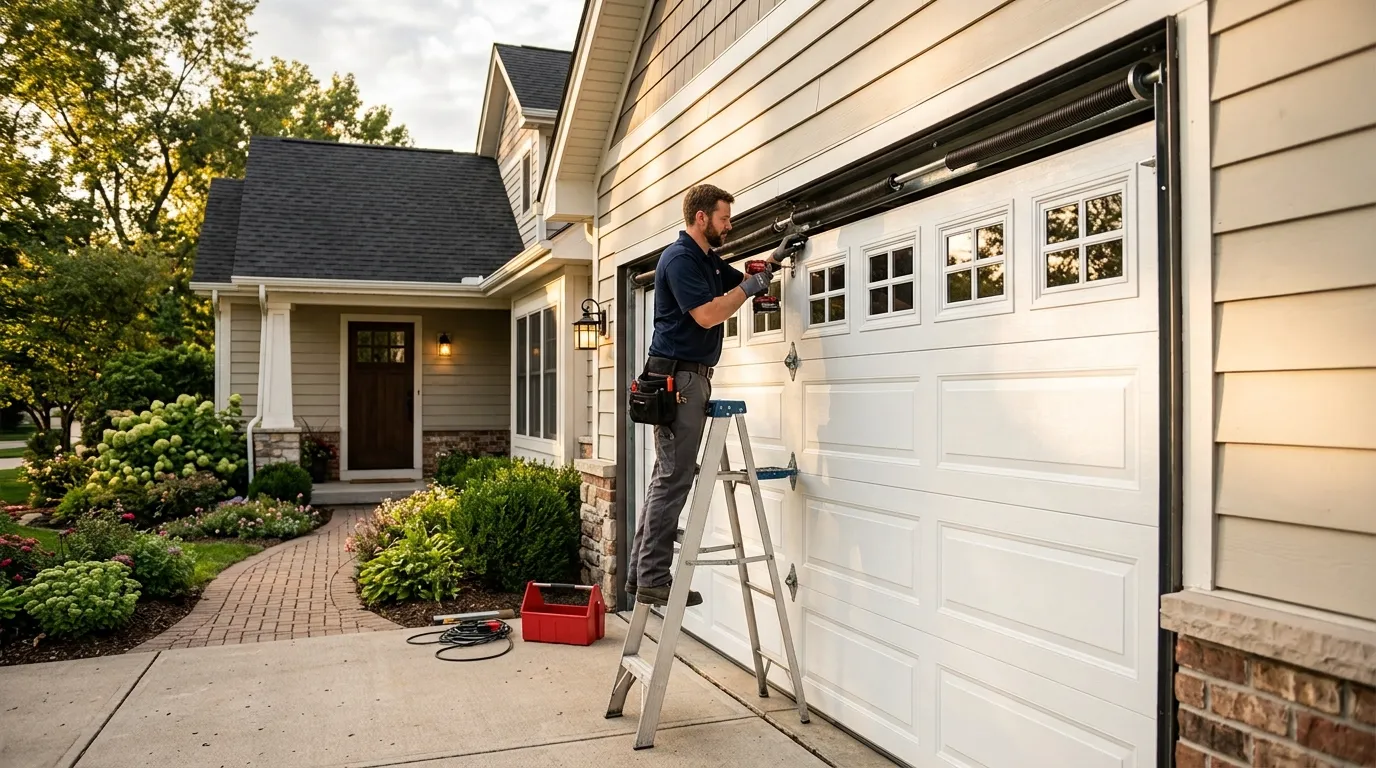
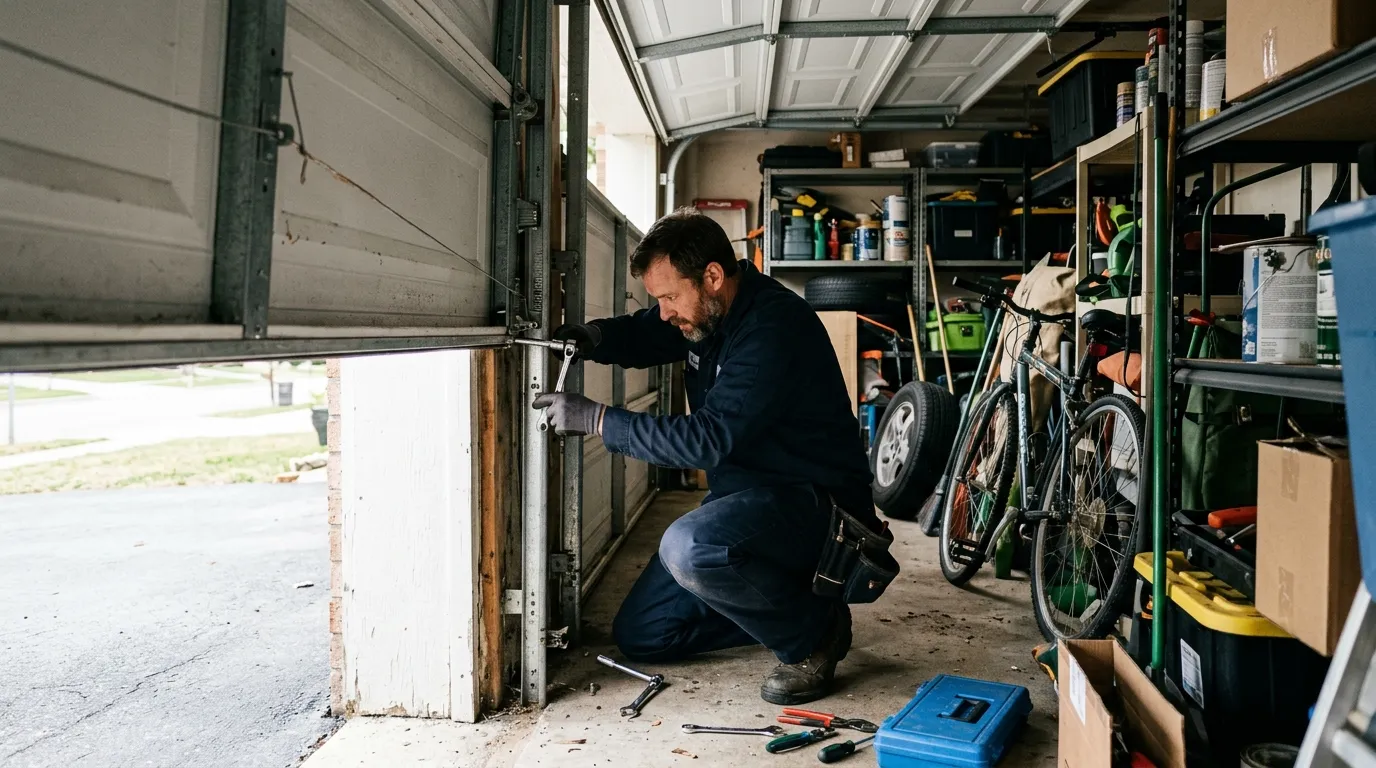
We start by taking the door off the spring entirely - releasing tension safely, checking the drums, cables, and center bearing, then measuring the existing spring's wire size, length, and wind direction so the replacement matches the door's actual weight rather than a rough estimate. On a standard double door built around 2004, that's usually a two-spring torsion system mounted above the opening on a single shaft.
We replace both springs together even when only one has broken. A torsion spring pair that's the same age wears at close to the same rate, and running one new spring against one that's fifteen or twenty years old just moves the next failure a few months down the road. After the new springs go on, we balance the door by hand - lifted halfway, it should hold its position on its own without the opener pulling it. If it doesn't, the spring tension isn't right yet, and we keep adjusting until it does.
Last step is cycling the door under power a few times and checking the opener isn't straining to make up for a door that isn't properly balanced. A door that's out of balance wears the opener's gears faster than the springs ever will.
What Can Go Wrong
The most common failure on a 2004-era door is straightforward fatigue: a torsion spring is rated for a set number of open-close cycles, and once a spring built around 2004 gets close to twenty years old, it's often past that rating even on a door that's never had a dramatic problem. The spring doesn't always announce itself first - sometimes the door just gets heavy to lift by hand, and a few weeks later it lets go.
A less common but harder problem is a spring that's been wound or replaced incorrectly at some point, often by someone using a universal spring instead of one matched to the door. That shows up as an opener that strains constantly, or a door that closes unevenly, dropping faster on one side than the other.
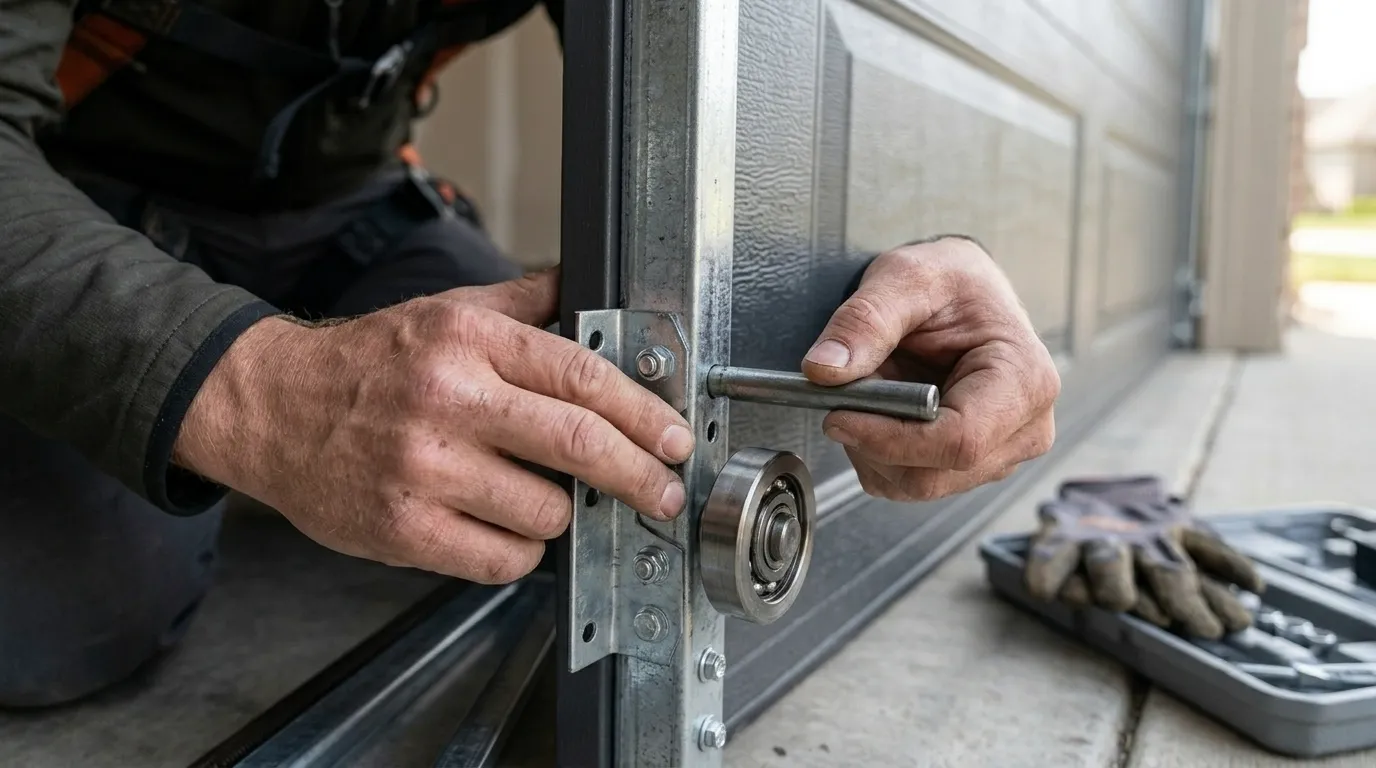
Cables coming off the drum usually follow a spring failure rather than cause one, but a frayed cable on its own can jam a door mid-travel. We check cable condition any time we're replacing springs, since a cable close to failing is a cheap fix now and a stuck, off-track door later. One thing we won't do is quote a spring-only fix on a door where the cables are visibly fraying - that's a job that needs both done at once, or it's not solved.
How It Shows Up
The clearest early sign is a door that's suddenly heavier to lift by hand than it used to be - if you disconnect the opener and the door doesn't stay put halfway up, the spring has already lost tension even if it hasn't fully broken yet. A loud bang from the garage, especially in the morning after a cold night, is usually the spring letting go outright.
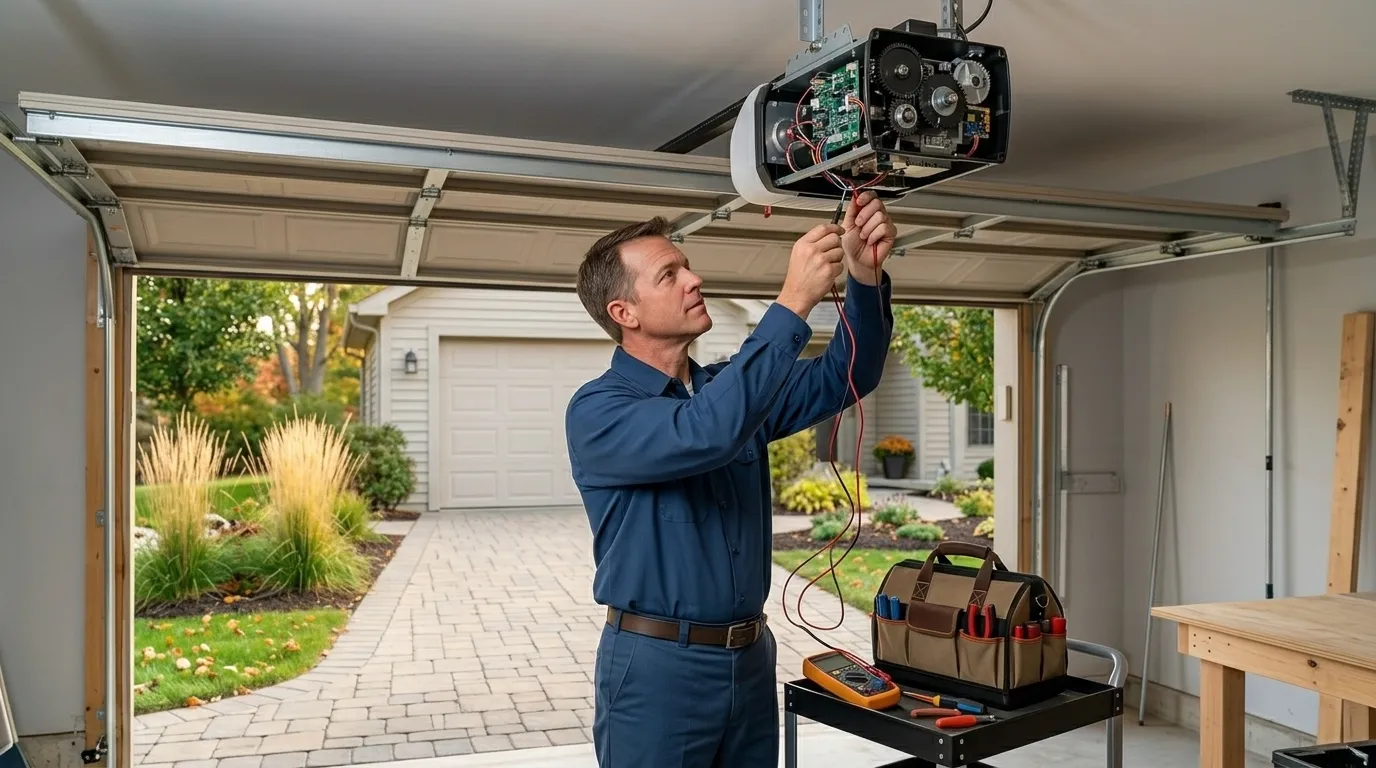
An opener that strains, groans, or takes noticeably longer to open the door is often compensating for a spring that isn't doing its share of the lifting anymore - the motor was never built to lift the door's full weight on its own, and running it that way for more than a day or two shortens its life fast.
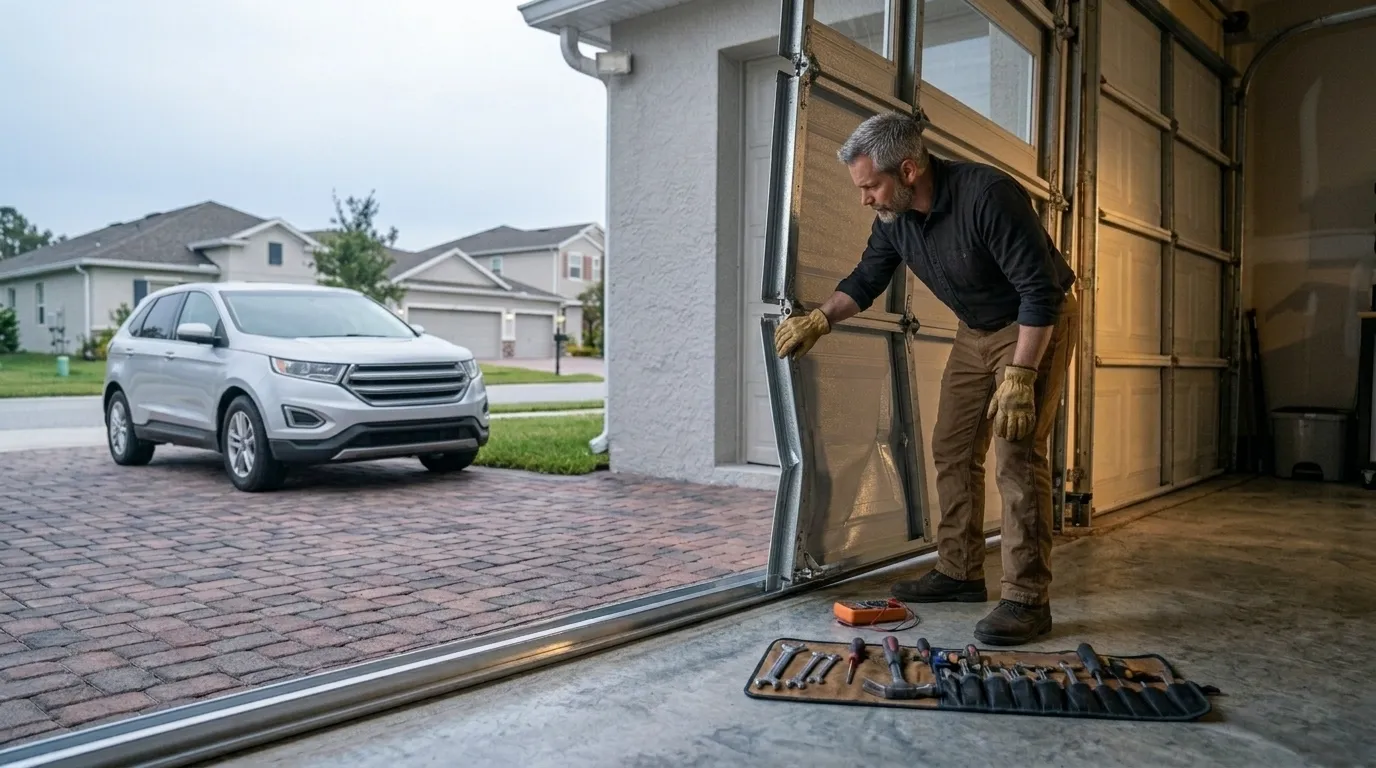
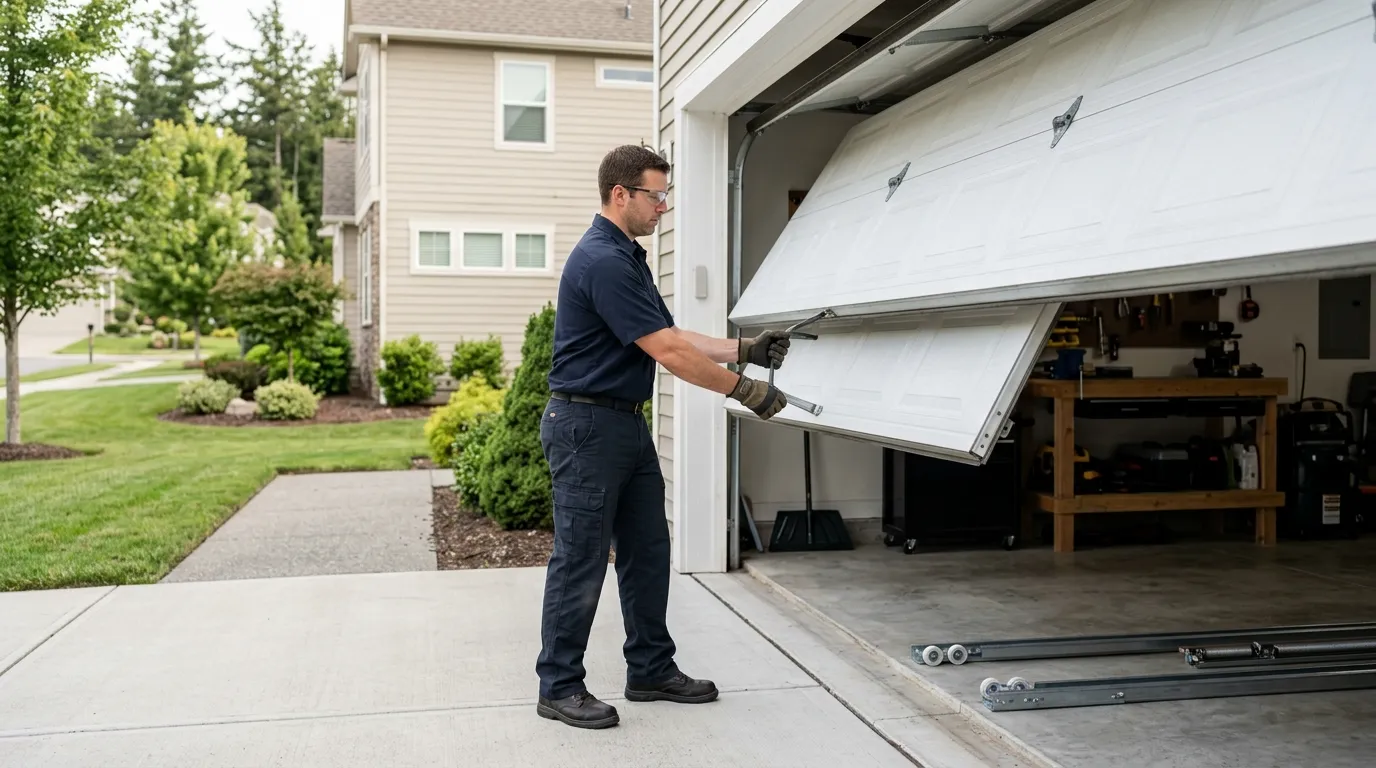
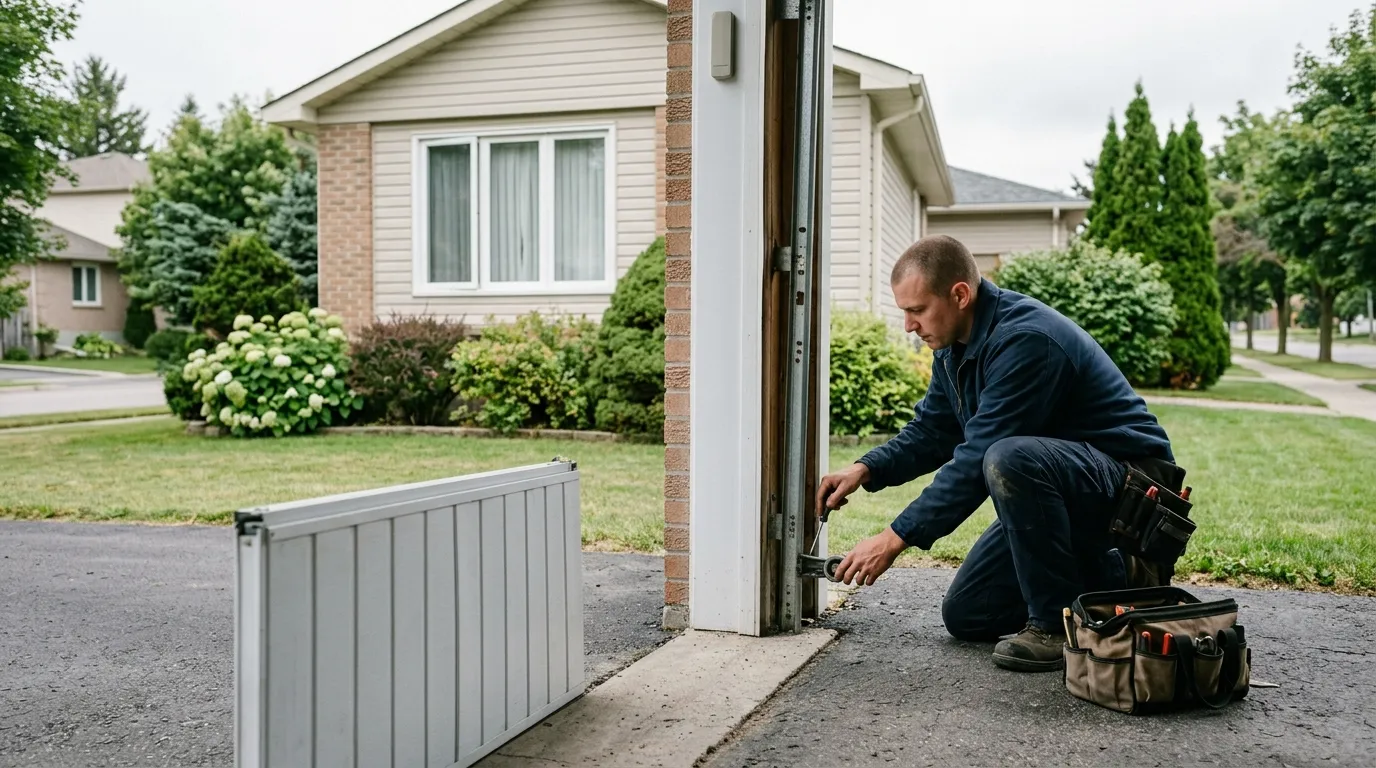
A door that closes unevenly, with one side reaching the floor before the other, points to one spring in a two-spring system failing while the other is still holding. That's not a wait-and-see situation. An unbalanced door under partial spring tension can come down harder and faster than it should, and it's worth a call before someone's standing under it.
Booking a Visit
We work out of Orem and drive out the roughly 10 miles to reach Highland for spring calls. There's no branch office here - the truck comes from Orem, loaded based on what you tell us about the door on the phone, which is why it helps to know roughly how old the door is and whether it's ever been serviced.
If you're not sure whether what you're hearing or seeing is a spring problem or something else - a track issue, a bad opener capacitor, a cable off the drum - describe it when you call and we'll tell you honestly what it sounds like before anyone drives out. Not every noisy door needs a spring replaced, and we'd rather tell you that up front than run up a bill.
See our Highland service area page for more on where we cover, or check the Orem spring repair page if you're closer to Orem itself and want details specific to that side of the service area.