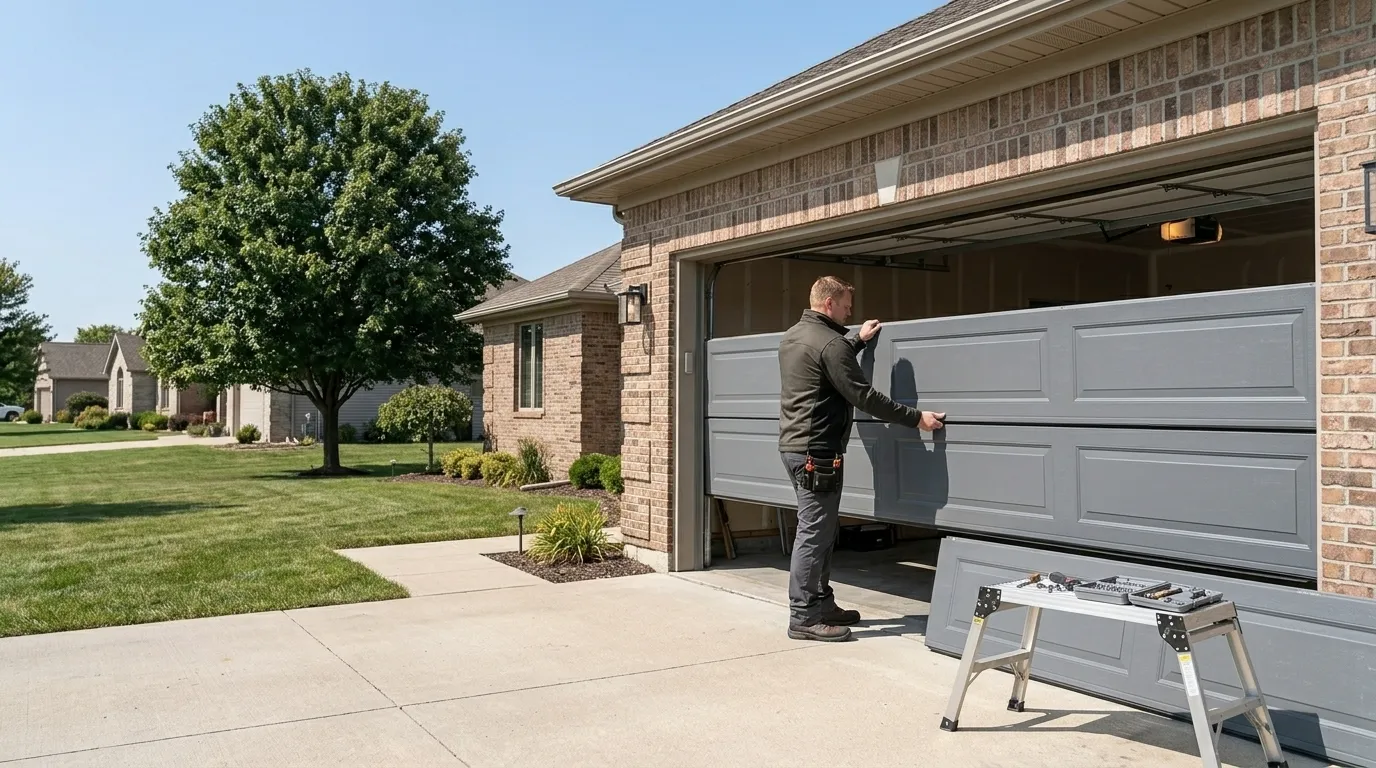
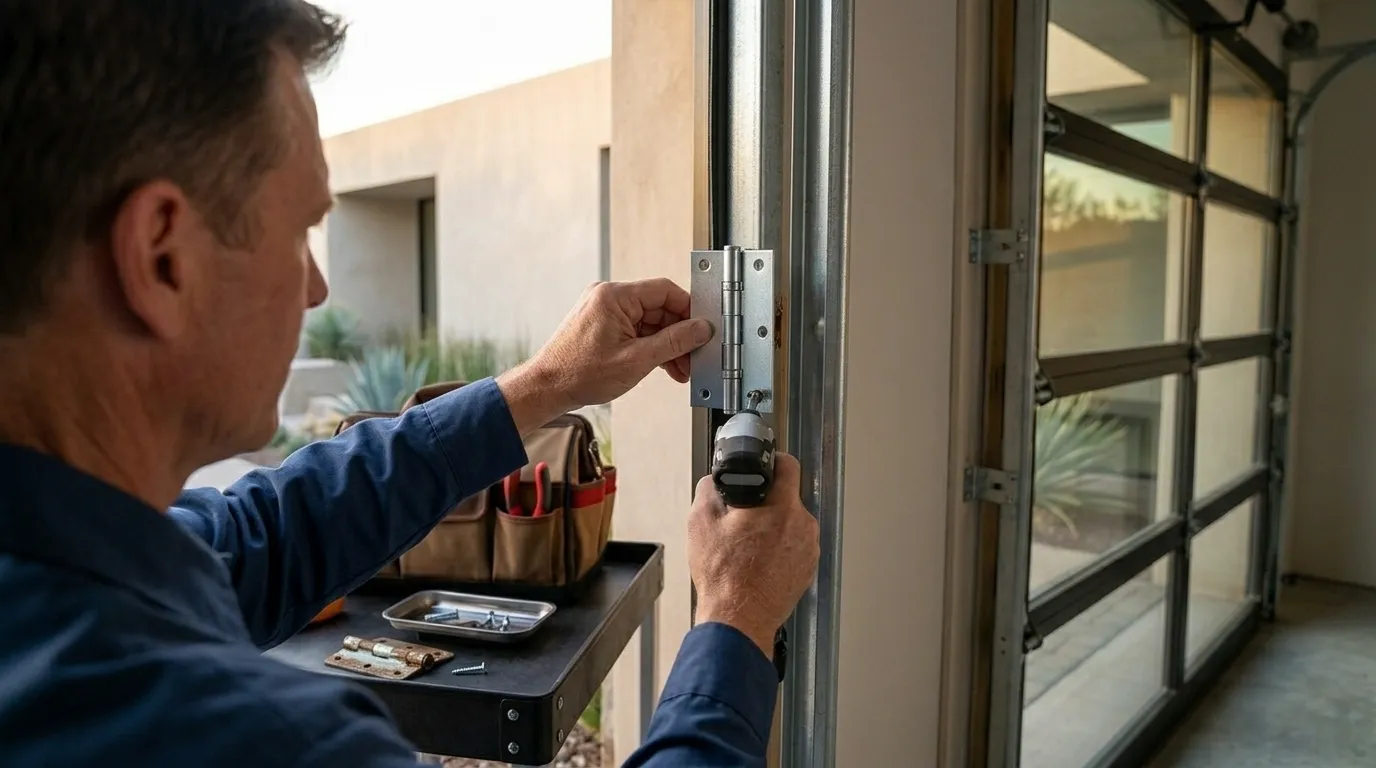
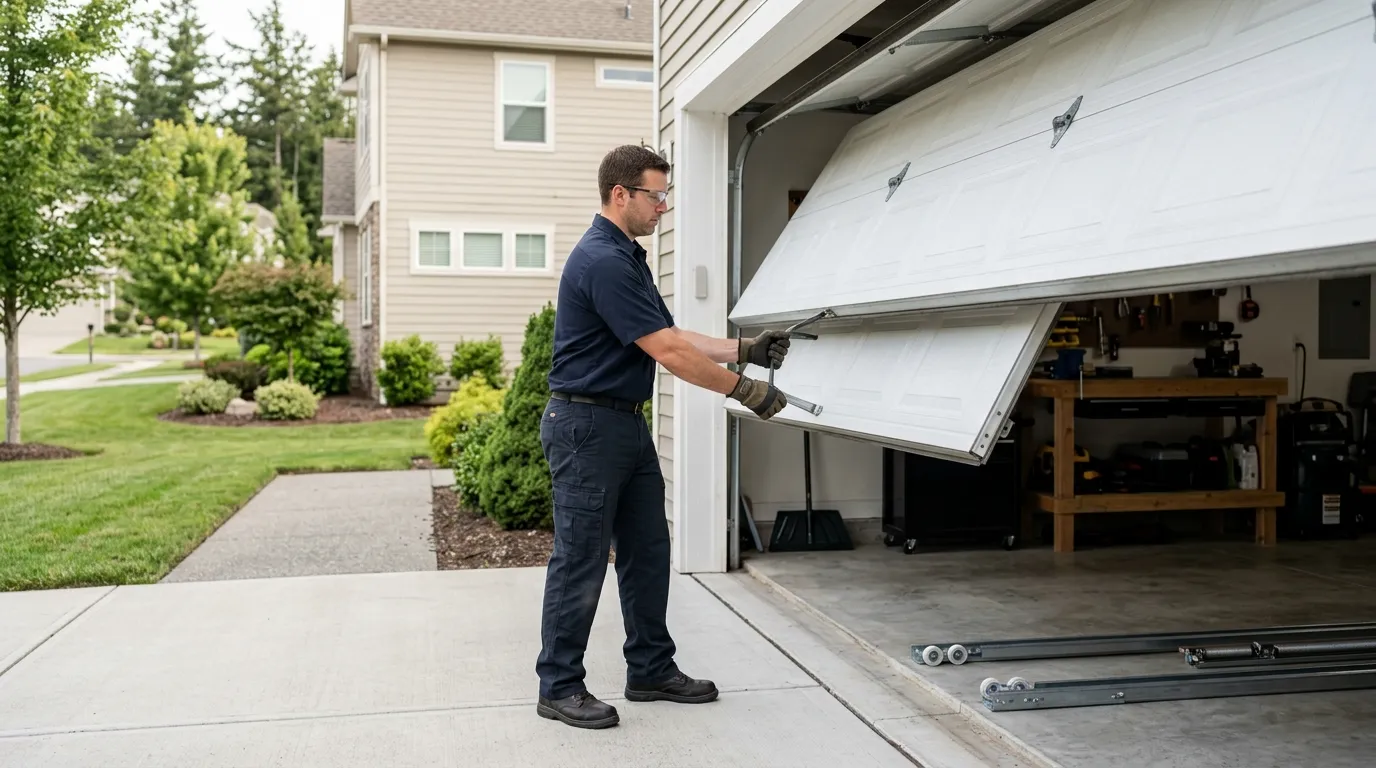
If your garage door was original to the house and the house went up anywhere in that 1977-2015 window that covers most of Orem, there's a decent chance you've never had a reason to think about the door's insulation until now - it just closes and opens. Call someone when the inside of the panel sweats on cold mornings, when the garage stays noticeably colder than it should even with the door shut, or when you can see daylight around the edges when it's closed. Those aren't cosmetic problems in a cold moderate climate band; they're signs the door was built to a spec from before insulation was part of the conversation. We won't tell you to replace a door that's still sealing fine just because it's old - if the panel is solid, the seals are intact, and it's not costing you in heat loss, a repair to the opener or hardware is the right call, not a full swap. But if the steel is thin, single-layer, and visibly working against you every winter, patching it isn't worth the labor.
What Local Conditions Do
Orem sits in a cold moderate climate band, which means real freeze-thaw cycles most winters but nothing as extreme as the doors get built for in colder parts of the country. That matters because a door built without insulation doesn't just let heat out - it also lets moisture in from the warmer garage-side air meeting the cold steel, and that moisture shows up as condensation dripping down the inside of the panel or pooling at the bottom track. Over enough winters that moisture works on the bottom seal, the hardware, and eventually the springs, which corrode faster wet than dry. None of this is dramatic weather - no named storm did it - it's just the ordinary cold moderate cycle doing what it does to a door that was never built with a thermal break. A newer insulated door handles the same climate without the sweating, because the steel on the garage side never gets cold enough to meet the dew point.
What Is Going On
Housing across the area runs from 1977 to 2015 with the median stamped right around 1999, and the bulk of it - the 1980s and 90s wave - falls into the stretch before insulated garage doors were the default builder spec. Builders in that era were putting up single-layer steel doors because that's what met code and kept costs down; insulation was an upgrade, not a requirement, and most tract homes skipped it. So a big share of Orem's garages are running the original door from that build era, or a like-for-like replacement that copied the same uninsulated spec because nobody flagged it as an issue. It's not a defect and it's not neglect - it's just what got built in that window. The problem only becomes visible once you're living with a cold moderate winter pattern and a door that was never designed to handle the temperature swing between garage and outside.
What to Look At First
Start at the door itself, not the opener. Look for a rating sticker or embossed panel marking - most true insulated doors will say so somewhere on the inside face; if there's nothing, and the panel is a plain single layer of steel with no foam backing visible when you look at the cut edge near the track, that's your answer. Check the bottom seal next: a hardened, cracked, or flattened seal on an older door lets in more cold air than the panel itself does. If you're in one of the older interior pockets - Orem Park, Westmore, Bonneville, or Lakeview all sit inside that same 1980s-90s build wave - assume uninsulated until you check, because that's the pattern for that stretch of housing. Last, feel around the frame for daylight or drafts on a cold day; gaps there point to a warped jamb or worn weatherstripping rather than the door panel, and that's a cheaper fix than a full replacement.
How it works
From “it’s stuck” to “it’s fixed”
01
Tell us what’s wrong
Describe the symptom - won’t open, loud bang, opener runs but the door won’t move.
02
On-site diagnosis
A technician tests the door under power and by hand and finds what actually failed.
03
Clear, up-front plan
You get the fix that’s needed and what drives the cost - before any work starts.
04
Repaired & tested
The repair is done, the door is set true and tested, and the work area left clean.
Serving Orem, UT - tell us what your door’s doing and we’ll take it from there.
Straight answers about garage door repair in Orem. Still unsure? Ask us directly.
Is my garage door actually uninsulated, or does it just feel cold?
Check the cut edge of a panel near the track - insulated doors show a foam core, plain steel doors don't. Most Orem homes built in the 1980s and 90s got the plain steel version as standard, so if there's no sticker and no visible foam, assume it's uninsulated rather than guess from feel alone.
Do I need to replace the whole door to fix the cold and condensation?
Not always. If the panel and seals are otherwise sound, a new bottom seal and weatherstripping around the frame can cut down on drafts and moisture significantly. Full replacement makes sense when the steel itself is thin, dented, or the springs and hardware are already corroding from years of condensation.
Why does this show up more in winter than summer?
Orem's cold moderate climate band means the garage side of an uninsulated door gets cold enough to meet the dew point of warmer indoor air, so moisture condenses on the panel. In summer the temperature gap is smaller and less consistent, so the same door won't sweat the same way.