When We Can Get There
Because we're coming from Orem, Alpine isn't a same-hour stop the way a neighborhood a mile from the shop might be. We build the day's route around where the trucks already are, and a job in Alpine gets scheduled with that 12-mile drive counted in, not ignored. If you call with a spring that's already snapped and the door won't budge, tell us that up front - it changes where you land in the order of the day, but it doesn't change the fact that we're still driving in from Orem to reach you.
Winters here add another layer. Alpine sits at a higher, colder point than a lot of the valley, and a cold morning can make a marginal spring or a dry track fail that would have limped along one more week somewhere warmer. That's not a promise of a faster response - it's just why the calls from up here tend to cluster on the first hard-freeze mornings of the season.
How That Shows Up in the Door
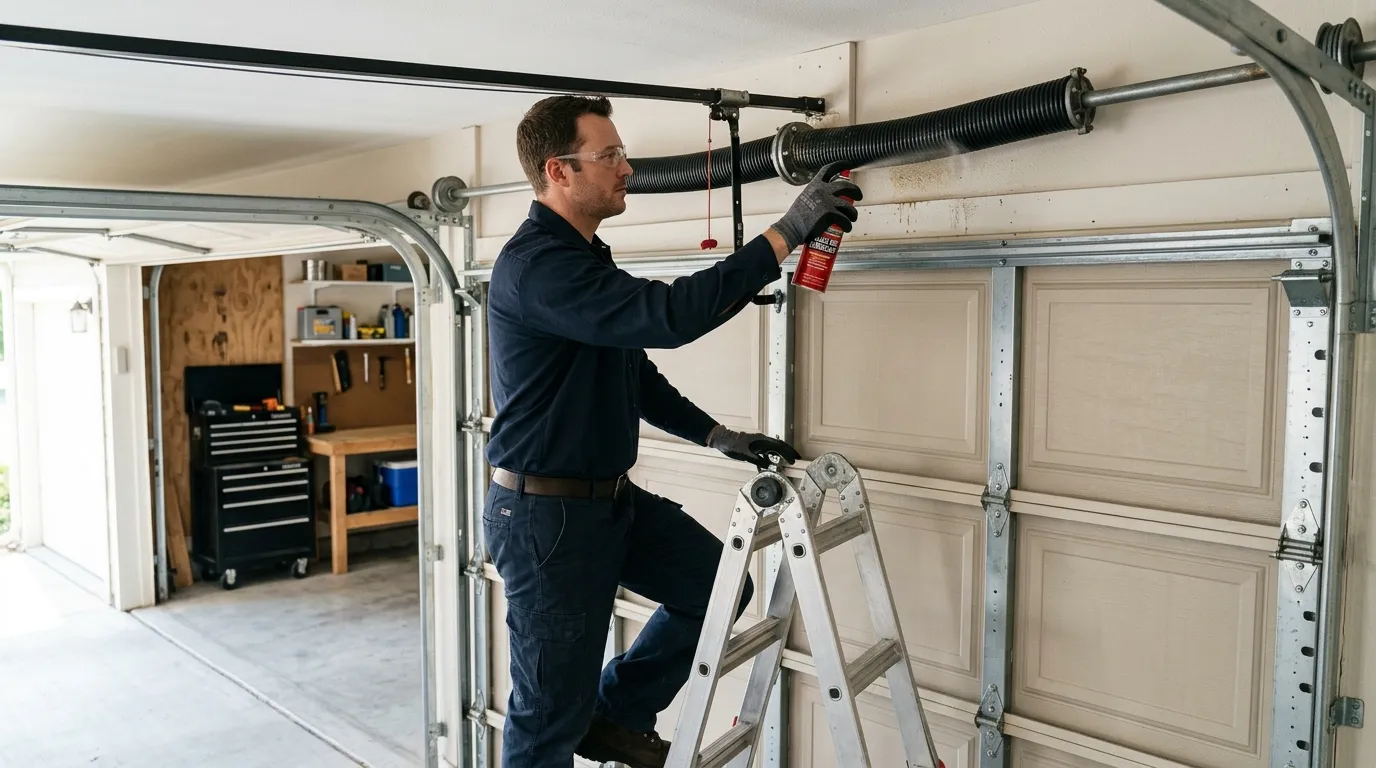
Most of Alpine was built later than a lot of the area we cover - median year built here is around 1998, newer than the mix of 1980s and 90s stock that makes up a lot of our other stops. That matters more than it sounds like. A house from 1998 usually came with a steel raised-panel door on a torsion spring system and a chain or screw-drive opener with a circuit board, not the older extension-spring setups or wood doors you find in older pockets of the valley.
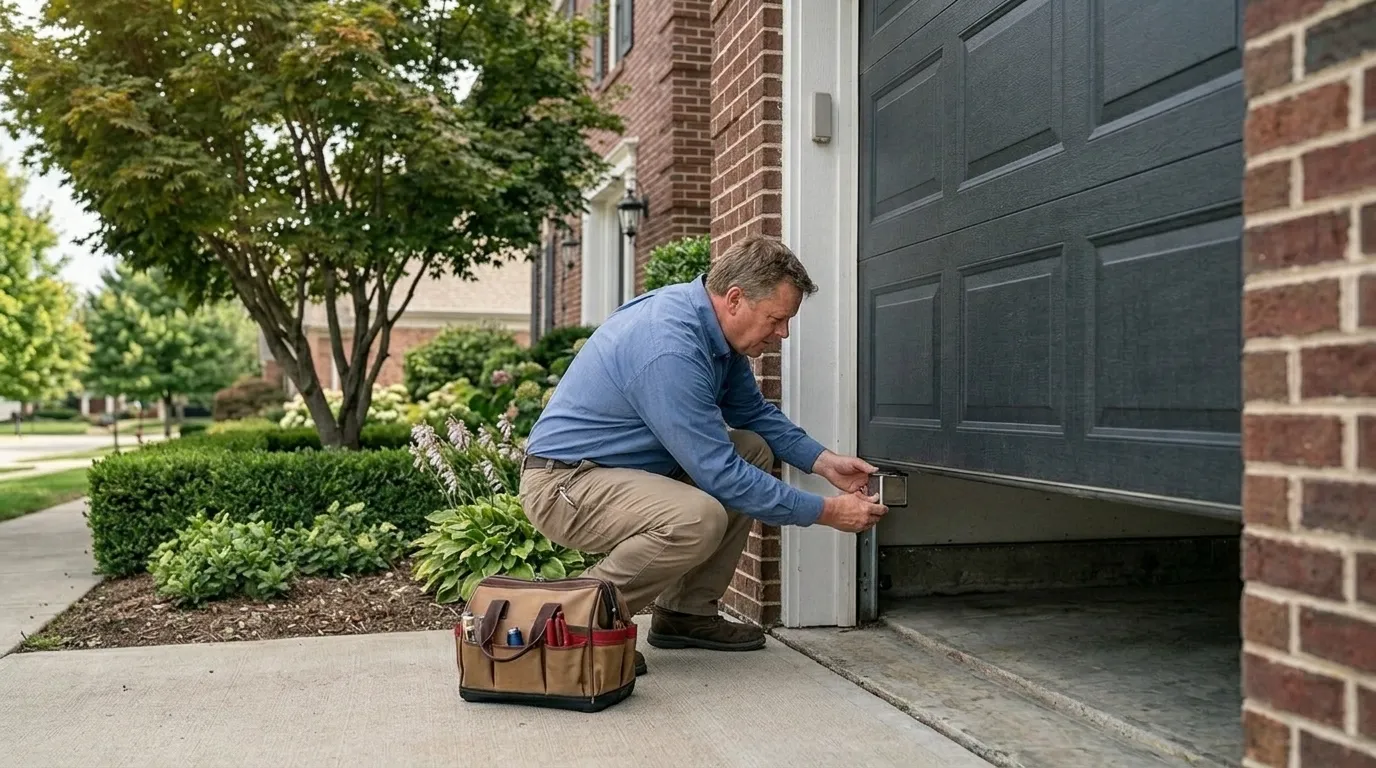
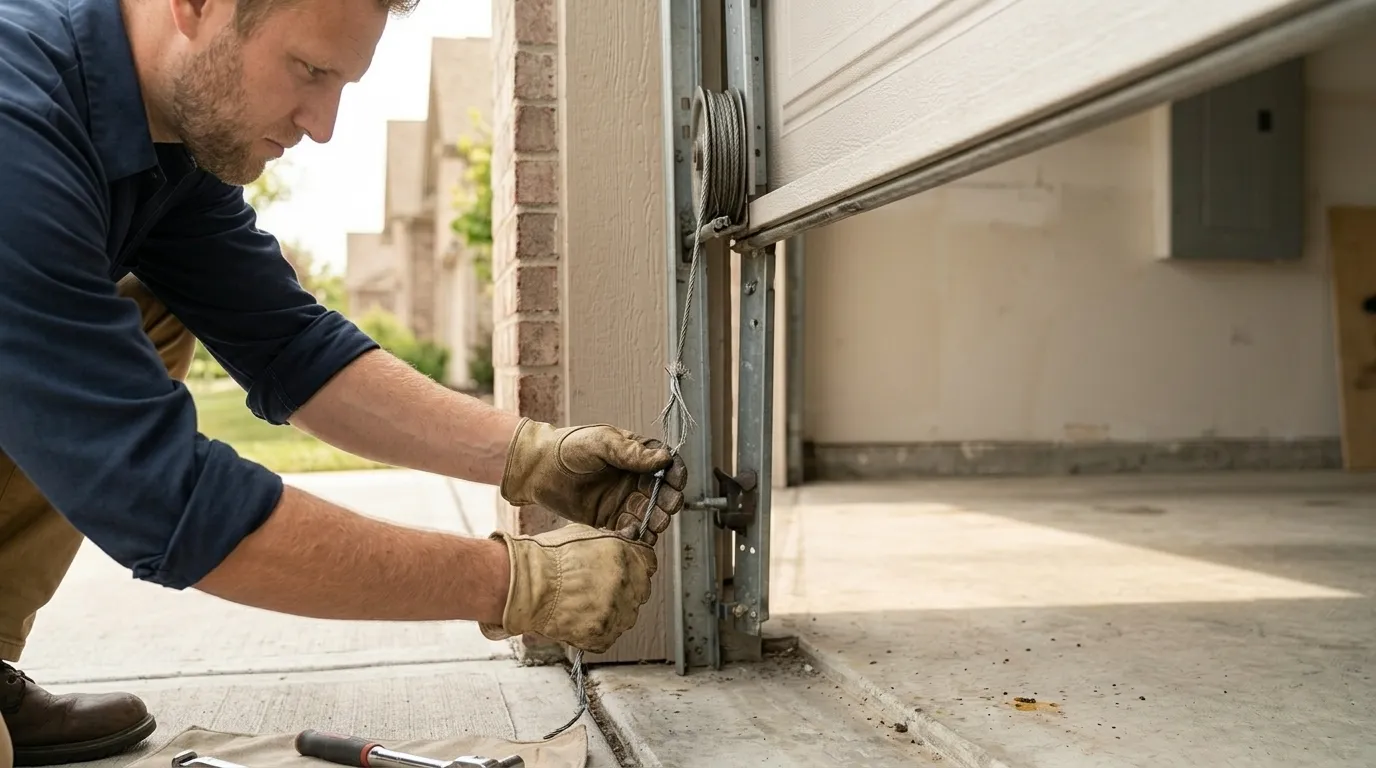
The common failures follow the age of the parts, not the age of the neighborhood's reputation. On Alpine doors we're mostly dealing with worn opener boards, gaskets and weatherstripping that have finally given out after 25-plus winters, and torsion springs reaching the end of their cycle count rather than the total wear you see on genuinely old original hardware. It's a different repair conversation than we have in an area still running 1970s doors - here the bones are newer, so more often it's the moving parts and electronics, not the door panel itself, giving out.