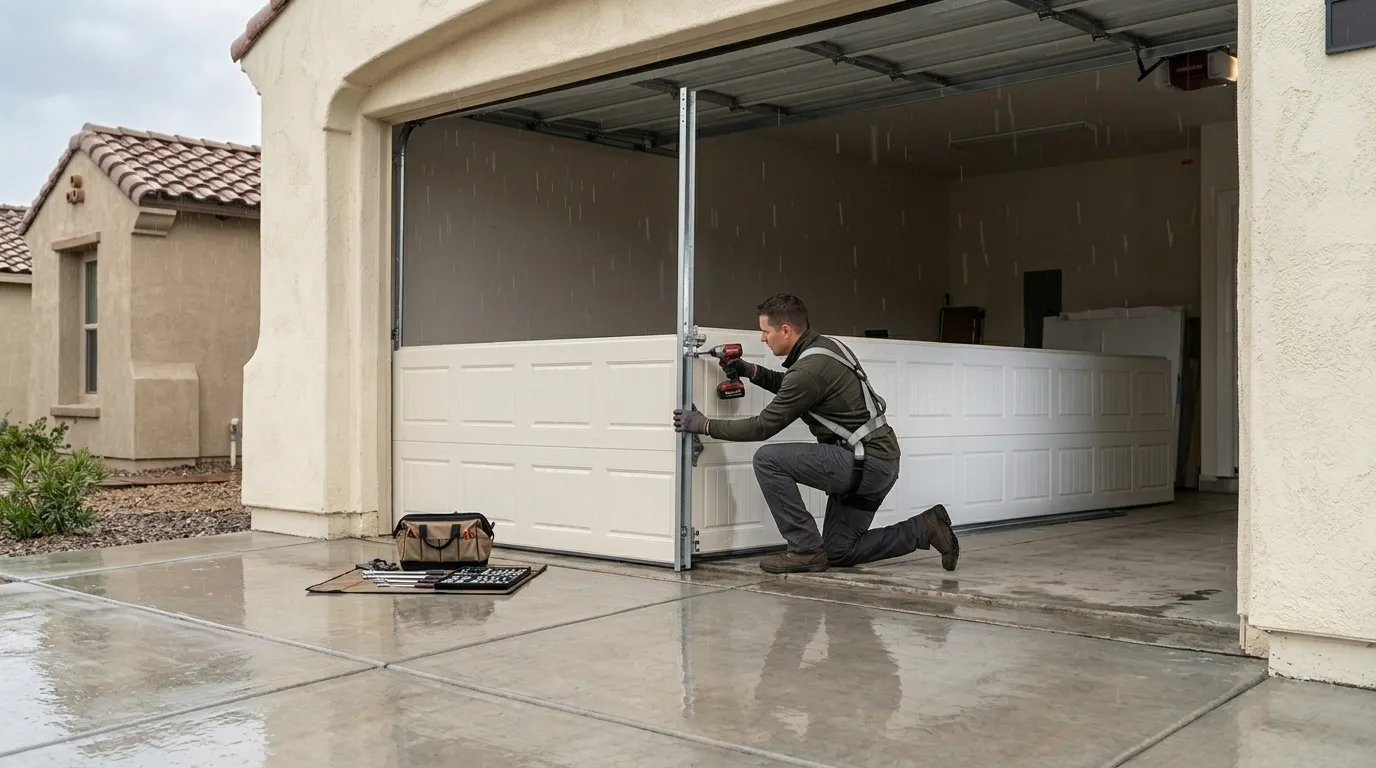
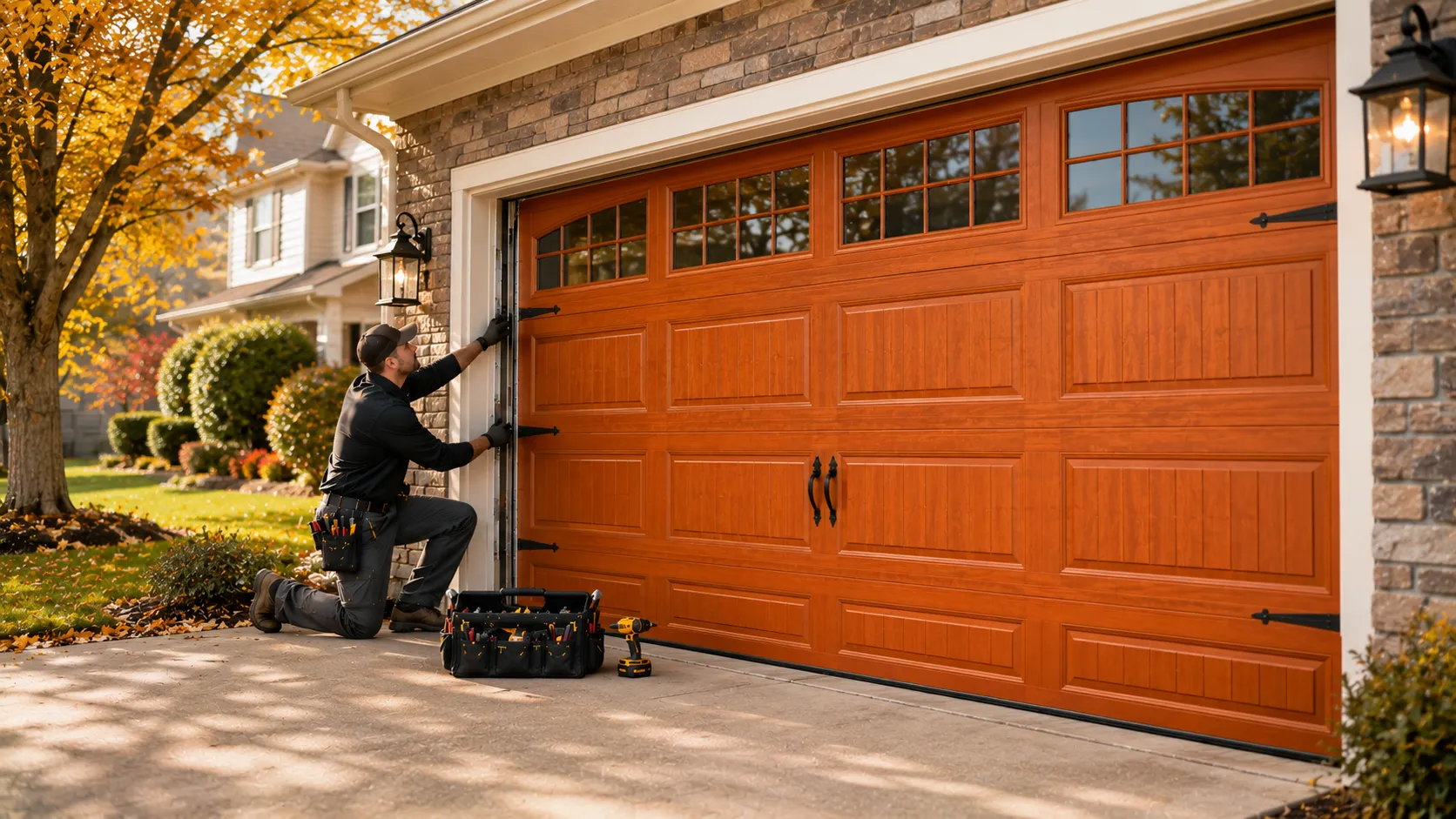
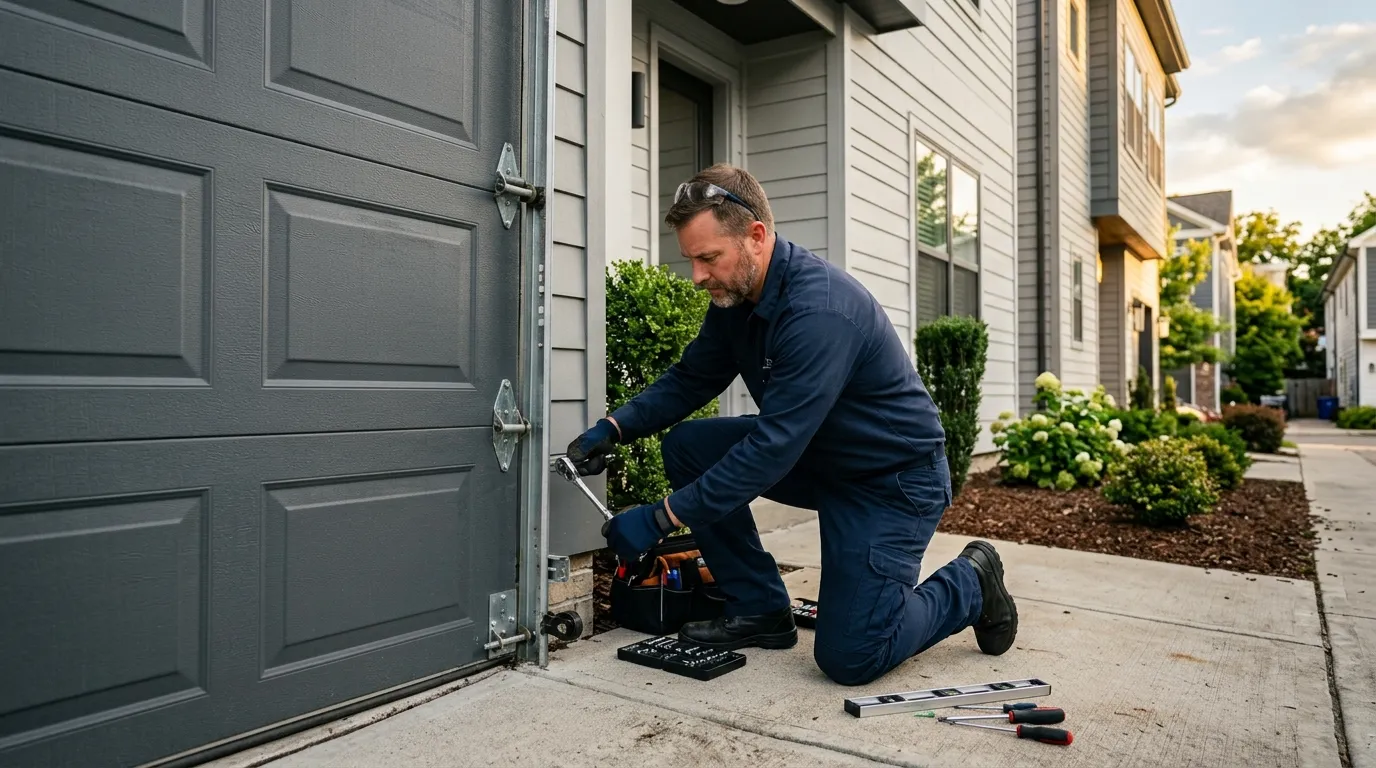
Torsion springs and openers from Orem's 1980s-90s housing boom fail in predictable ways once cold hits. Local repair for Orem Park, Bonneville, Lakeview, and nearby streets.
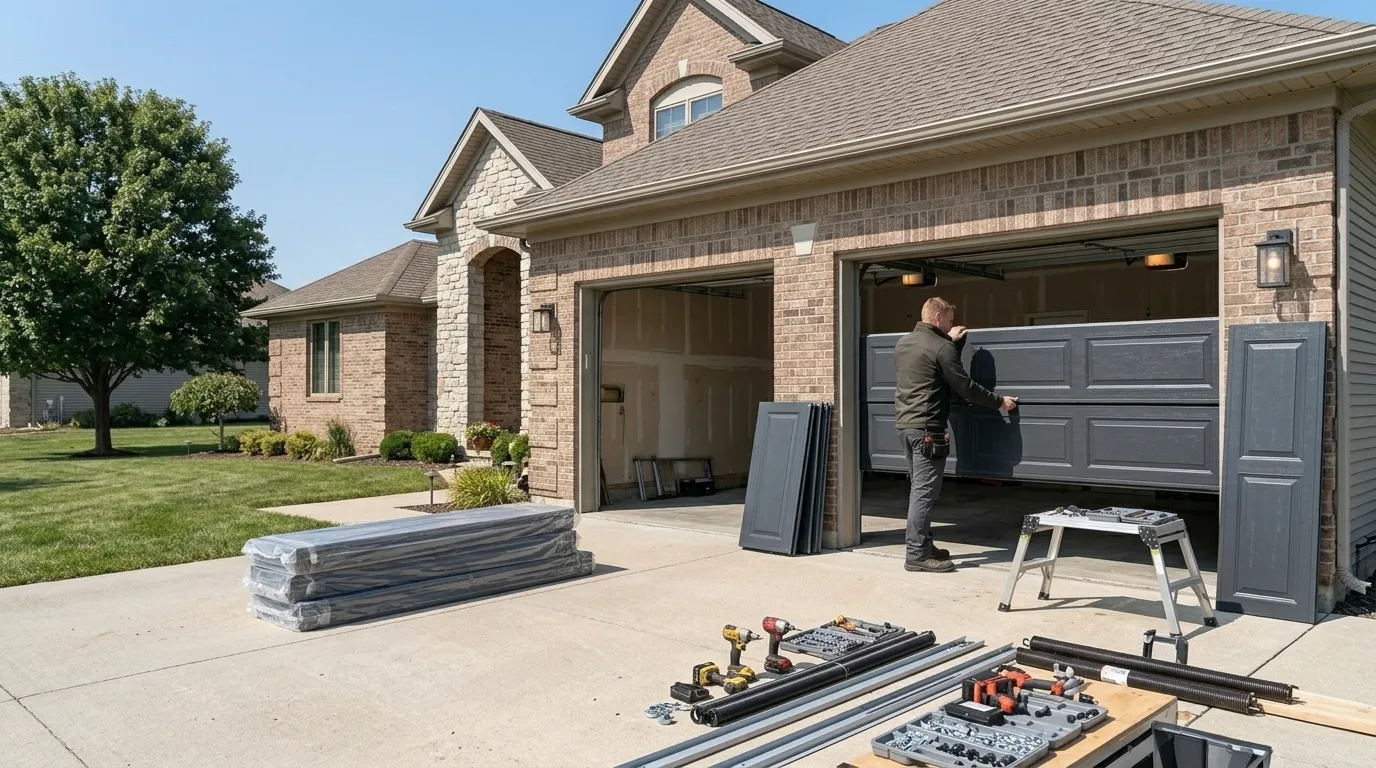
Most of the housing stock in this service area went up between 1977 and 2015, with the bulk of it clustered in the 1980s and 90s and a median build year of 1999. That matters for repair work because it means a huge share of the doors we get called on are original or one replacement removed from original - steel sectional doors on torsion springs sized for the openers that were standard then, not the heavier insulated doors a lot of owners have swapped in since without upgrading the spring.
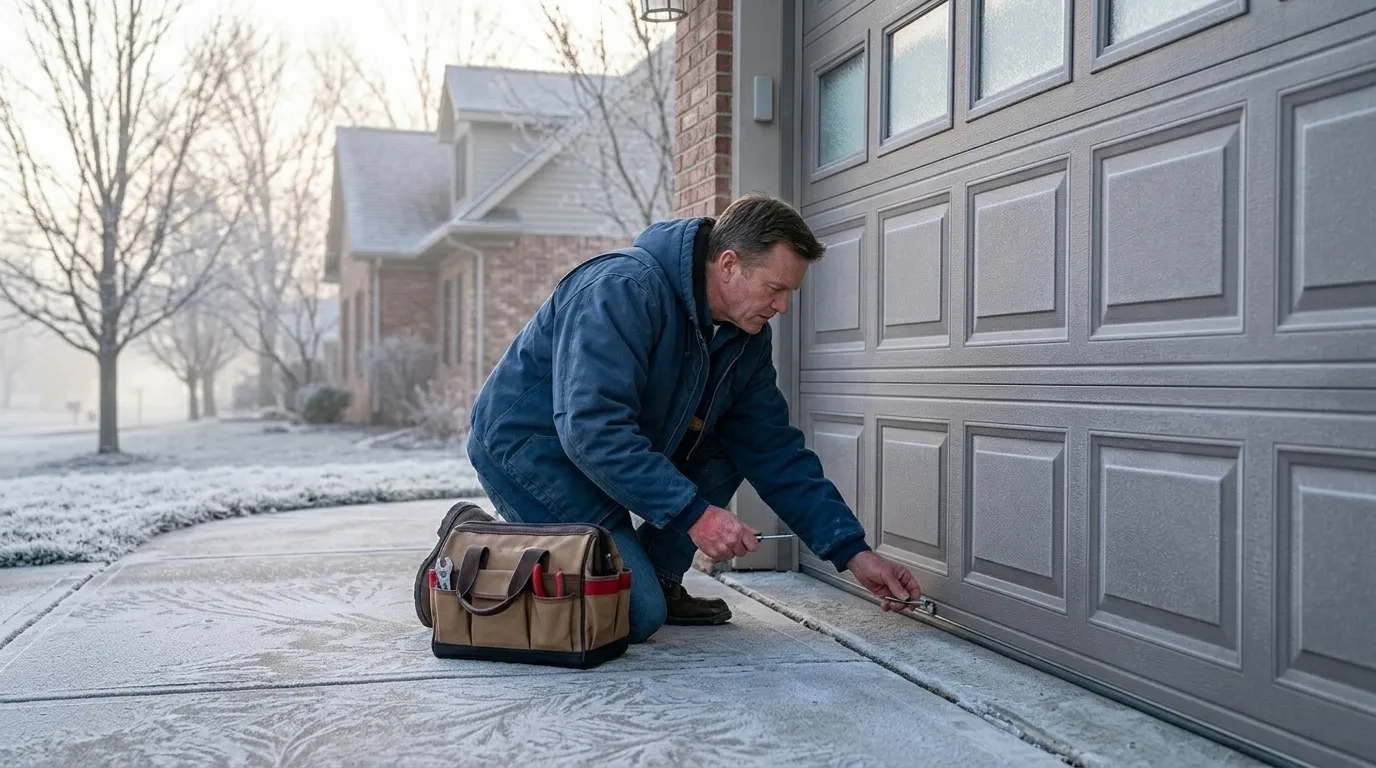
Add the climate here, which runs cold and moderate rather than mild. Steel contracts in a hard freeze, grease in an old bearing plate stiffens up, and a spring that's been doing fine for years suddenly can't manage the extra resistance on a 10-degree morning. We see this pattern block after block in the older sections close to the center of town - Orem Park, Westmore, Lakeview - where a lot of doors are still running the torsion hardware installed when the house was framed. Newer construction out toward the edges of the service area tends to have galvanized springs rated for more cycles, so the failure curve looks different there.
The short version: age of the door plus cold snaps is the combination that brings most of our calls, not one or the other alone.
What It Costs
We don't have a published price list to hand you here, and giving you a number without seeing the door would be a guess dressed up as a fact. What drives cost on a repair is usually the spring size, whether it's one spring or a pair, and whether the drums or cables came off the shaft with it - a job that started as "spring broke" can turn into a cable and drum job once we're up on the ladder.
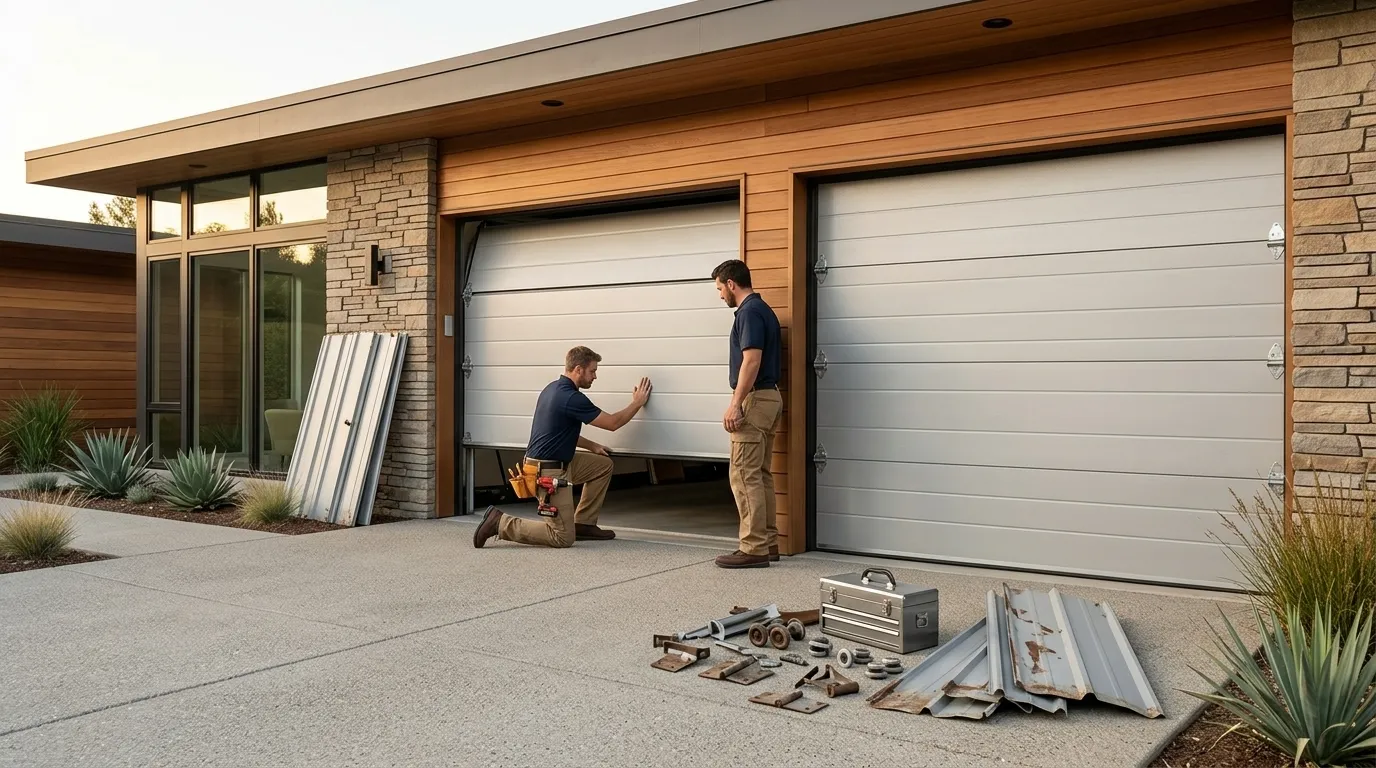
What we can tell you: for a service area where median household income runs above $107,000 and most owners hold onto their houses rather than flip them, we see a lot of customers who want the repair done right the first time rather than the cheapest patch - matching spring wind and wire size to the door instead of whatever's on the truck. That's the approach we take. If your door is old enough that the opener, springs, and rollers are all near the end of their life at once, we'll tell you straight when replacement makes more sense than another repair call in six months. Ask for a quote once we've looked at your specific door and we'll give you a real number, not a range that means nothing.
What Can Go Wrong
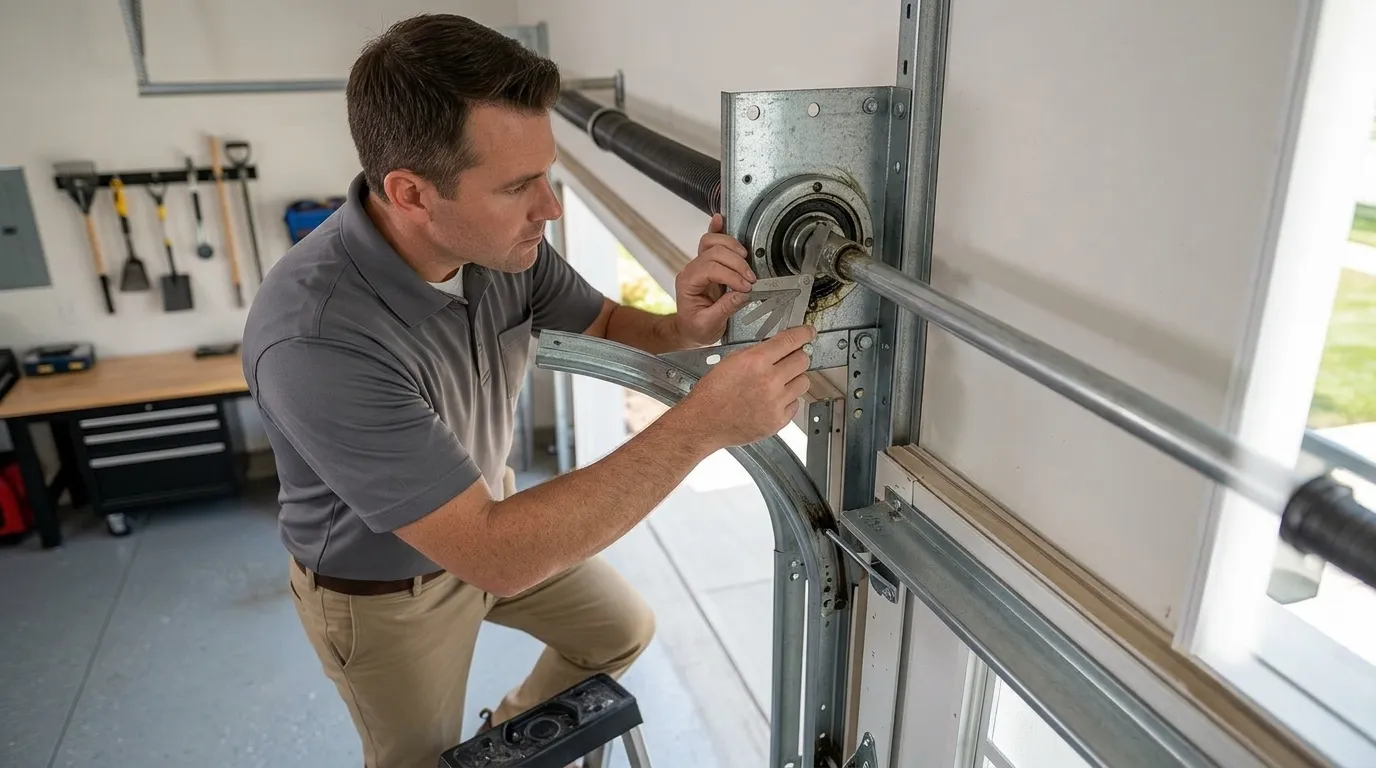
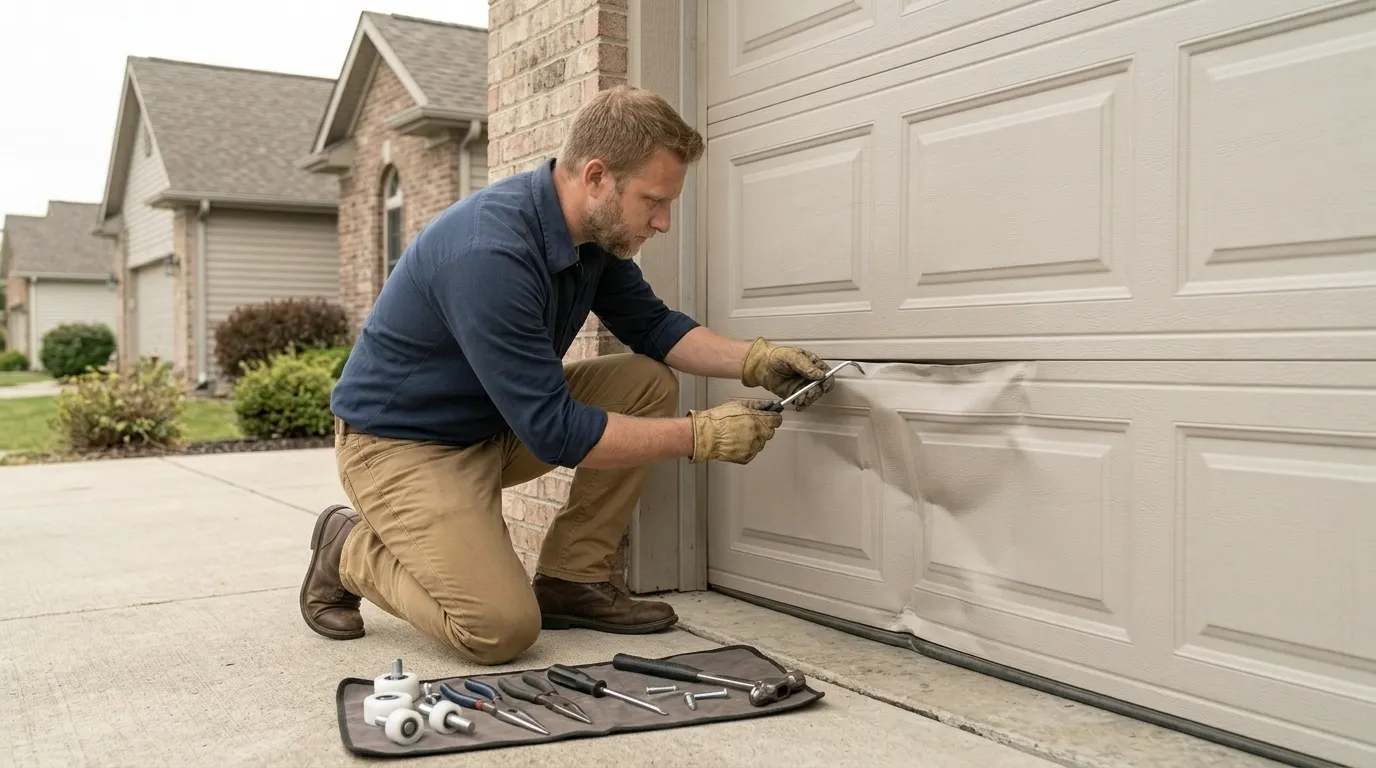
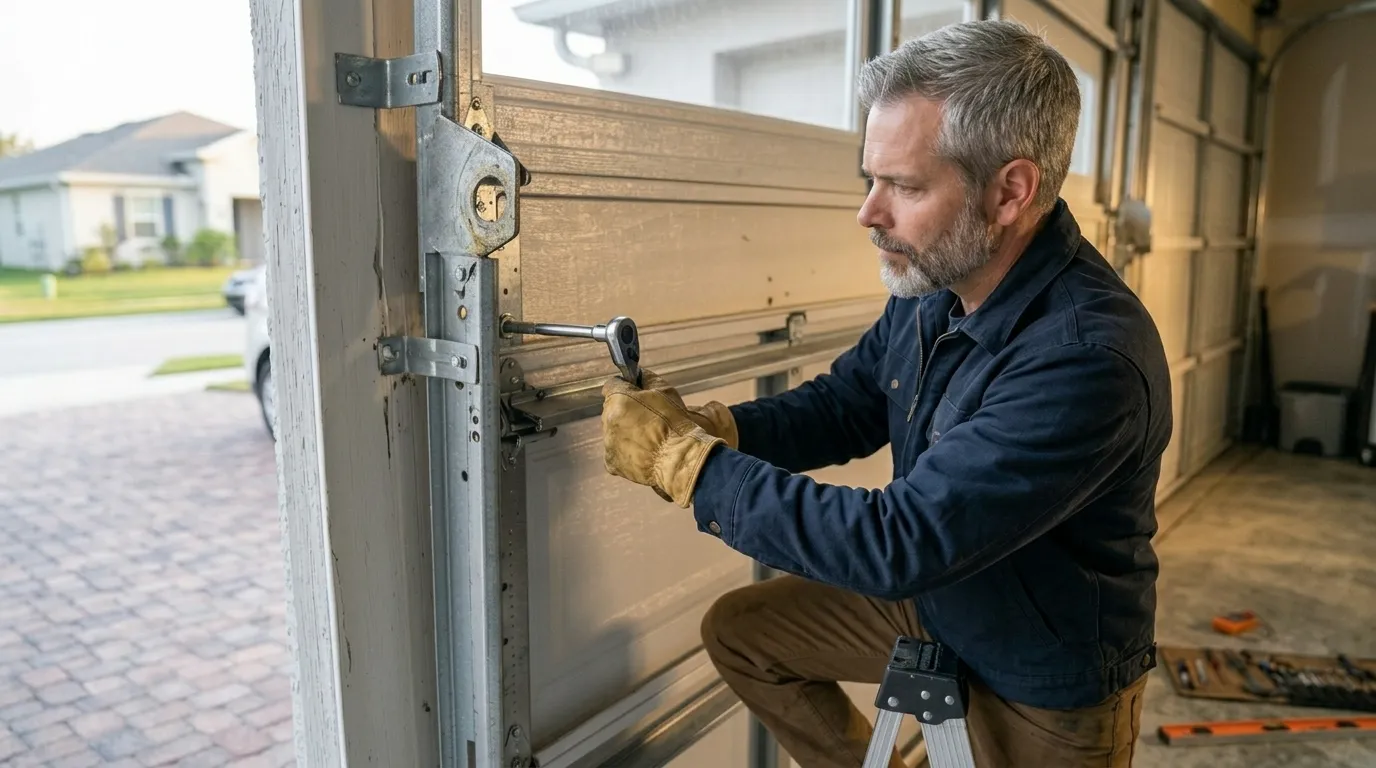
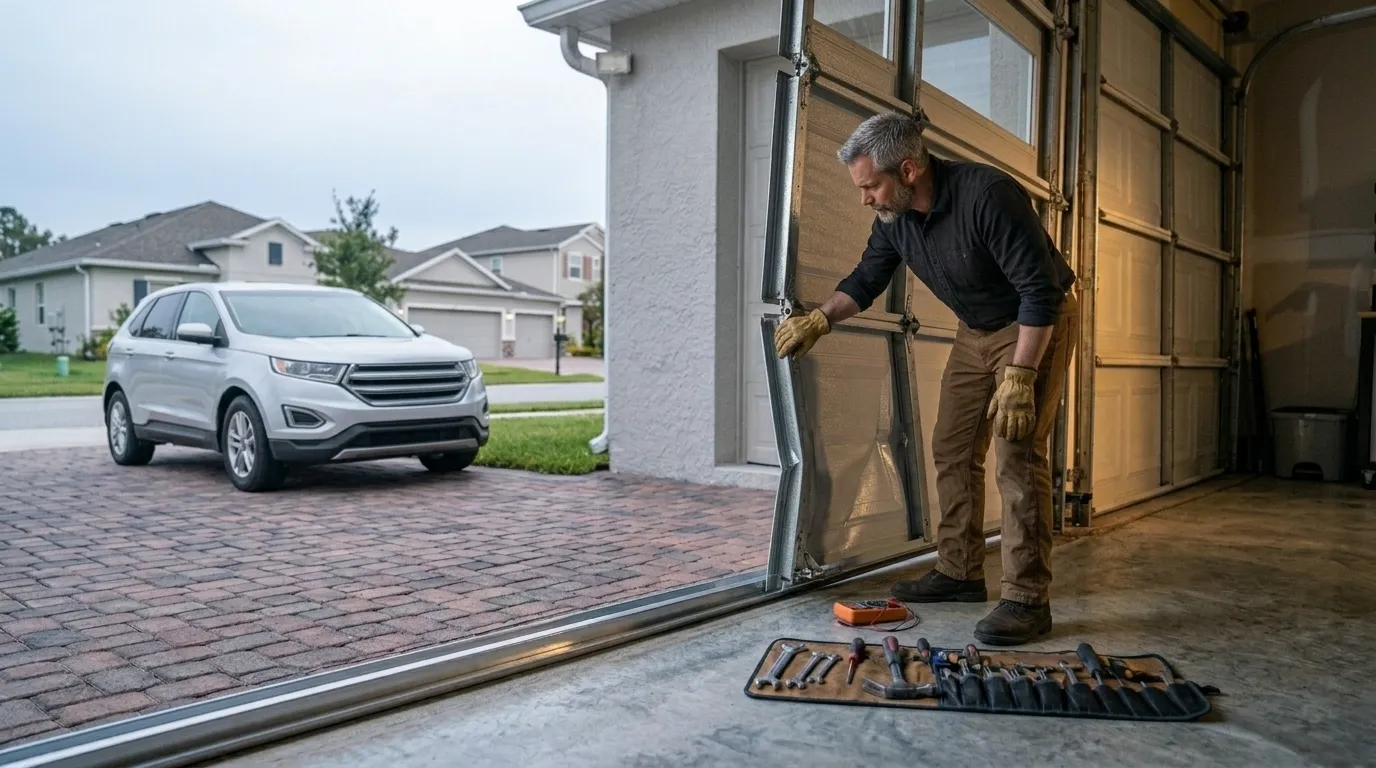
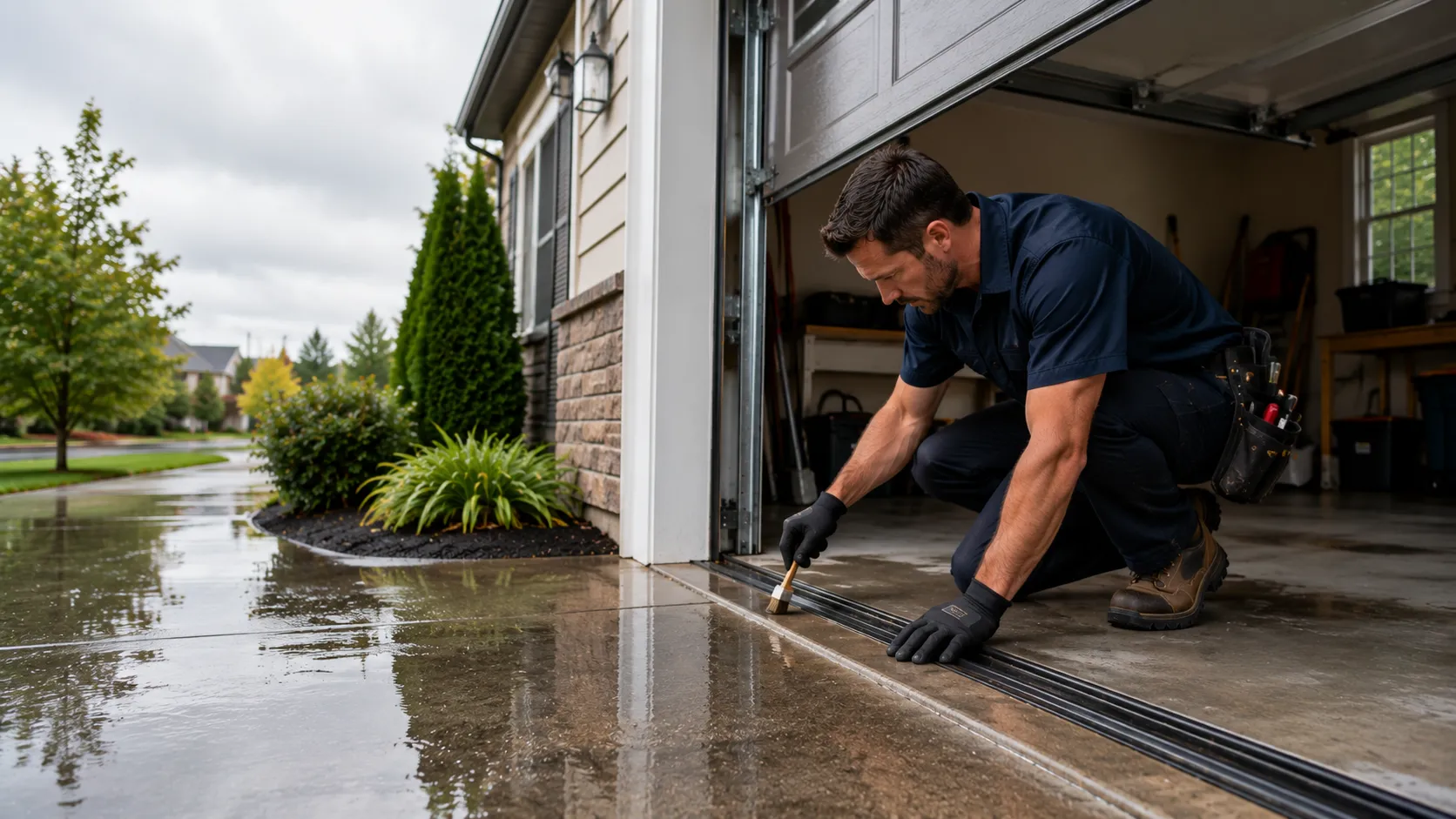
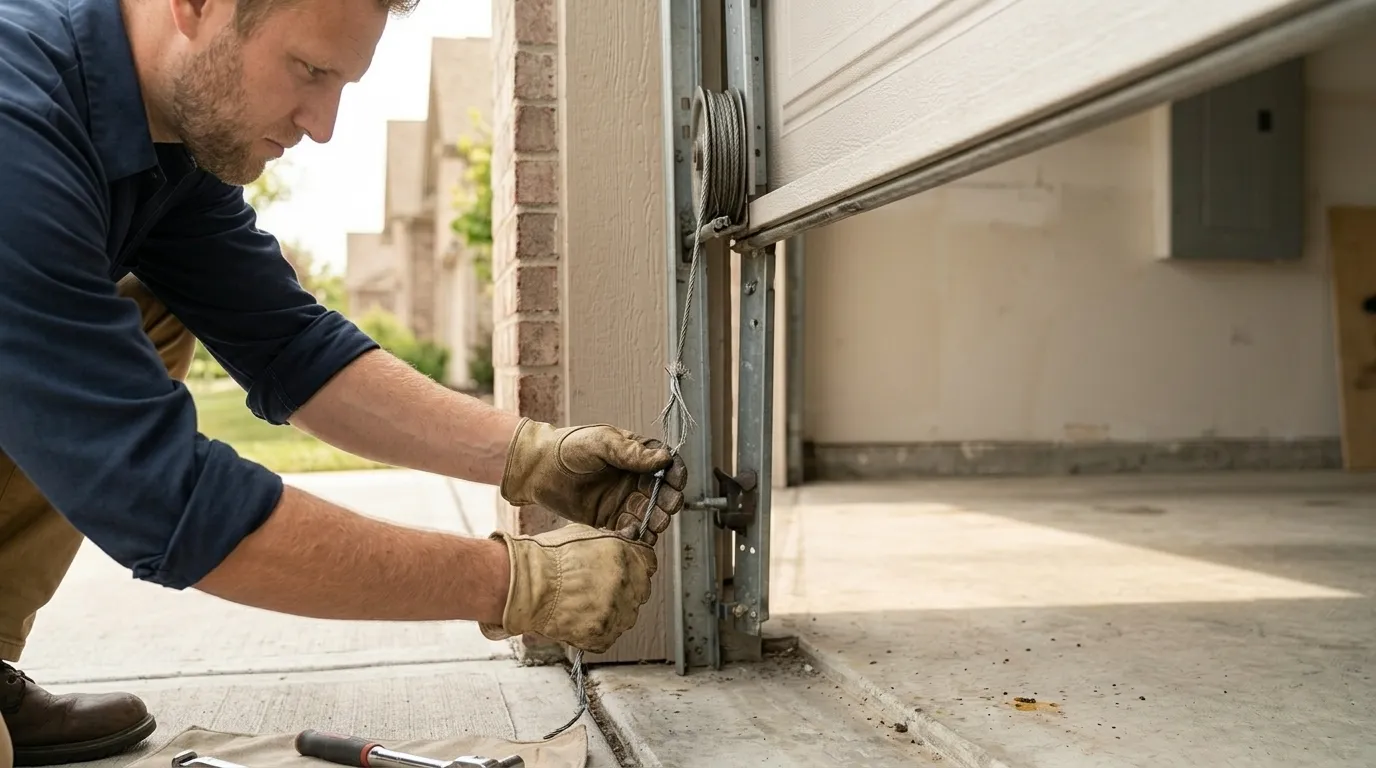
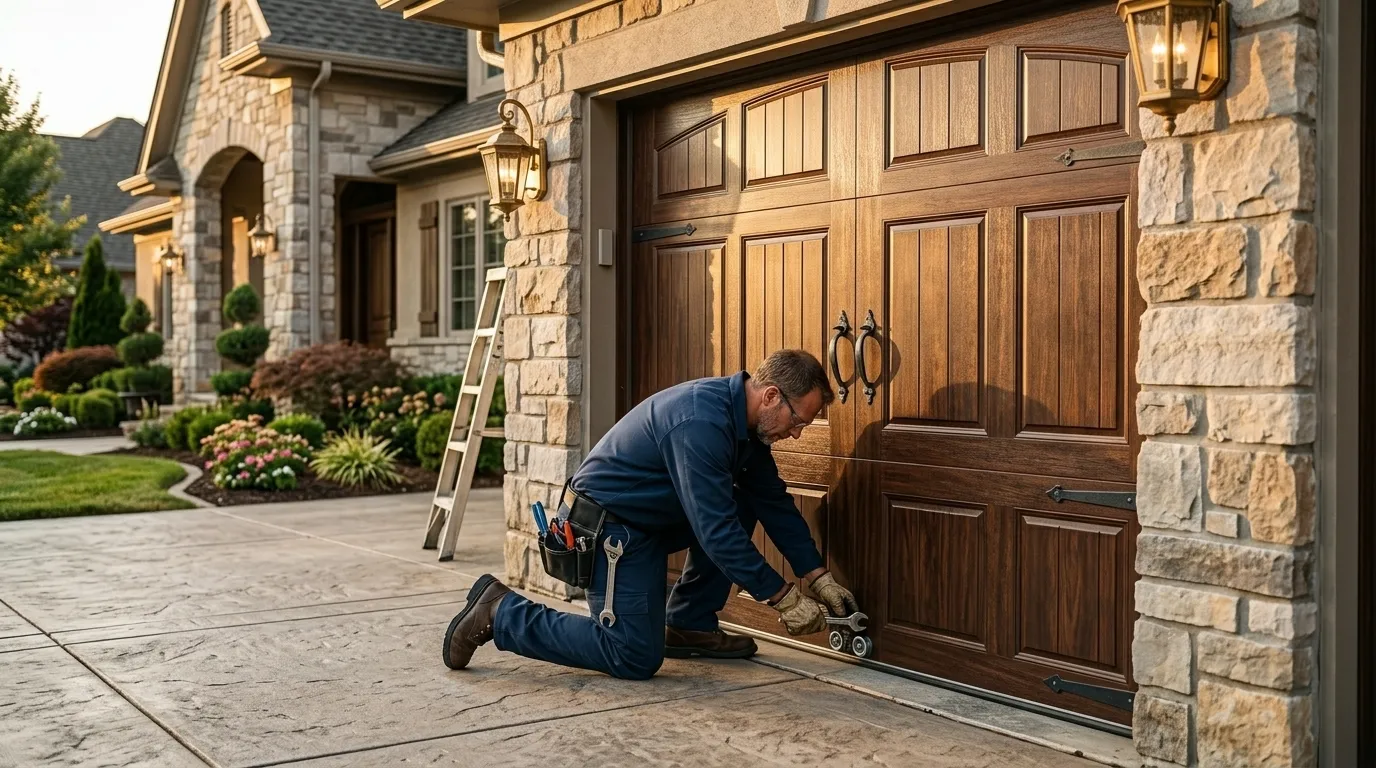
On a torsion spring door from the 1980s or 90s, the spring itself is the most common failure, but it's rarely the only thing wearing out. The bearing plates at each end of the shaft take thirty-plus years of the same friction the spring does, and on original hardware they're often the reason a new spring still sounds rough. Cables fray at the drum where they've rubbed the same three inches of travel for decades. Rollers - especially the original steel ones with no bearing - wear an oval groove into the track that throws the whole panel off level.
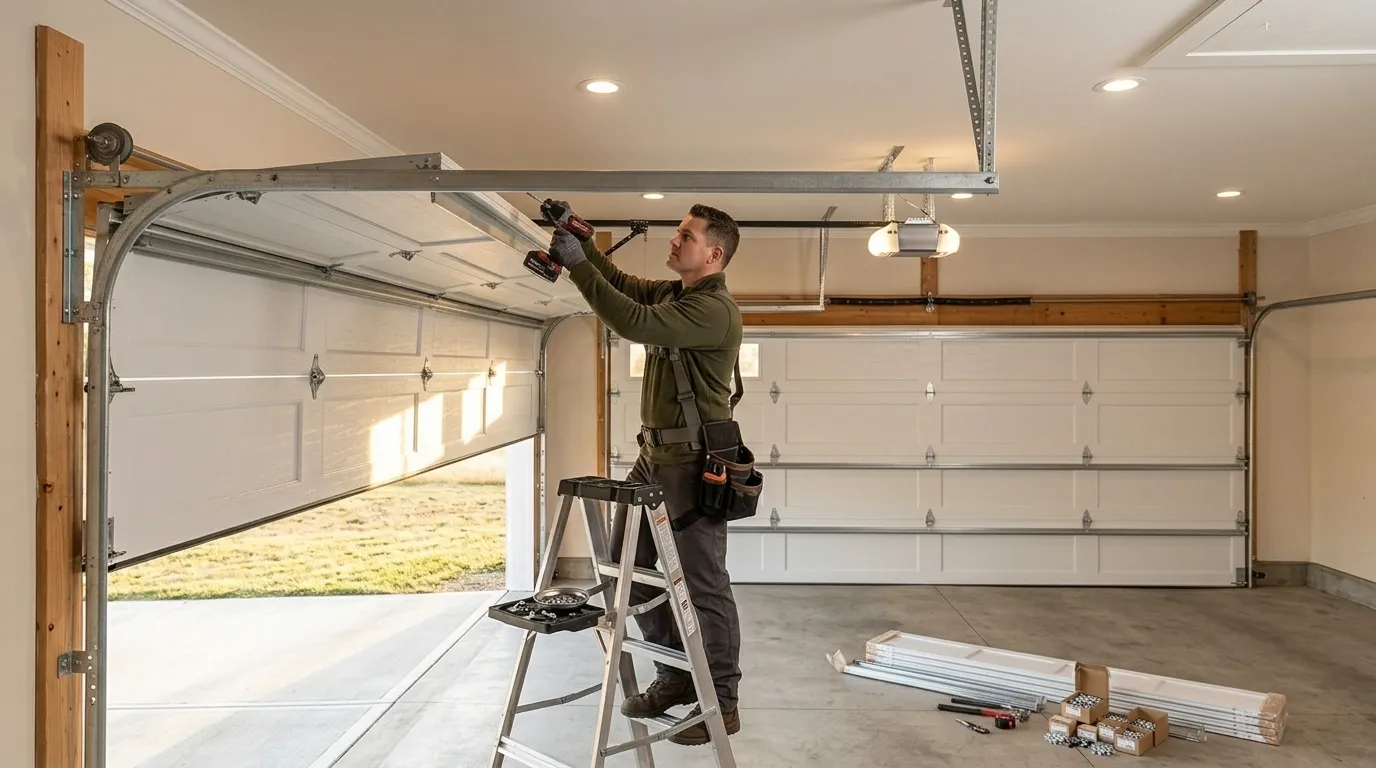
On openers, we mostly see two things fail: the drive gear inside the unit strips after years of chain tension, or the logic board stops holding a signal from the remote. Both are common enough in houses built in this window that they're not a coincidence - they're just what happens to a mechanical part running two or three cycles a day for that long.
One thing we won't do is sell you a new opener when the fix is a $20 gear kit, or a full spring replacement when one cable needs re-seating. We'll open the panel and show you what's actually broken before we quote anything.
How It Shows Up
The classic sign is a door that won't budge and an opener motor that just hums - that's a broken torsion spring, full stop, and it's dangerous to force by hand given how much tension a spring this age is holding. A door that closes crooked, dropping faster on one side, usually means one spring broke while its twin held, which is common on the older two-spring setups still running in a lot of the mid-century pockets near Bonneville and River Bottoms.
A grinding or popping noise on the way up, especially right after a cold night, often points to a bearing plate seizing rather than the spring itself - the spring's fine, it's just fighting friction it shouldn't have to fight. If the door reverses partway up or down with no obvious reason, check the sensors first, but on an opener from this era it's just as likely to be a worn drive gear losing its grip under load.
If your door has gone quiet - no click when you press the remote, nothing from the wall switch either - that's usually the opener's board, not the door itself. Worth ruling out before anyone touches a spring.
How it works
From “it’s stuck” to “it’s fixed”
01
Tell us what’s wrong
Describe the symptom - won’t open, loud bang, opener runs but the door won’t move.
02
On-site diagnosis
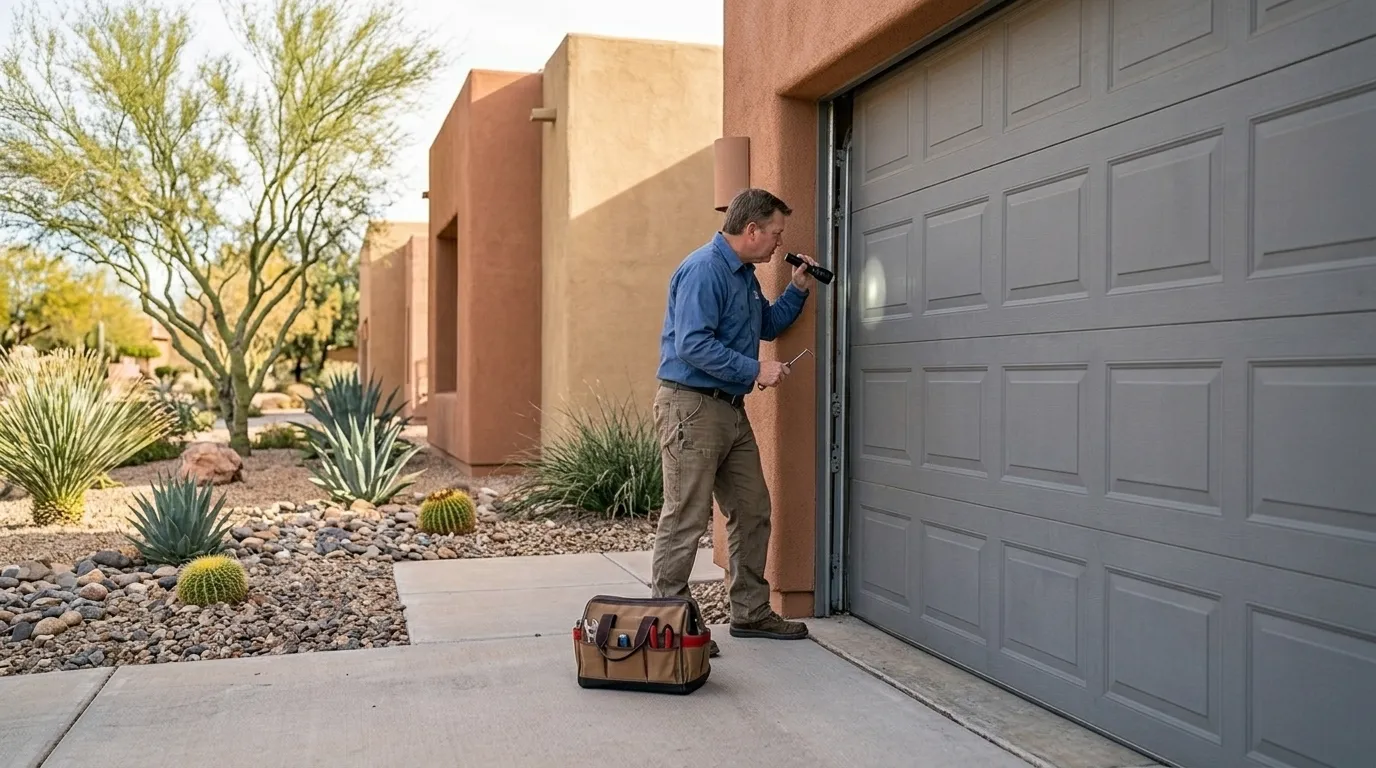
A technician tests the door under power and by hand and finds what actually failed.
03
Clear, up-front plan
You get the fix that’s needed and what drives the cost - before any work starts.
04
Repaired & tested
The repair is done, the door is set true and tested, and the work area left clean.
Serving Orem, UT - tell us what your door’s doing and we’ll take it from there.
Straight answers about garage door repair in Orem. Still unsure? Ask us directly.
Why did my garage door spring break in the middle of winter?
Cold makes steel less forgiving. A torsion spring that's been near the end of its cycle life all year will often finally let go on a hard-freeze morning, when the metal is stiffer and the door itself is heavier to lift. If your house was built in the 1980s or 90s, the spring may simply be original.
Is it normal for only one garage door spring to break on a two-spring setup?
Yes. Two-spring systems don't always wear evenly, and it's common for one to fail years before the other. We'll usually recommend replacing both at once, since the second one is close behind and you'd otherwise pay a second call fee for a job you could do once.
My opener runs but the door doesn't move - what's wrong?
On older units this is often a stripped drive gear inside the opener housing, not the door itself. It's a cheap part but takes some disassembly to reach. We can usually confirm it in a few minutes without pulling the whole unit off the ceiling.
Should I repair or replace an opener from the 90s?
Depends what's failing. A drive gear or capacitor is worth fixing. If the logic board is going and the unit is also missing modern safety sensors, replacement usually makes more sense than chasing parts for a unit that old.