When We Can Get There
Because Bluffdale is the far edge of our coverage from Orem, we're upfront that we're not a same-hour outfit out here the way we might be closer to the shop. We schedule Bluffdale work in blocks, and a broken spring or an opener that's quit entirely usually gets prioritized over cosmetic complaints like a noisy roller. If you're calling about a door that won't close and you've got vehicles trapped inside, say so - that's the kind of thing that gets moved up the list even from 18 miles out.
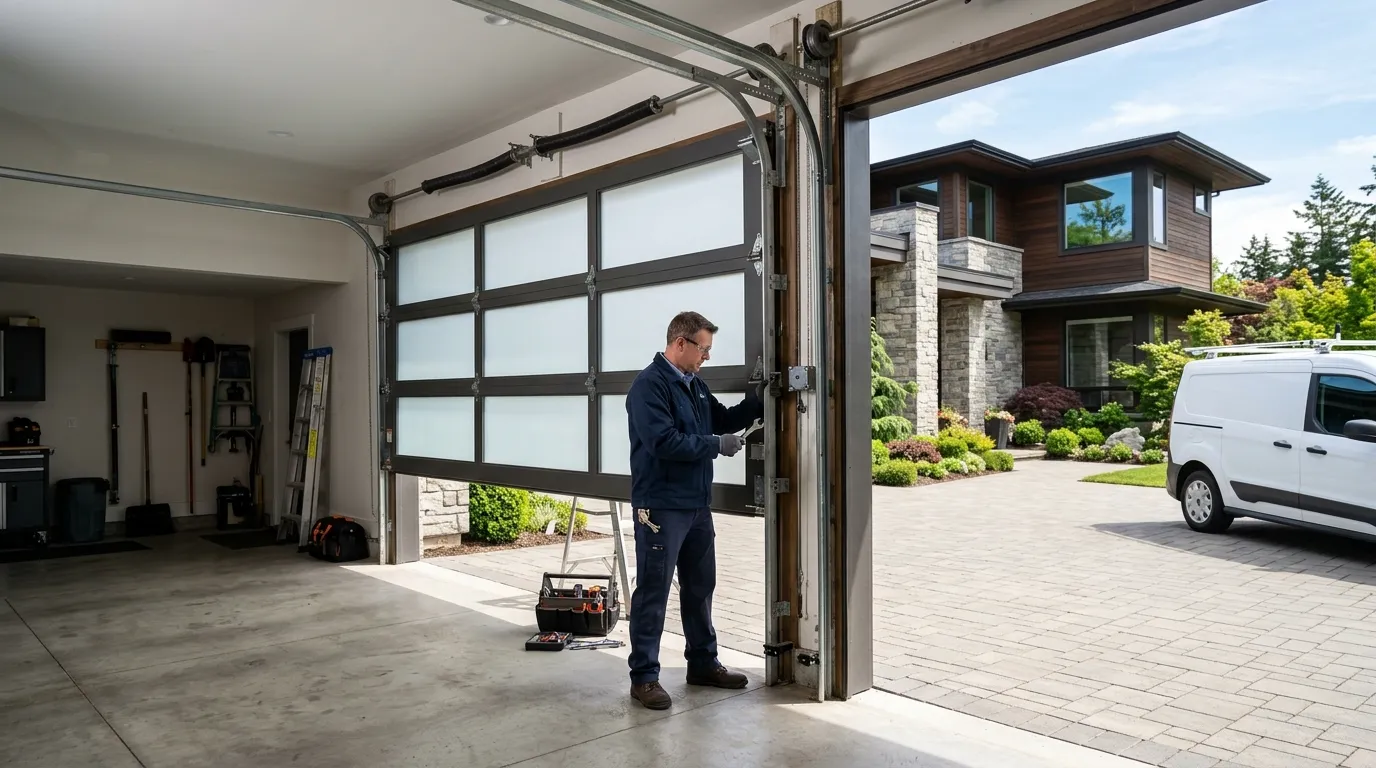
We don't promise a response window we can't back up with a local presence, because we don't have one here. What we can promise is that once a truck is headed your way, it's got the parts on board for the common failures we see in newer construction - which, in Bluffdale's case, looks different than it does in the older parts of our territory.
How That Shows Up in the Door
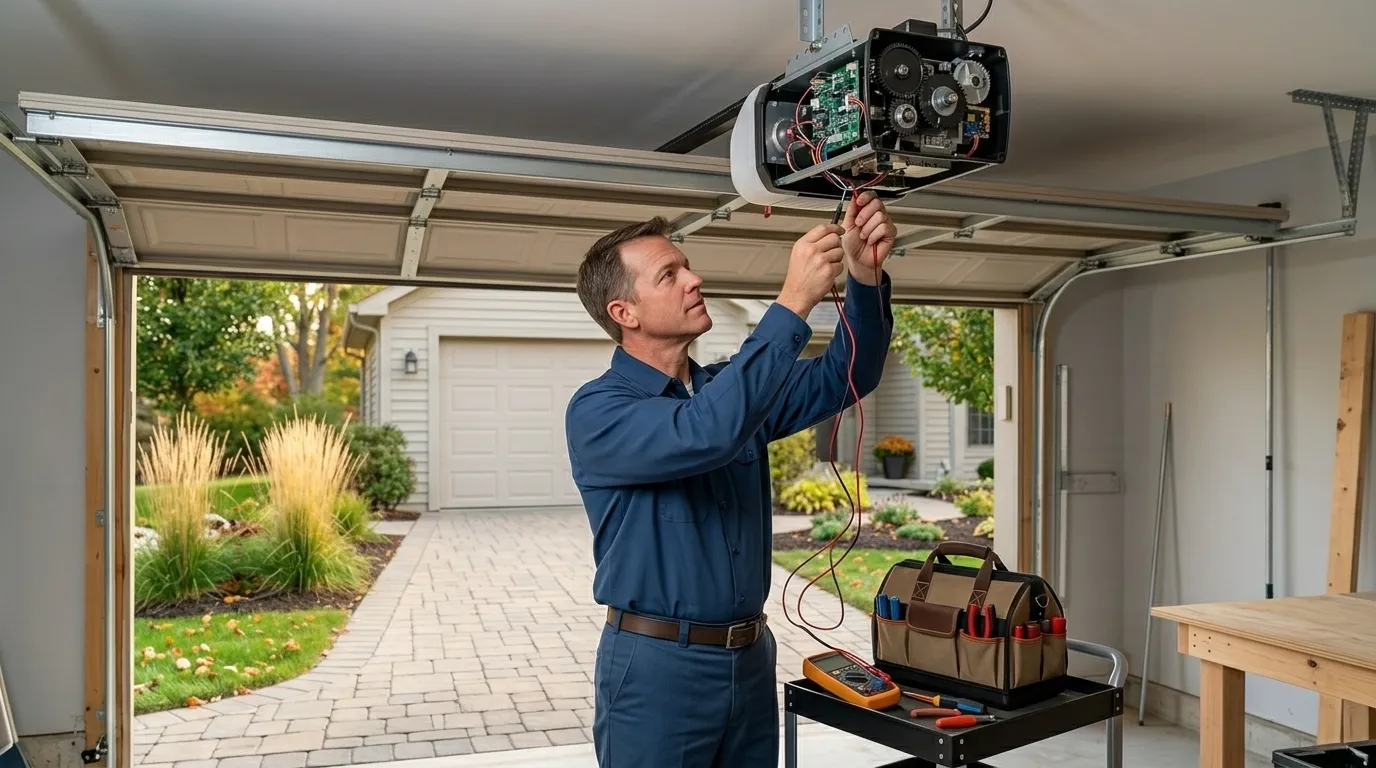
Most of the housing stock across our service area went up between 1977 and 2015, with a median build year around 1999 - but Bluffdale runs newer than that, with a median build year closer to 2010. That decade matters more than people expect. Doors installed in the 2000s and 2010s came standard with steel torsion springs rated for insulated sectional doors and openers with rolling-code safety sensors built in from the factory, not retrofitted. The failures we see in Bluffdale skew toward electronics - logic boards, sensor alignment, remotes losing sync - more than the raw mechanical wear (bent track, seized torsion bar) that shows up in 1980s and 90s stock elsewhere in the territory.
One honest limitation: if your opener is one of the early-2010s models with a proprietary control board, parts can be slow to source, and sometimes replacing the opener outright is faster and cheaper than waiting on a specific part. We'll tell you that instead of stringing out a repair that doesn't make sense.