What Local Conditions Do
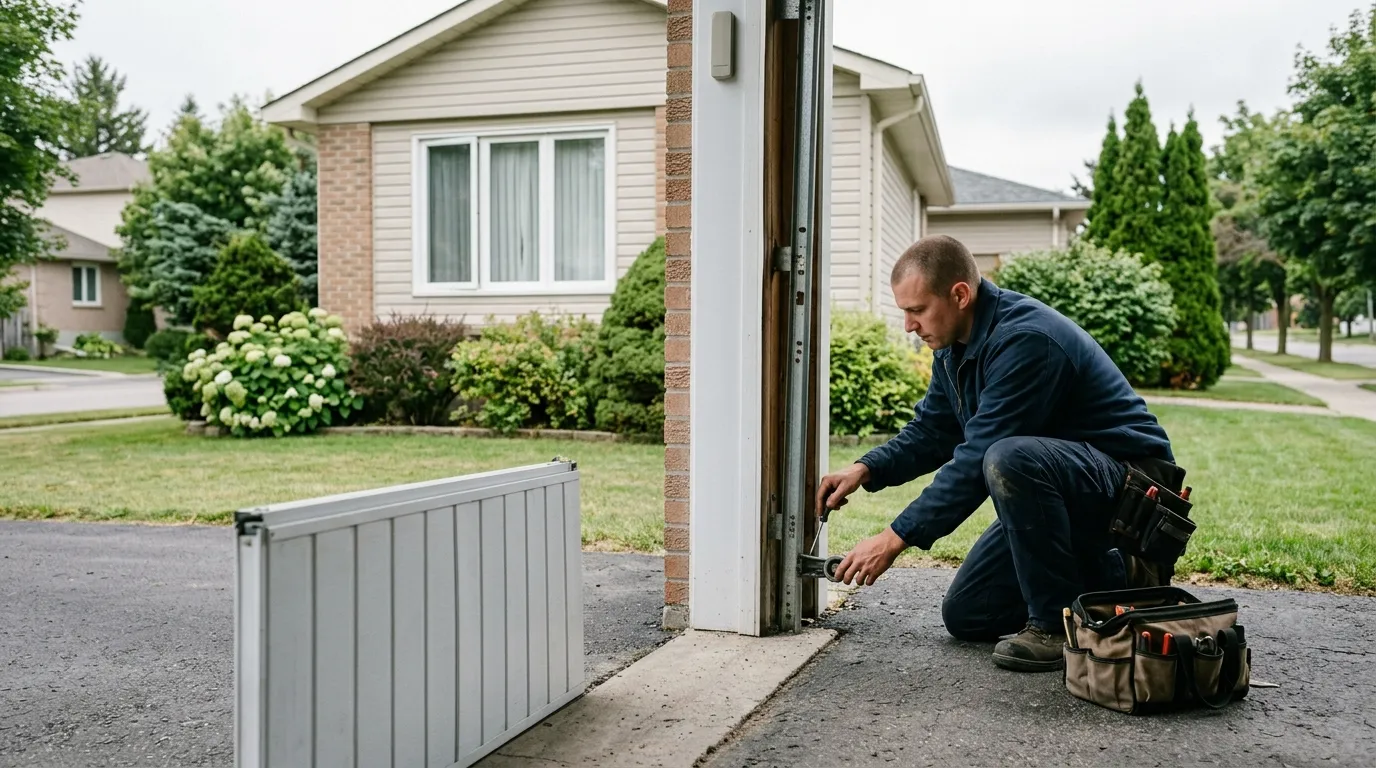
Orem sits in a cold-moderate climate band, and that swing matters more to your track than most people expect. Steel track is fastened to wood framing with lag screws, and wood framing moves seasonally - it swells slightly with humidity and contracts in dry cold. Over enough winters, the screws that hold the track brackets to the jamb back out a fraction of a turn at a time. You don't see it happening. You see the result: a track that's a quarter-inch further from the door than it was, just enough for a roller to walk out of it on a cold morning when the grease has stiffened and the door is fighting extra resistance right at the moment the track has the least room for error. This isn't a defect in the door. It's what a temperature swing does to a mechanical system that's bolted to wood, year after year, in a place that gets real cold and isn't desert-dry either.
What Is Going On
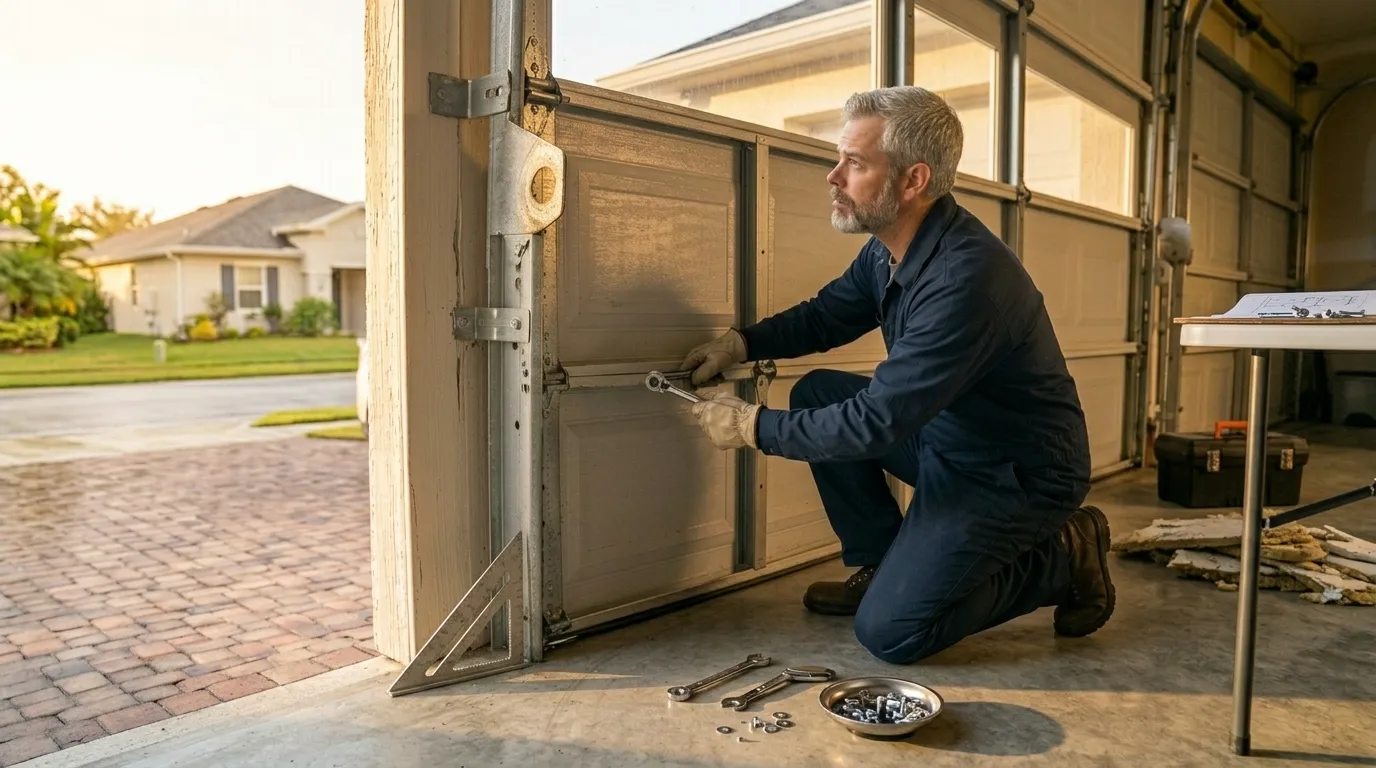
A door off track is almost never one single cause - it's a chain. Something changes the door's balance or path slightly, and the rollers, which have very little margin, lose contact with the track rail. In homes from Orem's dominant construction era, the common chain looks like this: a bracket has loosened over the years, which lets the track flare outward at the bottom third; a roller that's original to the house - now old enough to have flat spots or dried-out bearings - hits that flared section and skips sideways instead of rolling through it; the door racks a little, and on the next cycle a cable or the opener arm takes on load it wasn't built to carry unevenly. By the time you notice it, you're not looking at a simple fix, you're looking at whichever part in that chain failed worst. That's why we look at the whole track run and both sets of brackets, not just the spot where the roller is currently sitting outside the rail.