What Local Conditions Do
This area sits in a cold moderate climate band, which means the seals on your door go through real freeze-thaw cycling every winter rather than staying at one temperature. Rubber and vinyl weatherstripping contract hard in cold and then re-expand as temperatures swing back up, and that repeated flexing is what eventually splits a seal at the corners or pulls it loose from its retainer. Houses built in the 1980s and 90s across this area often still have their original bottom seal track, and that track itself can warp slightly over decades of seasonal movement, which makes it harder for a new seal to sit flush even after you replace it. The cold moderate band here isn't extreme, but it's consistent enough that a seal rated for a milder climate wears out faster than it would somewhere without the swing. This is why a seal that looks fine in July can be letting in a steady draught by January - the gap opens up as the temperature drops, not as the rubber ages in a straight line.
What Is Going On
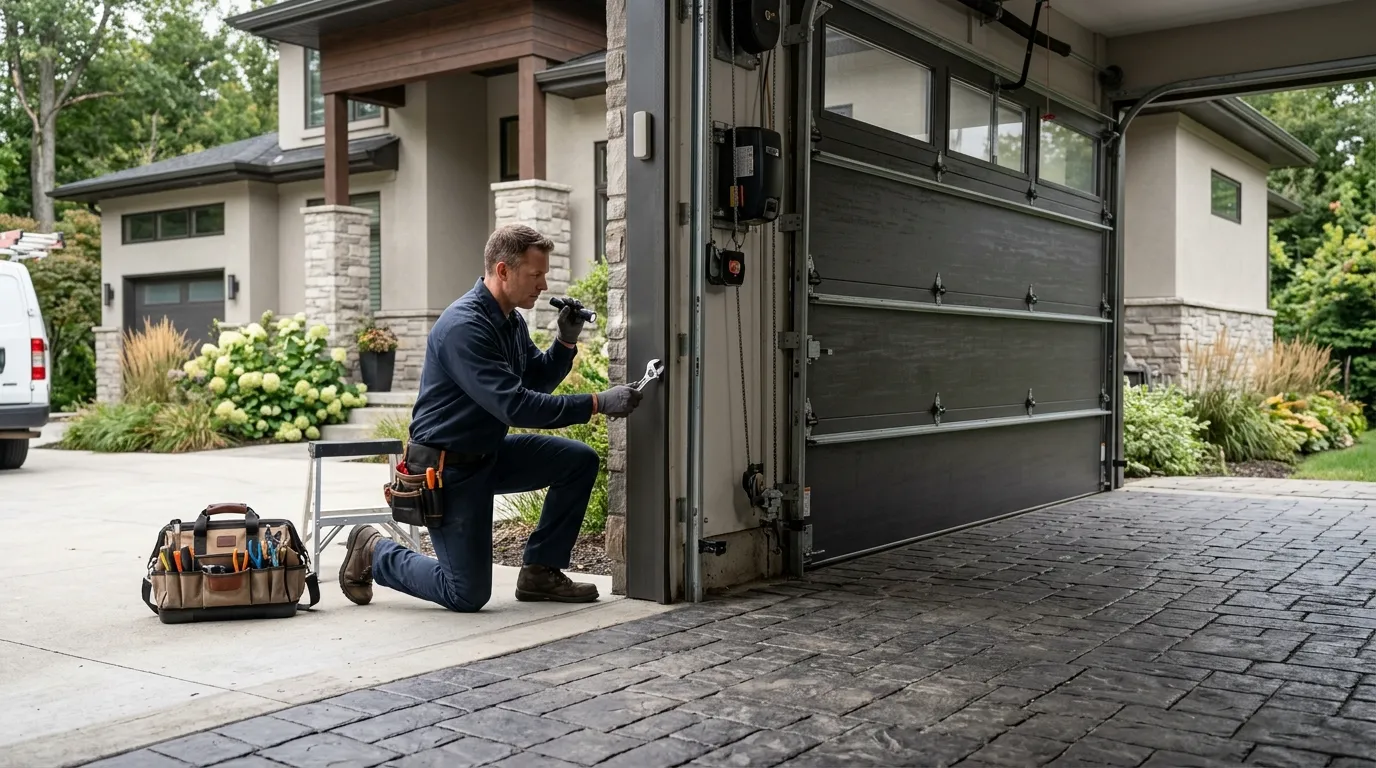
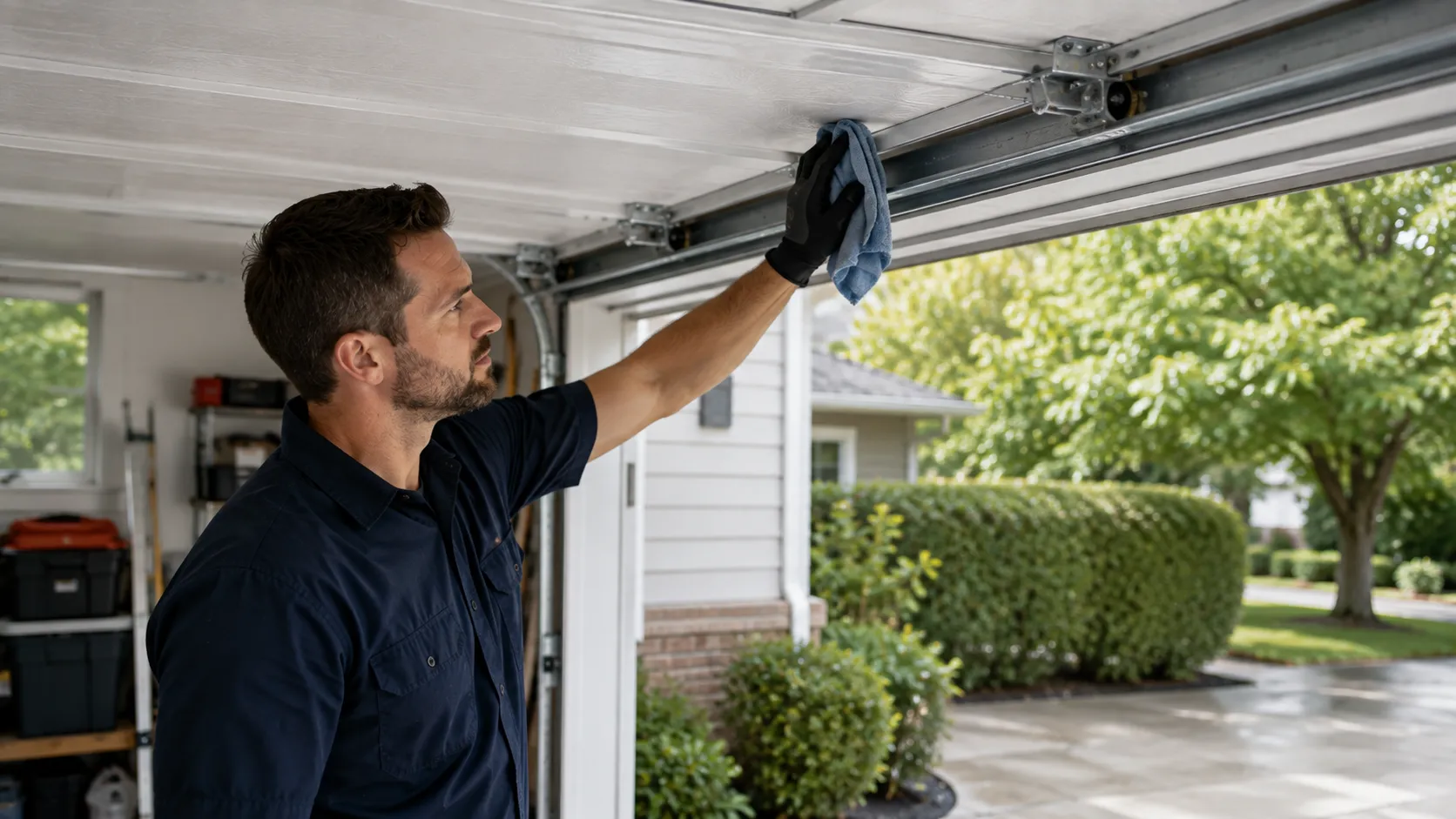
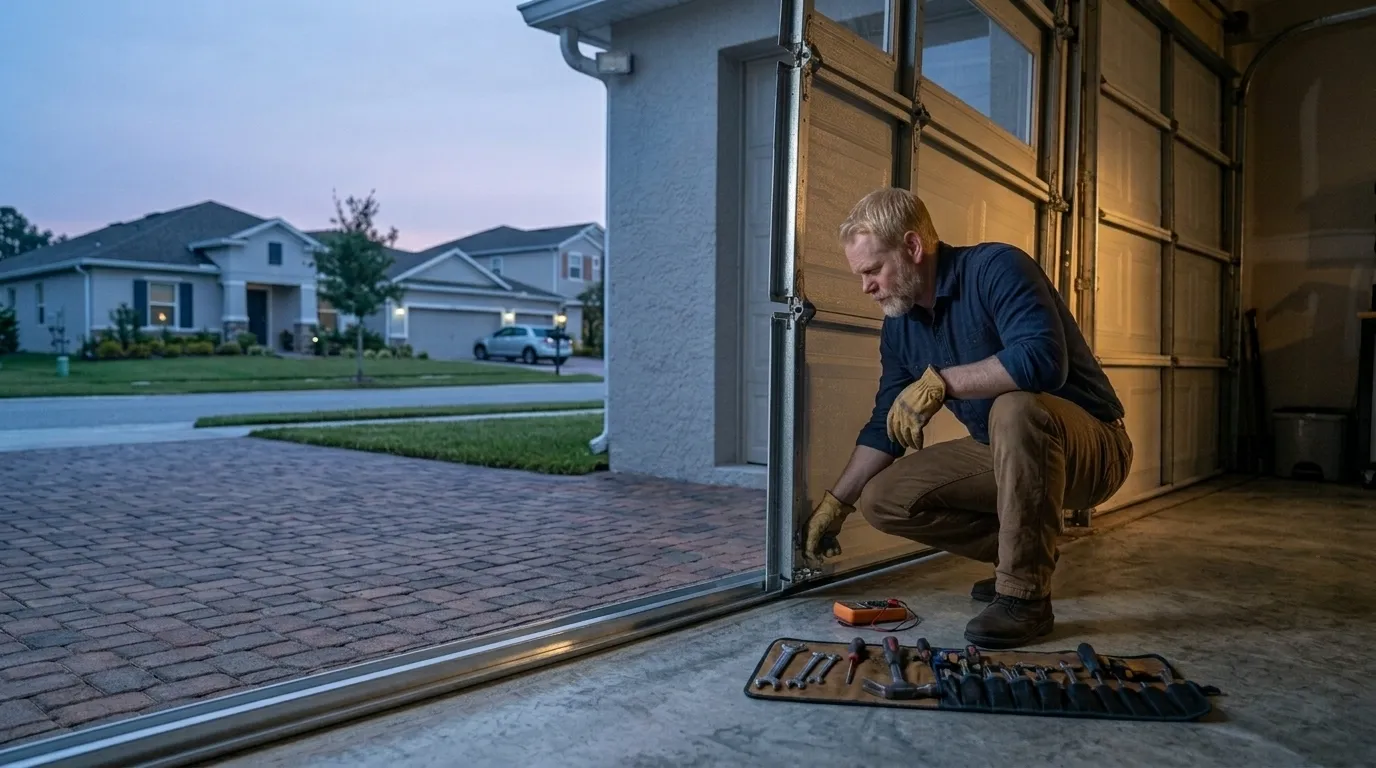
With housing built mainly from 1977 to 2015 and a median build year around 1999, a large share of garage doors in this area are on their second or third decade with the same bottom seal and side weatherstripping, even if the door itself has been repainted or the opener replaced. Weatherstripping is a wear item, not a lifetime part, and it rarely gets replaced unless something else on the door forces a service call. What's going on in most of these houses is straightforward: the seal has hardened, shrunk slightly, or torn at a corner, and it's no longer making full contact with the floor or the jamb. On a slab that has settled even a little, which is common in homes from this era, the gap is uneven along the bottom, wider on one side than the other. That's why a draught can feel like it's coming from one specific corner of the garage instead of the whole width of the door. None of this means the door is failing structurally. It means the seal is doing what seals do at this age, and it needs replacing rather than patching.