Most of the housing stock in and around Orem went up between 1977 and 2015, with a median build year of 1999. That means the majority of doors out there are on extension or torsion spring setups from the 80s and 90s, not the older side-mount hardware you'd find in a much older town. If your door is slow to close, drops the last foot with a bang, or the opener grinds before it moves, that's usually spring fatigue catching up with a 20-30 year old system rather than a fresh install problem. Call before the spring lets go completely - a snapped torsion spring on a double door can bend track or crack a panel on the way down, and that turns a $200 job into something bigger. If the door is still moving but sounds rough, or the opener light blinks a code, that's a call now, not a call after it fails on a Saturday. We also get calls for doors that reverse randomly on the way down - on 90s-era openers that's often a misaligned photo-eye sensor, not a full opener replacement.
What Local Conditions Do
Orem sits in a cold-moderate climate band, which is a different set of stresses than a coastal or desert town. Winter temperature swings shrink and swell the steel in torsion springs and stretch out the lubricant in older rollers, so a door that ran fine in September can start binding by January. That's not neglect - it's the metal doing what cold metal does. Nylon rollers that were fine at 70 degrees get brittle and start chipping at the edges once overnight lows drop, and that shows up as a door that shudders instead of gliding. We size springs and torsion bars for that swing, not for a mild-winter spec sheet. If your opener struggles more in deep cold than it did in summer, that's consistent with what this climate band does to home hardware generally, and it's worth a look before a spring finally gives out mid-January instead of on a service call.
What Is Going On
With roughly 78,784 owner-occupied houses across this service area and a median household income of $107,617, a lot of the doors we're called to aren't failing from cheap materials - they're aging out of factory-spec hardware installed when the house was built, somewhere in that 1977-2015 window. A door installed in 1999, the median year for this area, is now old enough that the original springs have well outlived their cycle rating even in a household that opens the door twice a day. That's the single biggest driver of the calls we get: not damage, not a bad install, just a spring or set of rollers at the end of a normal, predictable service life. Second most common is an opener logic board or sensor pair that's aged out around the 15-20 year mark, which lines up with houses built in the earlier part of that same window. We don't push full replacement on those calls unless the track or panel is also compromised - a spring swap or sensor realignment on an otherwise sound door is usually the right call, not a new unit.
What to Look At First
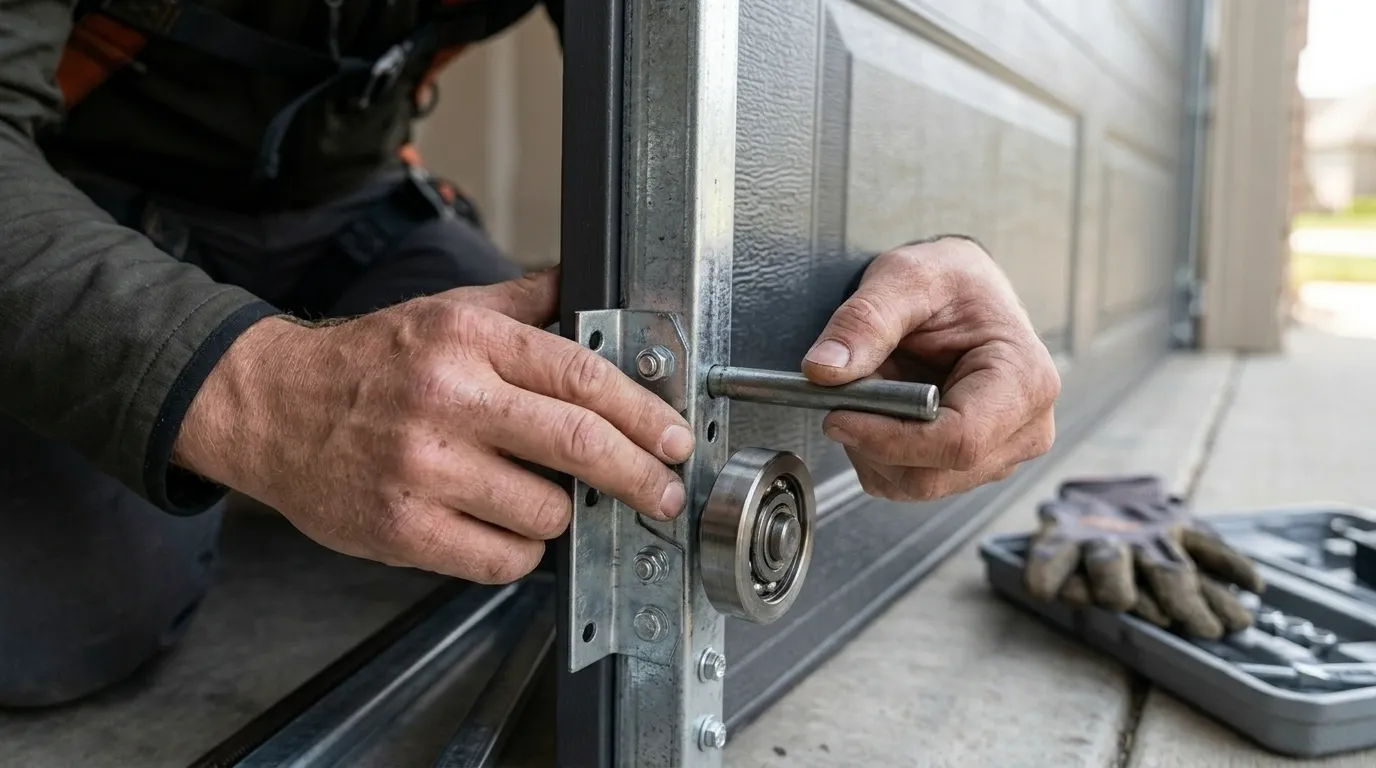
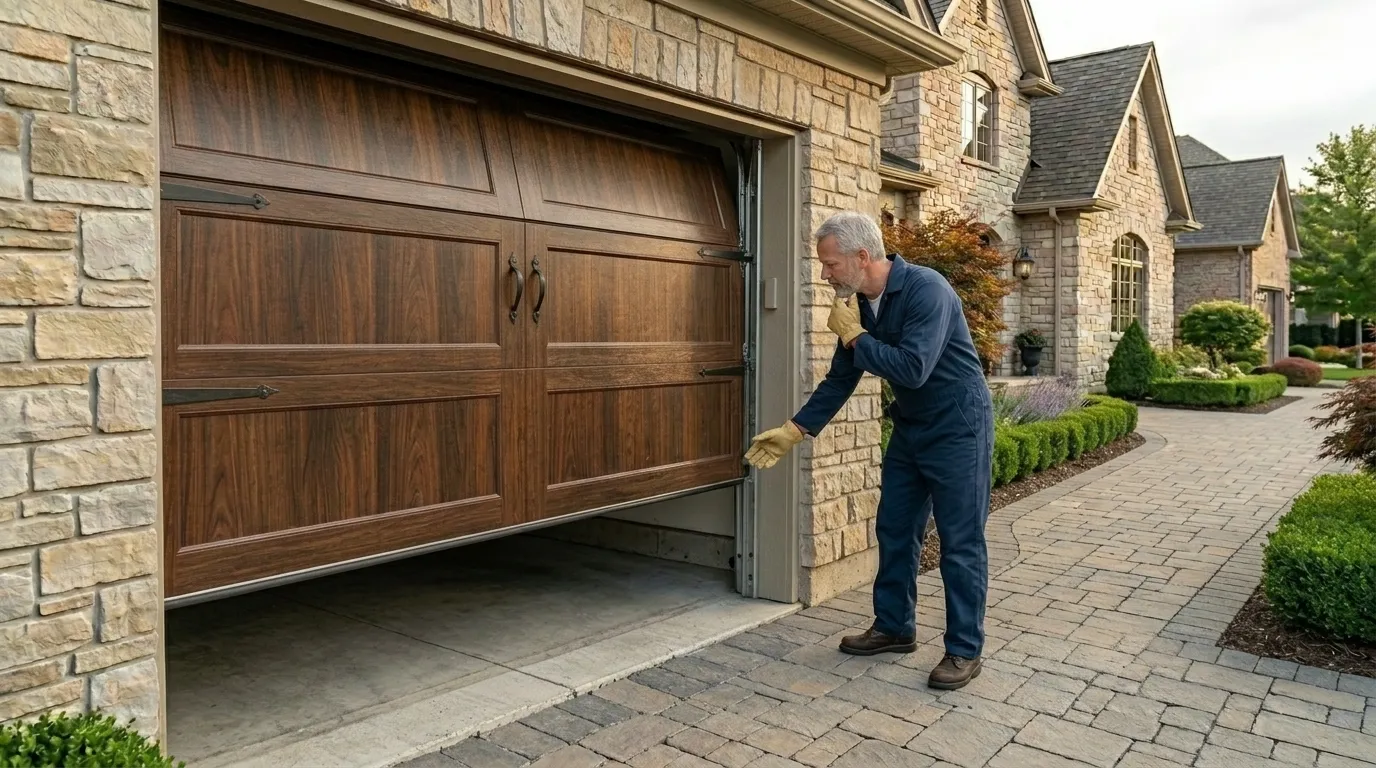
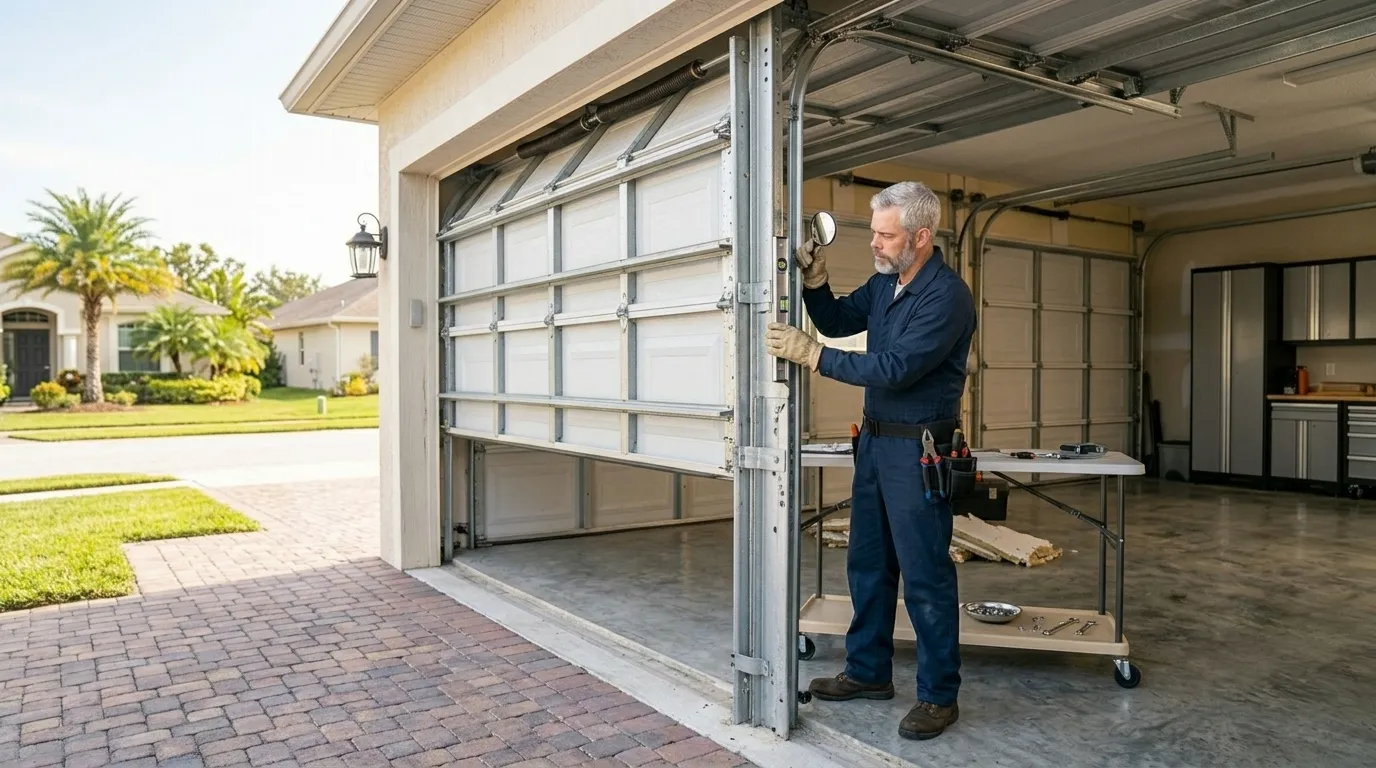
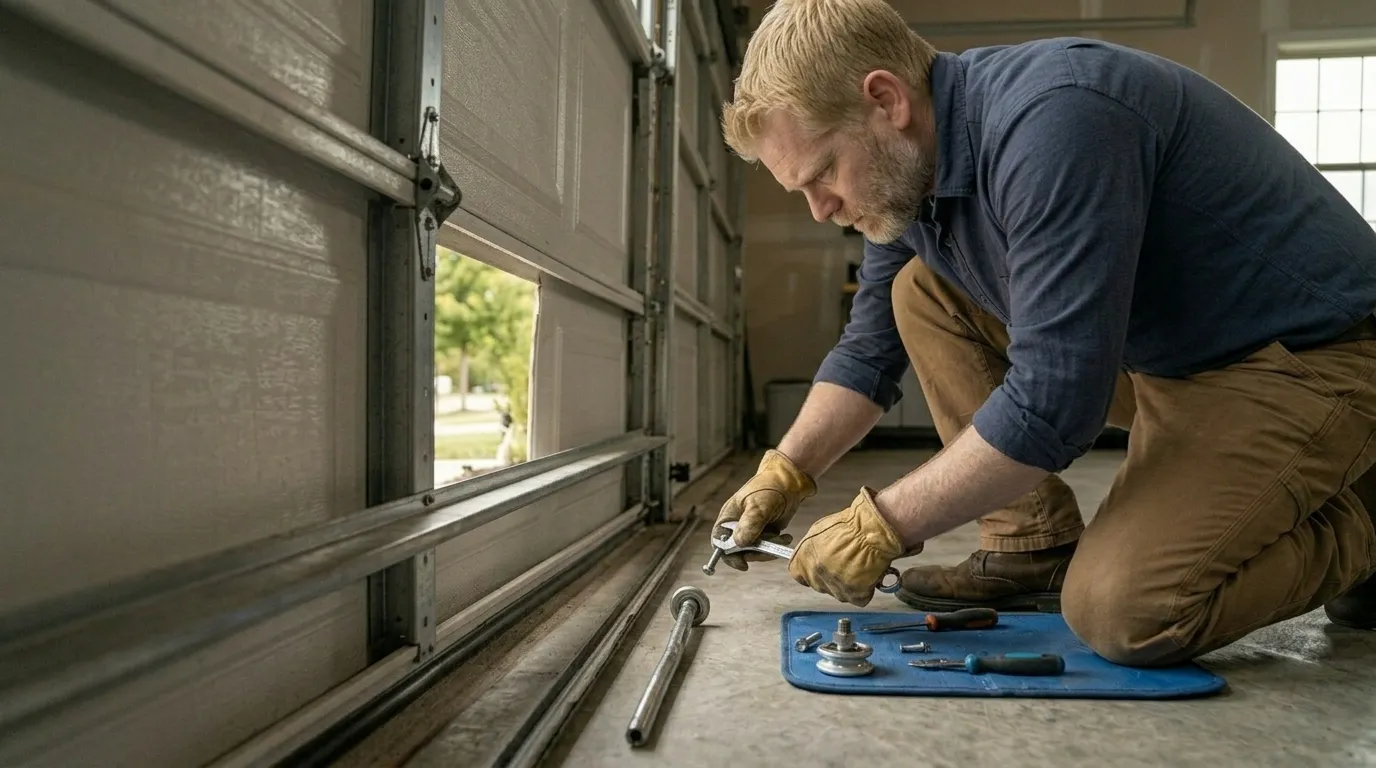
Before you call, look at three things. First, the springs themselves - if you can see a gap in the coil on a torsion spring above the door, that's a break, not a maintenance issue, and the door shouldn't be opened by hand or opener until it's fixed. Second, the rollers - in this climate band, chipped or flat-spotted nylon rollers are common on doors past the 10-12 year mark and they're a cheap fix compared to what they do to a track over time. Third, check whether the photo-eye sensors near the floor are aligned and clean; a knocked sensor is the single most common reason a door reverses without explanation. One honest limit here: if a panel is dented or the track is bent, that's not something we straighten and call good - once steel is bent it doesn't go back to true, and pushing hardware to fit a bent track just moves the failure point somewhere else. In that case replacement of the panel or section, not a patch, is the right recommendation.
How it works
From “it’s stuck” to “it’s fixed”
01
Tell us what’s wrong
Describe the symptom - won’t open, loud bang, opener runs but the door won’t move.
02
On-site diagnosis
A technician tests the door under power and by hand and finds what actually failed.
03
Clear, up-front plan
You get the fix that’s needed and what drives the cost - before any work starts.
04
Repaired & tested
The repair is done, the door is set true and tested, and the work area left clean.
Serving Orem, UT - tell us what your door’s doing and we’ll take it from there.
Straight answers about garage door repair in Orem. Still unsure? Ask us directly.
Why does my garage door act up more in winter?
Orem's cold-moderate climate band means steel springs contract and lubricant thickens as temperatures drop, so hardware that ran smoothly in warmer months can bind, groan, or struggle to lift in winter. It's a normal seasonal effect on aging springs and rollers, not usually a sign of a new problem, though it can expose one that was already close to failing.
How old is a typical garage door around Orem?
Most homes in the service area were built between 1977 and 2015, with a median build year of 1999. That puts a lot of original door hardware - springs, rollers, and openers - well past the point where a spring failure or sensor issue is expected rather than surprising.
Is it ever not worth fixing the door?
Yes. If the track is bent or a panel is dented, straightening it back to true isn't realistic - bent steel doesn't return to spec, and forcing hardware to match it just shifts the failure elsewhere. In those cases, replacing the affected section is the honest call rather than a patch repair.
What's the most common reason a door reverses on its own?
A knocked-out-of-alignment or dirty photo-eye sensor near the floor track, most often on openers from the 1990s-2000s era common in this area's housing stock. It's usually a quick fix, not evidence the opener itself is failing.